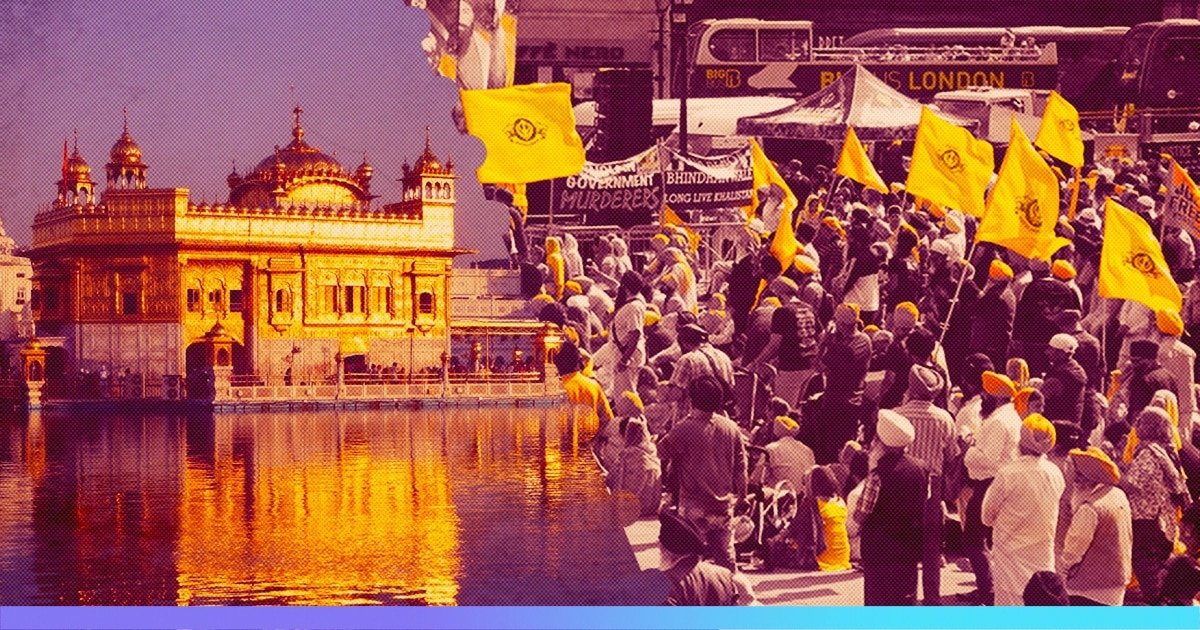





The Khalistan Movement is a Sikh separatist movement that seeks to create a sovereign state for Sikhs called Khalistan (meaning ‘Land of the Pure’) in their traditional homeland of Punjab. The movement’s history is deeply intertwined with the political and religious events of the 20th century in India and has significant implications for both domestic and international politics.
Origins of the Movement
The contemporary Khalistan movement, however, gained prominence in the late 1970s, fueled by a complex mix of religious, political, and economic grievances. This included the demand for greater political autonomy for Punjab, disputes over water rights with neighboring states, and a sense of marginalization among some Sikhs. The movement’s origins can be traced back to the pre-1947 era, where Sikh leaders, fearing they would become a marginalized minority in a Hindu-majority India or Muslim-majority Pakistan, expressed a desire for a separate state.
This aspiration evolved into the Punjabi Suba Movement in the 1950s and 60s, a campaign for a Punjabi-speaking state. In 1966, the erstwhile Punjab state was trifurcated into the Hindi-speaking states of Haryana and Himachal Pradesh, and the Punjabi-speaking, Sikh-majority Punjab. While this was a partial victory, it did not fully satisfy the demand for greater autonomy.
The discontent culminated in the Anandpur Sahib Resolution of 1973, a document passed by the Sikh political party, the Shiromani Akali Dal. While the resolution was initially a demand for greater federalism and state rights, it was later interpreted by some as a call for secession. It demanded more autonomy for Punjab and the recognition of Sikh nationhood, laying the political groundwork for a more radical separatist movement.
Ideology, Accusations, and Historical Events
The core ideology of the Khalistan movement is rooted in Sikh nationalism, seeking to establish a sovereign state where the Sikh community can exercise complete political and religious self-determination. Proponents of Khalistan argue that Sikhs are a distinct nation with their own unique culture, language, and religious identity, which they believe cannot be fully protected within a Hindu-majority India.
You May Like To Read: Prime Minister Modi to Visit China Amid US Diplomatic Tensions
Pro-Khalistan groups accuse India of several acts of persecution and discrimination:
- Systemic Discrimination: They claim that the Indian government has historically undermined Sikh political power and has not addressed their religious and economic grievances, such as disputes over river water distribution and the status of Chandigarh.
- Constitutional Suppression: They argue that the Indian Constitution does not recognize Sikhism as a separate religion but rather as a sect of Hinduism, which they view as an assault on their distinct religious identity.
- Human Rights Violations: The most serious accusations are related to the state’s use of force during the 1980s and 1990s, which led to widespread human rights abuses, extrajudicial killings, and enforced disappearances.
The movement’s history is marked by several pivotal and often tragic events:
- The rise of Bhindranwale: In the late 1970s and early 1980s, militant leader Jarnail Singh Bhindranwale emerged as a powerful figure, advocating for Sikh rights and a return to traditional Sikhism. His increasingly radical approach led to him and his followers establishing a base within the Harmandir Sahib (Golden Temple) complex in Amritsar, which they used as a headquarters for their activities.
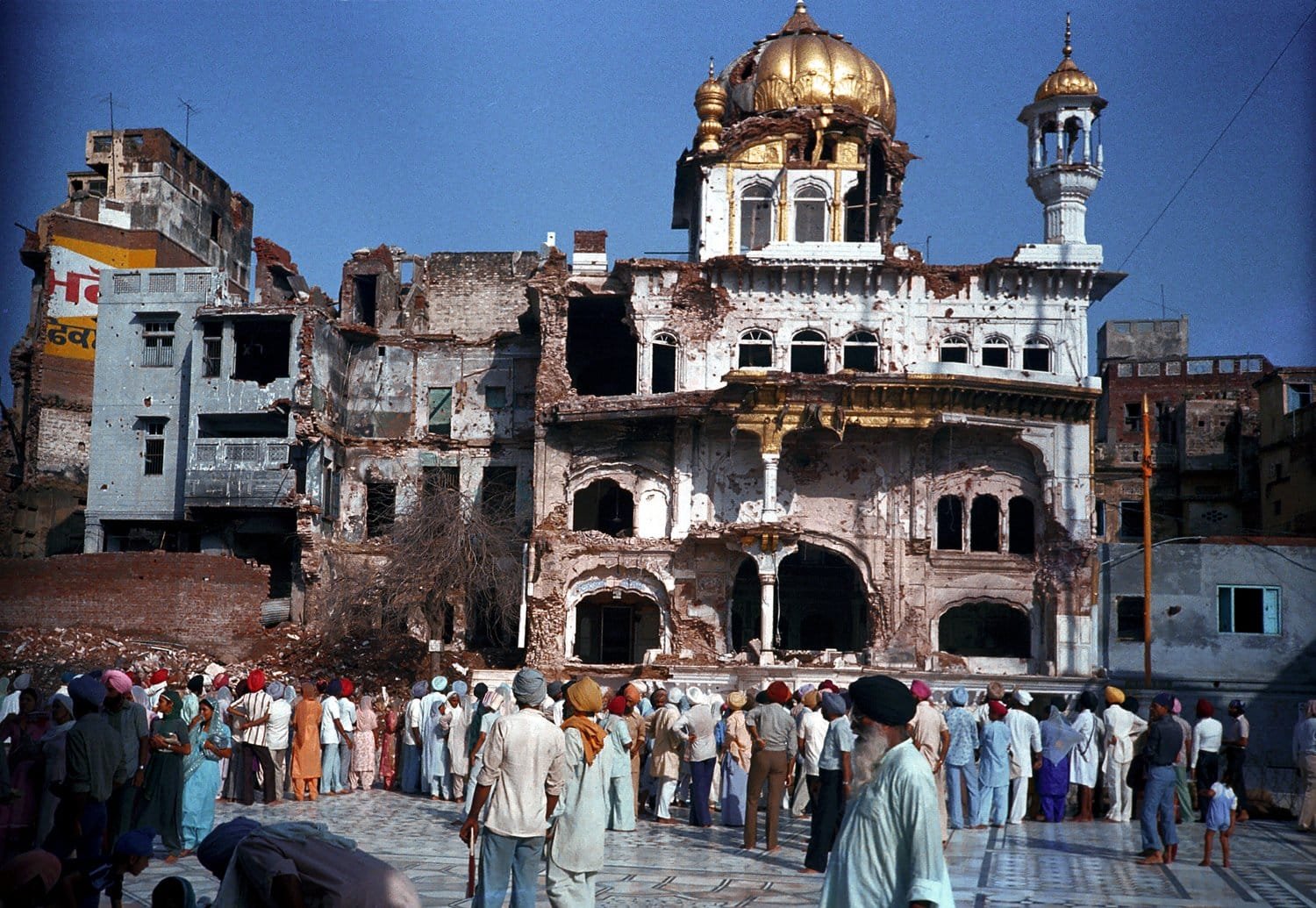
- Operation Blue Star (1984): In June 1984, the Indian government, under Prime Minister Indira Gandhi, launched a military operation to flush out the militants from the Golden Temple. The operation resulted in hundreds of casualties, including Bhindranwale and a large number of civilians, and caused significant damage to the holiest Sikh shrine. This event is a watershed moment, deeply traumatizing the Sikh community and fueling a sense of anger and alienation.
- The 1984 Anti-Sikh Riots: In the aftermath of Operation Blue Star, Prime Minister Indira Gandhi was assassinated by her two Sikh bodyguards in October 1984. This triggered a horrific pogrom against Sikhs, particularly in Delhi, where thousands of Sikhs were killed by mobs. The Nanavati Commission report and other investigations have accused the state of complicity and a failure to provide justice for the victims.
India’s Suppression and Contemporary Status
In the late 1980s and early 1990s, the Indian government launched a powerful campaign to suppress the Khalistan insurgency. Security forces were granted extensive powers under laws like the Terrorist and Disruptive Activities (Prevention) Act (TADA). This period, while effective in quelling the insurgency, was marked by widespread allegations of human rights abuses, including arbitrary arrests, torture, and extrajudicial killings. According to a Human Rights Watch report, state security forces in Punjab, systematically violated international human rights law.
Today, the Khalistan movement lacks explicit-significant popular support within Punjab itself, mainly due to the persecution in the past. The widespread violence of the 1980s has left a deep-seated desire for peace and stability among the local population. However, the movement remains active and vocal among the Sikh diaspora in countries like Canada, the UK, and the United States. Diaspora organizations continue to hold rallies, raise funds, and advocate for Khalistan on the international stage.
Recent years have seen a resurgence of attention on the movement, largely due to diplomatic tensions. In 2023, Canadian Prime Minister Justin Trudeau alleged that Indian government agents were involved in the assassination of Khalistan activist Hardeep Singh Nijjar on Canadian soil. This allegation, supported by a U.S. indictment, has led to a major diplomatic rift and brought the issue of transnational repression into the global spotlight.
Source: New Lines Mag
Future Outlook and the Path Forward
The future of the Khalistan movement is complex and uncertain. While the armed insurgency is largely a historical event, the underlying political and religious grievances have not completely vanished for some within the Sikh community, especially in the diaspora. The movement’s strength has shifted from a ground-level insurgency to a diaspora-led political and online campaign, which is particularly effective through social media.
Proponents of Khalistan argue that the creation of an independent state is the only way to ensure the long-term survival and prosperity of the Sikh nation, providing them with a homeland where they can fully practice their faith and culture and control their own political destiny.
However, many others, including a large number of Sikhs within India, disagree. They argue that Khalistan is an unviable and dangerous idea that would lead to further conflict and instability. They believe their rights can be protected within a democratic, secular India and point to the economic and social integration of Sikhs in the country. A path forward would require genuine political dialogue that addresses the historical grievances of the Sikh community, ensures justice for the victims of past violence, and fosters an environment of trust and reconciliation.
Final Remarks
From the perspective of many within the Sikh community and human rights observers, the Indian state has acted as a primary suppressor of the Khalistan movement, not merely as a counter-insurgent force. This narrative posits that New Delhi’s policies have consistently undermined Sikh political aspirations, beginning with the rejection of the Anandpur Sahib Resolution as a secessionist demand rather than a plea for greater federalism.
You May Like To Read: Tragedy Strikes Off Yemen Coast as Migrant Boat Sinks, 76 Dead
The most significant and deeply felt act of suppression was Operation Blue Star in 1984, a military raid on the holiest Sikh shrine that not only led to a massive loss of life but also desecrated a central symbol of the faith. The subsequent 1984 anti-Sikh riots in Delhi and other parts of India, which a government report found was a riot where the police was either indifferent or negligent in performance of its duties, further solidified the belief that the state was complicit in violence against its own Sikh citizens.
Furthermore, the government’s counter-insurgency campaign in the late 1980s and early 1990s, while ending the insurgency, was criticized by a Human Rights Watch report for systematically violating international human rights law, with widespread allegations of extrajudicial killings, torture, and enforced disappearances. In the modern era, critics point to the Indian government’s alleged involvement in the assassination of Hardeep Singh Nijjar in Canada as evidence of a continuation of state-sponsored repression that now extends to the international stage, demonstrating a commitment to silencing dissent beyond its borders.