



New Enforcement Bodies Under Pakistan’s PECA Amendments: A Transformative Shift
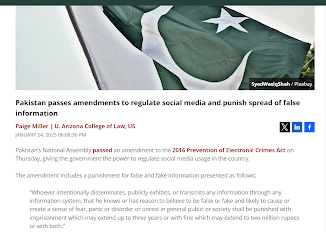
The digital landscape in Pakistan has undergone a seismic shift with the passage of the Prevention of Electronic Crimes (Amendment) Act, 2025 (PECA Amendments). Central to these reforms is the establishment of four new enforcement bodies: the Social Media Protection and Regulatory Authority (SMPRA), Social Media Complaint Council (SMCC), Social Media Protection Tribunals (SMPTs), and the National Cyber Crime Investigation Agency (NCCIA), each designed to address the complex challenges of online regulation, accountability, and cybercrime. These institutions replace the Federal Investigation Agency’s (FIA) Cyber Crime Wing, marking a new era in Pakistan’s approach to digital governance.
Source: Jurist
The Social Media Protection and Regulatory Authority (SMPRA)
SMPRA is the linchpin of the new regulatory framework. Established under Section 2A of the amended PECA, SMPRA is tasked with overseeing social media platforms, ensuring online safety, and combating unlawful content. Its powers include:
- Blocking or removing content that violates Pakistani law.
- Issuing guidelines for social media platforms to ensure compliance.
- Imposing fines on platforms or individuals that fail to adhere to regulations.
SMPRA’s composition is designed to reflect a broad spectrum of expertise, including representatives from the Pakistan Electronic Media Regulatory Authority (PEMRA), Pakistan Telecommunication Authority (PTA), and the Interior Ministry of Pakistan, among others. This multi-stakeholder approach aims to balance regulatory oversight with technical and legal expertise.
While SMPRA is modeled on regulatory bodies in the European Union, such as the European Digital Media Observatory. Accordingly, these regulations empower authorities to ensure greater online safety and accountability, fostering a digital space where harmful content is mitigated and responsible discourse thrives. By enabling the blocking of platforms for persistent non-compliance, the framework aims to uphold community standards and protect users from misinformation and illicit activities, ultimately enhancing the integrity of public and social dialogue.
Social Media Complaint Council (SMCC)
The SMCC is a five-member council established to receive and address complaints from the public regarding violations of PECA by social media platforms or users. Its mandate includes; providing a forum for citizens to lodge complaints about fake news, hate speech, or unlawful content. And ensuring accountability by investigating complaints and recommending actions to SMPRA.
The SMCC’s creation reflects a recognition of the need for accessible, third-party accountability mechanisms in the digital age. By offering a direct channel for public grievances, the council seeks to bridge the gap between citizens and regulators, fostering greater transparency and responsiveness in online governance. The SMCC’s effectiveness will depend on its independence and the clarity of its procedures. There is potential for the council to empower citizens and civil society, but only if it operates free from political interference and with robust procedural safeguards.
Social Media Protection Tribunals (SMPTs)
SMPTs are specialized judicial bodies established to adjudicate disputes arising from SMPRA’s actions and SMCC’s recommendations. Key features include; Mandated to resolve cases within 90 days, ensuring timely justice in the fast-moving digital sphere. Composed of a chairman (qualified as a High Court judge), a journalist, and a social media expert, providing a blend of legal, media, and technical perspectives.
The tribunals’ decisions are subject to appeal in the Supreme Court of Pakistan, introducing an additional layer of judicial oversight. This appellate mechanism is crucial for maintaining checks and balances and preventing abuse of power. The introduction of SMPTs is a significant step toward specialized digital justice. By ensuring that content regulation decisions are made transparently and with sector-specific expertise, SMPTs address longstanding criticisms of slow and opaque legal processes in online cases. However, there are concerns about possible judicial overreach and the need for clear, consistent standards to guide tribunal decisions.
National Cyber Crime Investigation Agency (NCCIA)
Perhaps the most transformative change is the replacement of the FIA’s Cyber Crime Wing with the NCCIA. This new agency, established under Section 51 of PECA, is designed to be Pakistan’s premier force against cybercrime. Its mandate includes; investigating a wide array of cybercrimes: from hacking and data breaches to online fraud, cyberterrorism, and digital blackmail, conducting forensic analysis and leading prosecutions under PECA. And coordinating with international partners on cross-border cybercrime cases.
The NCCIA absorbs all personnel, assets, and ongoing investigations from the FIA’s Cyber Crime Wing, ensuring continuity during the transition. The agency is headed by a Director-General with at least 15 years of experience in relevant fields, underscoring the need for both legal and technical expertise. The creation of NCCIA marks a shift toward a more specialized, technologically advanced approach to cybercrime. Recently, NCCIA arrested 149 individuals, inclusive of 48 Chinese individuals, involved in cybercrimes, and bank hacking activities.

Proponents argue that this move is necessary to keep pace with the growing scale and sophistication of digital threats. Critics, however, caution that centralizing investigative powers could lead to increased surveillance, especially if not accompanied by strong oversight and accountability mechanisms.
Broader Implications and Debates
The PECA amendments and the establishment of these new bodies have sparked intense debate in Pakistan. Supporters argue that the reforms are essential for protecting citizens from cybercrime, fake news, and online abuse, and for aligning Pakistan’s digital governance with international best practices. They point to the rapid proliferation of misinformation and cyber threats as justification for stronger regulation and enforcement. Whereas, opponents—select journalists, human rights organizations, and digital rights activists—warn that the new laws could be weaponized to stifle dissent, and tighten government control over the digital sphere.
Centralized Control or Coordinated Efficiency?
These four institutions collectively represent a new architecture of digital control in Pakistan. Advocates say this unified system promotes efficiency, ensures quick response to online threats, and empowers the state to tackle growing cybercrime. However, centralizing regulatory, complaint, and judicial functions under executive influence may undermine independent checks and balances.
Navigating the Tension: Key Recommendations for Rights-Respecting Regulation
Equally important is the need to ensure transparent and inclusive appointment processes for key positions within regulatory bodies like the Social Media Protection Tribunals (SMPTs) and the Social Media Protection and Regulatory Authority (SMPRA). A more credible and balanced process would include participation from civil society organizations, digital rights advocates, legal professionals, and independent journalists. Such inclusion would enhance institutional legitimacy and reduce the perception and risk of bias or political interference.
Additionally, the establishment of independent oversight committees is essential to maintain checks and balances within the new regulatory ecosystem. These oversight bodies should be mandated to review the actions of enforcement agencies such as the NCCIA and SMPRA and publish regular, publicly accessible reports detailing content takedown requests, investigations, and case outcomes. This transparency would not only foster public trust but also deter the perception of misuse of authority.
A crucial safeguard in this digital environment is the protection of whistleblowers, journalists, and civil society voices. Legal reforms must explicitly protect investigative reporting, critical commentary, and advocacy work from criminalization under cybercrime or misinformation charges. Without such protections, the risk of undermining democratic accountability increases.
In parallel, the government should also focus on investing in digital literacy campaigns. Educating the public on how to assess the credibility of information, identify disinformation, and engage responsibly online can be far more effective than censorship in combating online harm. These campaigns should be inclusive, multilingual, and widely accessible, especially targeting youth and rural populations where misinformation tends to spread more rapidly.
Finally, reforms must strengthen appeal rights and legal support mechanisms for individuals and organizations accused under PECA provisions. The law should guarantee timely access to defense counsel, fair trial rights, and affordable or state-sponsored legal aid where needed. Ensuring due process is not just a procedural necessity, it is a constitutional obligation that must be honored even in the digital domain. Together, these reforms offer a rights-based framework for digital governance, one that protects national security and public interest without eroding the very freedoms it seeks to safeguard.
Conclusion
The establishment of SMPRA, SMCC, SMPTs, and NCCIA under the PECA Amendments represents a watershed moment in Pakistan’s journey toward digital regulation. While these bodies have the potential to create a safer and more accountable online environment, their success will hinge on transparency, independence, and respect for fundamental rights. As Pakistan navigates the challenges of the digital age, the balance between security, innovation, and freedom will remain at the heart of the national conversation.