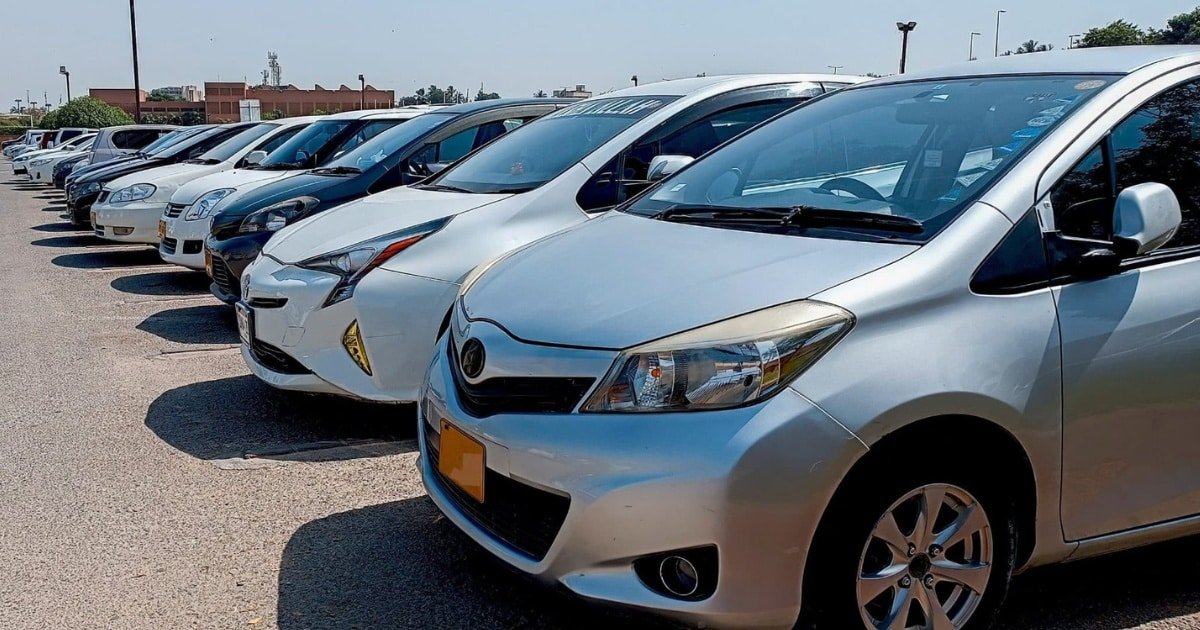





Islamabad — The Government of Pakistan has announced key policy decisions regarding the import of used vehicles in order to balance trade liberalisation commitments with the protection of the domestic automobile industry.
In a joint session of the Senate Standing Committees on Finance and Industry, Joint Secretary Trade Policy, Mr. Mohammad Ashfaq, confirmed that:
- The import of accidental and low-quality vehicles will be strictly prohibited.
- A 40% additional tariff will be imposed on the commercial import of used cars when the import window opens next month.
- This tariff will gradually be phased out over four years to align with commitments under the IMF-supported reform programme.
Consumer Impact, and IMF Conditions
The IMF has required Pakistan to allow the commercial import of used cars up to five years old starting September 2025, with complete removal of age and other restrictions by July 2026.
Under this framework, Pakistan is also bound to reduce its average import tariffs from 20.2% to 9.7% over the next five years—a 52% reduction.
Mr. Ashfaq clarified that these changes will be gradual and carefully regulated to ensure that the influx of old and used vehicles does not harm the local environment or undermine domestic industry.
Industry Concerns
Representatives of the Pakistan Automotive Manufacturers Association (PAMA) and the Pakistan Association of Automotive Parts & Accessories Manufacturers (PAAPAM) voiced concerns over the IMF-led reforms.
- Mr. Ali Asghar Jamali, CEO of Indus Motors, highlighted that the high cost of locally assembled vehicles is driven largely by government taxation, which accounts for 30% to 61% of final vehicle prices.
- For example, taxes on small cars amount to 30% of price, while in the case of SUVs like the Fortuner, 61% of the cost is attributed to government levies.
- He further noted that under the new policy, importing and selling used vehicles may become more financially attractive than manufacturing them locally, posing risks to the future of domestic production.
A representative from Pak-Suzuki Motors echoed this sentiment, stating that producing locally has become increasingly costly and inefficient compared to import-based sales.
Senate Committee Reactions
Members of the Senate Committees expressed concern over high car prices, poor safety standards, and limited consumer benefit under the current system.
- Senator Aon Abbas, Chairman of the Standing Committee on Industry, questioned the IMF’s involvement in consumer-related policies.
- Senator Qadir supported the withdrawal of excessive protection, arguing that it would promote efficiency, competition, and improved safety standards.
Committee members also criticised local assemblers for offering vehicles with fewer safety features, noting that imported cars often come with six airbags, whereas local models are equipped with only two.
Way Forward
The Government confirmed that while the auto sector will undergo gradual liberalisation, steps will be taken to:
- Safeguard the local manufacturing base.
- Ensure consumer access to safe and high-quality vehicles.
- Phase out excessive duties in line with Pakistan’s international obligations.
“The government is committed to striking a balance between trade liberalisation, consumer protection, and industrial growth. These measures will ensure that Pakistan’s auto industry evolves with global standards while maintaining fair competition,” the Ministry of Commerce said in a statement.
You May Like To Read: