


Let’s start with a quick reminder of the bigger picture: we recently explored Pakistan’s external debt burden, and now it’s time to tackle the other side—domestic debt. While debt is not inherently bad—it can fuel growth, infrastructure, and public services—Pakistan’s domestic debt trajectory over the past decade demands our attention.
Domestic vs. External Debt: What’s the Difference?
If external debt is borrowed from foreign lenders (IMF, World Bank, bilateral partners), domestic debt is borrowed from within Pakistan—commercial banks, insurance companies, pension funds, and even citizens through government bonds and treasury bills. This local money helps finance the federal deficit, fund public services, and roll over maturing liabilities.
Domestic debt typically includes short‑term Treasury Bills (T‑bills) and longer-term instruments like Pakistan Investment Bonds (PIBs) and Sukuk.
Why Pakistan Has Needed So Much Domestic Debt
Over the past ten years, Pakistan’s domestic debt has ballooned to service fiscal shortfalls, cushion against external shocks, and manage debt repayments when external inflows faltered.
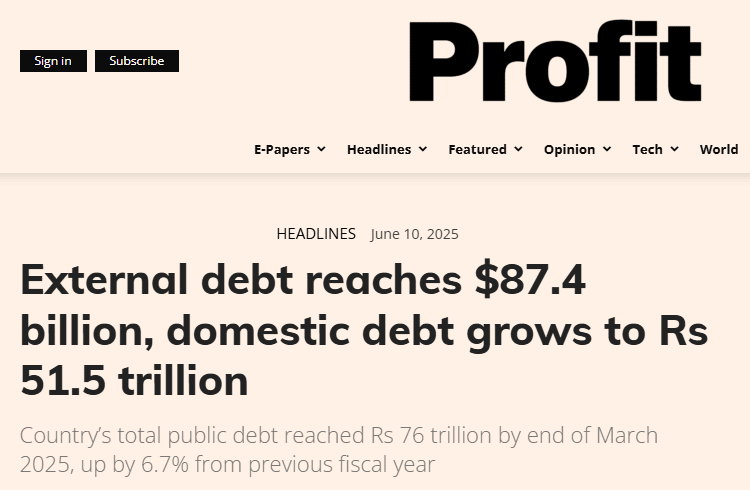
According to State Bank of Pakistan data, domestic debt surged from roughly Rs 33 trillion in mid‑2023 to over Rs. 51.5 trillion by March 2025. It continued rising, reaching nearly Rs. 53.5 trillion by May 2025.
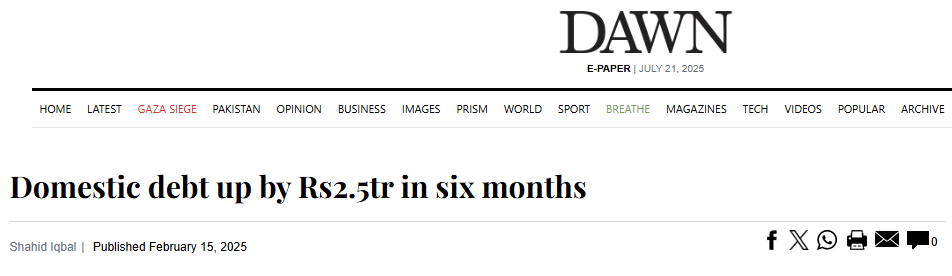
Source: Dawn
In just the first half of FY25, domestic debt increased by around Rs 2.5 trillion—to Rs 50.2 trillion as of December 2024. Even with the SBP distributing significant profits to the treasury (Rs 2.7 trillion), government borrowing soared—largely through long‑term instruments rather than rolling over T‑bills.
Pakistan’s Domestic Debt Profile: The Details
As of March 2025:
- Domestic Debt: Rs 51.5 trillion, making up around 68% of total public debt (Rs 76 trillion).
- Long‑term debt (PIBs, Sukuk) accounted for ~Rs. 44 trillion.
- Short‑term T‑bills totaled around Rs. 8–9 trillion
Source: Profit
By April–May 2025, domestic debt had reached Rs. 52.5–53.5 trillion, growing ~16% year‑on‑year, while short‑term borrowings declined as a share—reflecting a shift toward longer maturities. This move reduces rollover risk but locks in interest costs.
What If Pakistan Defaulted on Domestic Debt?
Here’s what could happen—and this is highly unlikely:
- Credit losses at banks and institutions holding government bonds.
- A collapse in domestic financial markets.
- Massive monetary disruption and a spike in interest rates.
- Severe fiscal and banking instability.
That said, Pakistan’s central bank, robust cadre of institutional holders, and continued rollovers make such outright default improbable. Restructuring could be politically explosive—given the majority of the debt is held by domestic pension and savings institutions. So the likelihood is low, though the cost of service is rising—interest costs on domestic debt alone exceeded Rs 5 trillion by late FY25.
Responsible Debt Management: The Current Government’s Record
Over the past three years, the government has consciously shifted toward lengthening debt maturities, lowering reliance on T‑bills, and improving yield profile. SBP reports show that:
- The share of external debt in total public debt declined from 34% (June 2024) to 32% (March 2025), within the limit set by the Medium‑Term Debt Management Strategy.
- PiBs issuance and Sukuk inflows replaced short‑term instruments, smoothing refinancing pressures.
- A strategic liability management operation repurchased ~Rs. 1 trillion of expensive debt, reducing interest burden
Contrast that with the 2018–22 period, when domestic borrowing exploded to fund consumption and populist spending without structural reform, resulting in rapid debt buildup and short maturities.
By early FY25, the emerging primary fiscal surplus—thanks to fiscal consolidation and improved revenue—helped slow the pace of debt growth, even as external inflows remained thin.
Current Snapshot
Here’s where Pakistan stands now (as of May 2025):
- Total Public Debt: ~Rs 76 trillion (~66% of GDP) Business Recorder.
- Domestic Debt: Rs 53.5 trillion (≈70%).
- External Debt: Rs 22.6 trillion (≈30%).
- Debt Composition:
- PIBs: ~Rs 35 trillion.
- Sukuk: ~Rs 5.7 trillion.
- T‑bills: ~Rs 8 trillion.
Leveraging Debt Through Balance
Debt can catalyse growth: funding infrastructure, tackling climate resilience, or smoothing shocks. Pakistan’s recent work under IMF-based fiscal consolidation, coupled with debt strategy to minimize short‑term rollover risks, shows greater maturity. Longer maturities and targeted refinancing operations earn praise from debt managers.
However, the high proportion of domestic debt implies interest costs remain top‑heavy—a large share of the budget goes into servicing rather than development. And rising interest rates or weak revenue collection would push domestic debt service spiralling further.
As mentioned in previous articles, debt is not black and white—it’s a tool which can be leveraged for financial growth. The real test is structure, cost, and purpose.
Earlier governments leaned too heavily on short-term, expensive borrowings to finance political and populist spending, leaving Pakistan vulnerable to rollover risks. Today’s administration looks to have reversed course—building longer‑term maturity, stabilising interest costs, and supporting fiscal consolidation.
Still, even truly necessary debt costs something—and behind the numbers lie future trade-offs. As Pakistan writes its debt story, the government must stay vigilant: invest borrowed resources wisely, build buffers, and resist temptation to rely on past growth narrative. Debt doesn’t disappear—it’s always someone’s promise. Properly managed, it can help Pakistan cross thresholds. Mismanaged, it becomes a burden that limits future choices.