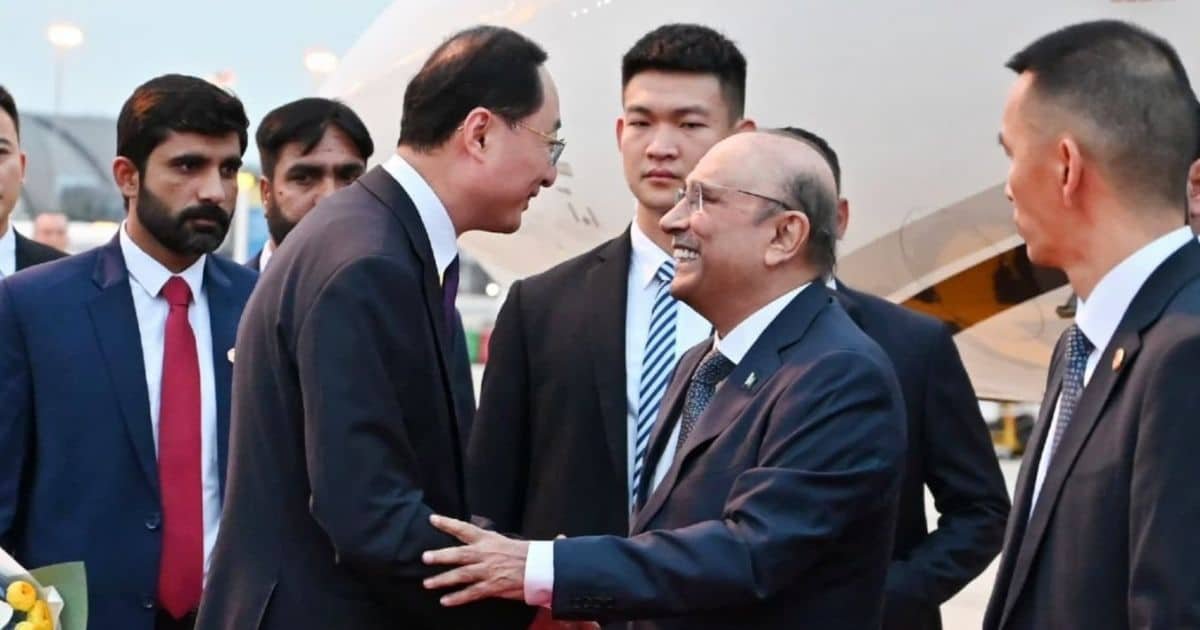


President Asif Ali Zardari’s recent official visit to China stands as a landmark event, reaffirming the unshakeable “all-weather strategic cooperative partnership” between the two nations. The trip, marked by high-level meetings and the signing of key agreements, was not merely a diplomatic exercise but a tangible step towards a deeper and more multifaceted relationship. Beyond traditional economic and political ties, the visit solidified collaboration in critical areas such as defense, technology, and regional integration, setting a new course for the future.
Deepening Defense and Military-Industrial Collaboration
A key strategic highlight of the visit was President Zardari becoming the first foreign head of state to tour China’s AVIC complex in Chengdu, a highly restricted facility home to advanced military systems like the J-10C fighter jet. This unprecedented access sends a powerful message, signifying a heightened level of strategic trust and cooperation. It signals China’s willingness to treat Pakistan not just as a partner, but as a reliable strategic peer in the defense sector. The tour is expected to lay the groundwork for a new phase of military-industrial collaboration. Rather than a simple import-export relationship, Pakistan is now likely to pursue more joint production of defense hardware. This would not only build local capacity and technological expertise but also fortify Pakistan’s position as a key regional player. Such a development could significantly influence regional power dynamics, altering strategic calculations in the broader South Asian and Central Asian contexts.
The tour of the AVIC facility underscores a shift in the nature of defense relations from a transactional model to one of shared development and capacity building. This new approach is likely to focus on technology transfer, joint research and development, and the co-production of next-generation defense systems. The strategic implications of this are immense, as it positions Pakistan to enhance its own defense capabilities, reduce reliance on foreign imports, and become a more formidable force in its region. This deepened military cooperation is a cornerstone of the bilateral relationship, reinforcing a shared commitment to regional stability and security.
Accelerating Economic and Regional Integration
President Zardari’s visit extended to Shanghai and the Xinjiang Uygur Autonomous Region, underscoring a commitment to broadening economic ties and regional integration. In Shanghai, he attended a ceremony where three significant Memoranda of Understanding (MoUs) were signed, marking a new chapter in practical cooperation:
- The establishment of a Controlled Agriculture Science and Education Park to enhance agricultural production and food security. This project is a critical step towards modernizing Pakistan’s agriculture sector, which is the backbone of its economy. By leveraging Chinese expertise and technology in controlled-environment agriculture, Pakistan can improve crop yields, ensure food security, and create new opportunities for agri-businesses.
- A partnership with Shennong College for a vocational institute to provide modern technology and training to farmers. This initiative aims to address a critical skills gap in the agricultural sector, empowering Pakistani farmers with the knowledge and tools necessary to adopt advanced farming practices and increase their income.
- A tire recycling project to promote eco-friendly waste management solutions. This is a significant move towards environmental sustainability and a circular economy, as it addresses urban waste challenges while creating a new industry and employment opportunities.
The President’s assurance to a major Chinese carmaker, Chery Automobile Company Ltd, regarding policy support for New Energy Vehicles (NEVs) and local component production further highlighted Pakistan’s intent to embrace technological and industrial advancements. He encouraged the firm to explore joint ventures in electric buses, mini trucks, green energy solutions, and charging infrastructure, signaling a commitment to sustainable transport and clean energy.
In a separate but equally significant meeting, President Zardari met with Chen Xiaojiang, the Communist Party Secretary of the Xinjiang Uygur Autonomous Region. The President expressed his hope that growing linkages between Xinjiang and Pakistan’s northern areas would further strengthen cultural and economic bonds. He specifically highlighted Xinjiang’s pivotal role in the China-Pakistan Economic Corridor (CPEC) and encouraged greater industrial and agricultural collaboration, noting the potential of Special Economic Zones in Gilgit-Baltistan. The discussion also focused on Pakistan’s continued cooperation with China in countering terrorism and extremism, while expanding ties in agriculture, manufacturing, livestock, industry, and mining. Both sides expressed a desire to see a future where both countries can be easily accessed by road, a prospect that would revolutionize regional trade and connectivity, making Pakistan a gateway for China’s western development.
President Asif Ali Zardari met Mr Chen Xiaojiang, CPC Secretary of Xinjiang, in Urumqi. He reaffirmed Pakistan-China friendship as the cornerstone of foreign policy & stressed deeper cooperation in CPEC, agriculture, industry, mining & counter-terrorism. pic.twitter.com/bz237hhbtM
— The President of Pakistan (@PresOfPakistan) September 18, 2025
Reinforcing Unshakable Ties, and Shared Vision
In a meeting with Chen Jining, the Communist Party of China (CPC) secretary in Shanghai, President Zardari reaffirmed that Pakistan-China ties are unshakeable and that attempts by hostile elements to harm the relationship would never succeed. The discussion also explored opportunities for industrial collaboration in Pakistan’s Special Economic Zones and Gwadar Free Zone, particularly in technology, IT, artificial intelligence, and innovation. The insights shared by Chen Jining on Shanghai’s transformation from a manufacturing hub to a service-based economy resonated with Pakistan’s own aspirations for economic diversification and growth.
The visit’s success lies in its comprehensive approach, moving beyond traditional diplomacy to forge tangible partnerships in multiple sectors. The agreements and discussions are expected to boost CPEC, accelerating upgrades in infrastructure and deepening Pakistan’s integration into China’s western development. However, with higher expectations come greater domestic scrutiny, and the Pakistani government will face pressure to translate these agreements into visible benefits for its citizens, including jobs, improved infrastructure, and reduced corruption.
The visit concludes with the resounding message that Pakistan will always remain China’s most reliable partner and trusted friend, and that the strategic partnership is poised for a new era of growth, prosperity, and shared security.
You May Like To Read: