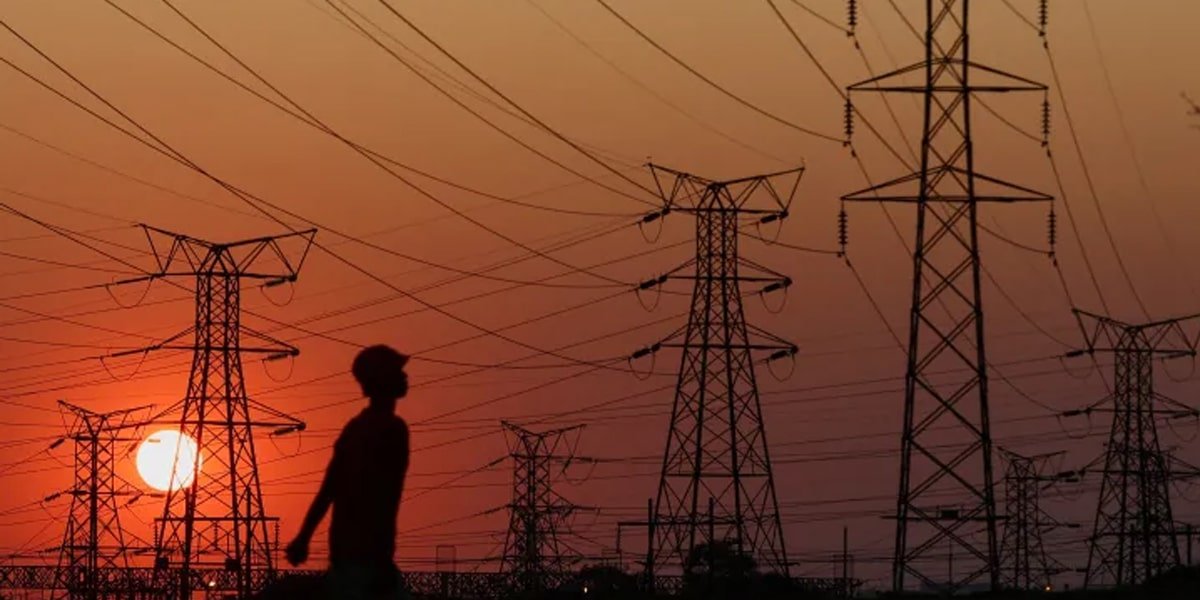





It begins with the flicker of a light bulb. Then the fan stops, screens go black, fridges fall silent. A few minutes later, in the dusty street below, a cacophony of generator rumbles fills the air. This has long been the rhythm of life in Pakistan’s cities and villages alike. The nation has grown used to living with electricity that comes and goes on its own schedule. From the heatwaves of Jacobabad to the apartment blocks of Lahore, load shedding has been more than just an inconvenience—it has been a defining feature of national frustration.
In the early 2010s, the crisis reached its zenith. Pakistan faced electricity shortfalls of up to 7,000 MW in peak summer months. Small businesses shuttered. Industries scaled back. Students studied by candlelight. The national grid groaned under ageing infrastructure, theft, and a mismatch between supply and demand. It wasn’t just about power; it was about the very engine of growth stalling.
A Decade of Catching Up
To bridge that gap, Pakistan turned to urgent solutions. In the years following 2013, the government signed dozens of power purchase agreements (PPAs) under its policy of energy security. CPEC brought in Chinese investments into coal, hydro, wind, and solar. By 2018, installed capacity had jumped from around 22,000 MW in 2013 to over 33,000 MW. Many of these contracts were on take-or-pay terms—meaning the government had to pay power producers whether the electricity was used or not. These terms were expensive, yes. But they were necessary at the time.
Pakistan was in the middle of an existential energy crunch. No investor would commit billions without guarantees. These PPAs ensured rapid deployment of capacity. The country finally had breathing space. By 2021, load shedding had become significantly less frequent in urban centers. However, that relief came with a cost. And that cost was circular debt.
The Circular Trap
Circular debt is a euphemism for financial bleeding. It refers to the build-up of unpaid bills across the energy supply chain. When distribution companies (DISCOs) fail to recover full payments from consumers due to theft, poor billing, or subsidies, they underpay the power producers. Those producers in turn delay payments to fuel suppliers like PSO or SNGPL. The system keeps running, but debt keeps accumulating.
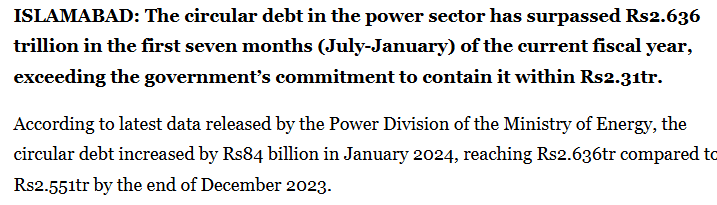
As of mid-2023, Pakistan’s circular debt in the power sector stood at nearly Rs2.6 trillion (NEPRA State of Industry Report 2023). This is money the government owes but doesn’t have. It eventually pays for this gap through budget allocations, borrowing, or by printing money—all of which burden the common taxpayer either through inflation, cuts to development spending, or additional taxes.
Source: Dawn
For the average Pakistani, circular debt is not just a number. It explains why electricity tariffs keep rising. It explains why subsidies are slashed but the relief never comes. It explains why investments in the sector stall. Every rupee stuck in the circular chain is a rupee not going into schools, hospitals, or public transport.
Efforts to Untangle the Mess
In the last three years, the government has made serious efforts to reform the power sector—efforts that, for once, go beyond paper plans. One of the most consequential has been the renegotiation of IPP contracts. Starting in 2021, the government successfully renegotiated tariff terms with over 30 independent power producers, reducing capacity payments and improving transparency in accounts (Ministry of Energy).
According to a report by the Prime Minister’s Office, these renegotiations could save the exchequer over Rs800 billion over the next 20 years. For the first time, the state clawed back some control over contracts that had long been considered untouchable.
Furthermore, the shift towards competitive bidding in new renewable projects is a policy leap. Instead of offering fixed returns, the government now invites open bidding for wind and solar projects, pushing tariffs down. The Alternative and Renewable Energy (ARE) Policy 2019 targets 30% renewables in the energy mix by 2030, and recent progress suggests the policy is gaining traction.
The World Bank and IMF have also been pushing for improved governance, separation of distribution and transmission companies, and the establishment of an independent market operator. In early 2024, Pakistan launched a wholesale electricity market trial under CPPA-G to allow direct contracts between producers and large consumers—a step towards deregulation and efficiency (CPPA-G).
Are We There Yet?
No, but for the first time in years, the country appears to be steering in the right direction.
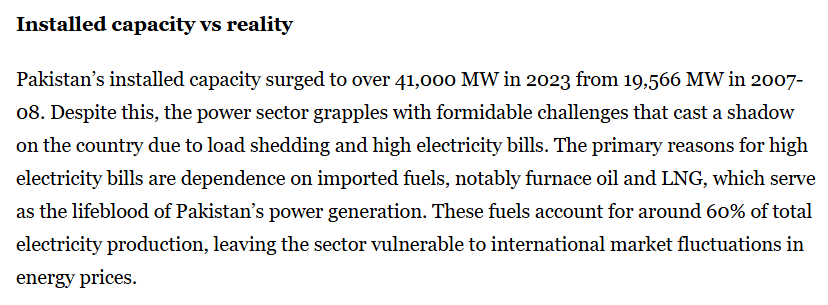
The reforms are beginning to tackle the structural flaws rather than just the symptoms. The recognition that capacity addition alone is not enough has been a breakthrough. In fact, by 2023, Pakistan’s installed capacity exceeded 41,000 MW, far more than its average demand. But the grid and the financial system were not built to handle this surplus.
Source: Tribune
Now, the conversation has shifted towards improving transmission lines, reducing losses, introducing smart metering, and automating billing. Digitalization is a key focus, and pilot projects in Lahore and Islamabad for advanced metering infrastructure (AMI) are already showing improved recovery rates.
What Else Needs to Happen?
While progress is visible, Pakistan must now prioritize policy continuity. The power sector cannot be jerked from one reform model to another every five years. Whether it is privatization of DISCOs, implementation of wheeling charges, or market liberalization—the roadmap must survive changes in government.
Secondly, energy efficiency needs to be brought to the forefront. Pakistan wastes nearly 25% of its electricity through inefficient appliances, poor building insulation, and outdated industrial processes. Programs for energy audits, appliance labeling, and incentives for efficient consumption must be scaled up.
Thirdly, consumer behavior must change. Theft is not a victimless crime. It increases tariffs for paying users. Public messaging, legal action, and incentives must all play a part in reshaping how power is treated in homes and industries.
And finally, targeted subsidies must replace blanket subsidies. The government has started using data from the Benazir Income Support Programme (BISP) to identify and protect low-income consumers while phasing out untargeted support. This approach, if expanded, could make subsidies both fiscally responsible and socially equitable.
A Light at the End of the Grid
It took years for the power sector to collapse into crisis. It will take years to build it back. But unlike the past, today’s approach isn’t just about buying more megawatts—it’s about building systems that can last. Through renegotiated contracts, market reforms, digitization, and policy realism, the government is finally attempting to untangle the knotted wires of Pakistan’s energy landscape.
It won’t be easy. There will be resistance, inertia, and perhaps some political cost. But if the flicker of light becomes a steady beam, the payoff will be immense: a stronger economy, competitive industries, and dignified lives for millions.
Because electricity is not just a service. It is the quiet pulse of a functioning state.