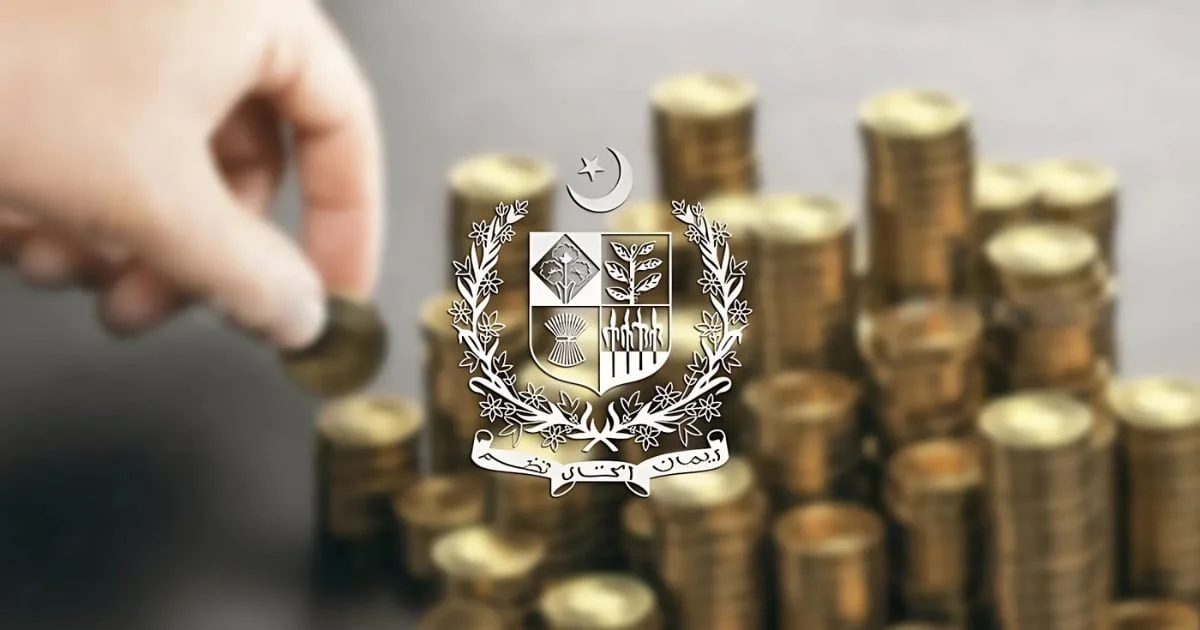



Pakistan’s state‑owned enterprises continue to represent a significant burden on public finances, prompting a drive for comprehensive reform. Loss‑making SOEs drained fiscal resources estimated at 1.4 percent of GDP between FY16 and FY23, as cumulative government support reached roughly Rs 5.7 trillion. The policy response has crystallized around privatization, restructuring, and governance improvements under newly enacted legal frameworks.
Source: Dawn
Fiscal and Governance Challenges in SOEs
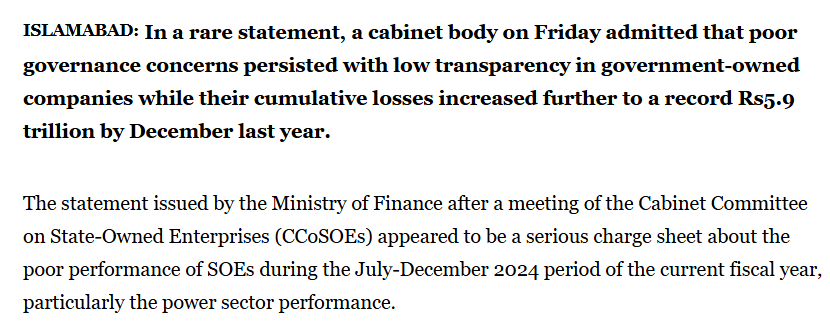
The fiscal costs of SOEs remain alarming. By December 2024 cumulative losses had ballooned to Rs 5.9 trillion, with energy sector circular debt alone hitting Rs 4.9 trillion in just six months. This debt includes unfunded pension liabilities, government loan guarantees, and subsidy support, which have eroded fiscal space and undermined investor confidence. The State Bank of Pakistan cited persistent weak governance, fragmented ownership across 20 ministries, and opaque board practices as root causes of poor performance.
Legal and Institutional Reform: Act, Policy and Central Monitoring
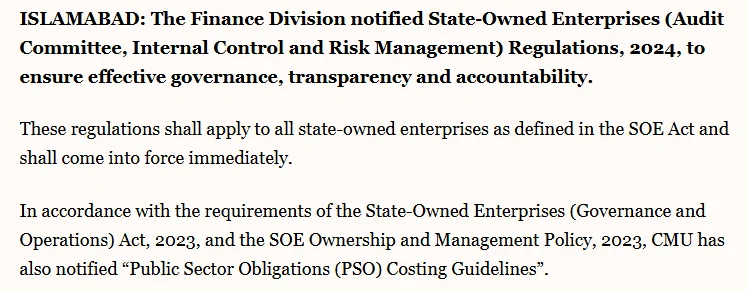
Recognizing the need for structural transformation, in late 2023 the federal government enacted the SOE Governance and Operations Act 2023, alongside a corresponding Ownership and Management Policy. These frameworks mandate that the largest SOEs publish independent audited IFRS‑compliant financial statements, adopt three‑year business plans with key performance indicators, and have boards composed of majority independent directors by end‑2024.
To support enforcement, the Central Monitoring Unit (CMU) was established within the Ministry of Finance. Operational since late 2023, it compiles aggregate reports on all SOEs, tracks compliance through an e‑database, and ensures adherence with PSO arrangements and governance norms by mid‑2025.
Source: Business Recorder
Reform Experience: Privatisation and Structural Adjustment
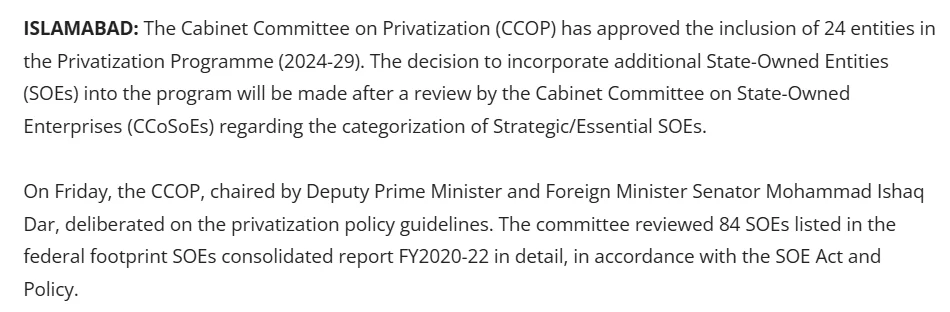
Privatization is central to reform policy. In May 2024, Prime Minister Shehbaz Sharif announced a landmark plan to sell nearly all non‑strategic SOEs between 2024 and 2029. The Cabinet Committee on Privatization greenlit inclusion of 24 entities into the phase II privatisation plan, emphasising a clear separation of strategic versus non‑strategic units.
Source: Pakistan Today
Loss‑making entities such as Pakistan International Airlines (PIA), several distribution companies (Discos), Pakistan Steel Mills, Pakistan Engineering Company (PECO) and Heavy Electrical Complex are priority targets. Multiple attempts to privatize Pakistan Steel and PECO have faltered over years due to legal hurdles, investor hesitation and governance deficits. Profit.pakistantoday.
You May Like To Read: Does Madrassa Only Produce Conservative People?
The Case of PIA: Progress Amid Challenges
PIA illustrates both the promise and pitfalls of the reform agenda. Last year a privatization attempt failed after a sole bid of PKR 10 billion fell far short of the government’s reserve price. In response, the government offloaded 80 percent of legacy debt to the state, revised pre‑qualification rules, and extended tax incentives to potential bidders. Expressions of interest for up to 100 percent stake were invited in mid‑2025, with renewed investor interest from major corporate groups and even PIA’s own employees. PIA has returned to profitability for the first time in over two decades, resumed European routes, and is considered the flagship public asset in the current reform drive.

Source: Reuters
Strengthening Governance and Accountability
Beyond privatization, the reform agenda stresses governance improvements in remaining SOEs. The Act requires independent board membership, transparent disclosure of related‑party interests, and publication of Statements of Corporate Intent (SCI) for public scrutiny. The director training programme launched in 2024 aims to professionalize board oversight, and PSO agreements are to be formally costed, and enforced with compensation by mid‑2025.
The IMF has been a persistent driver of these reforms, setting benchmarks for passage of the legal framework, CMU operationalization and divestment plans across power plants and banks by mid‑2025.
Constraints and Criticisms: Why Reform Falters
Despite the legal architecture and roadmap, outcomes remain mixed. The SBP’s review of reforms concluded that weak political will, bureaucratic delays, and unresolved sector policy issues have limited real improvements in performance and service delivery. Privatised entities like K‑Electric and SSGC showed some gains, but consumers continued facing high costs and outages due to lingering regulatory weaknesses. The government admits that compliance with transparency norms remains weak, with Section 30 disclosures of beneficial interests lacking, and SOE ownership scattered across ministries hindering coherent oversight.
Emerging Direction: Restructuring, PPPs and Resilient Pathways
In the FY2025–26 budget, state allocations to SOEs rose by over 80 percent, underlining continued fiscal exposure. In response, the government has classified SOEs into three categories: those slated for privatization, those earmarked for restructuring, and others for public‑private partnership (PPP) models. Professional boards are now being appointed to inject management discipline and shield enterprises from political meddling.
You May Like To Read: Climate Change as a National Security Multiplier in Pakistan
Conclusion
Pakistan’s SOE reform agenda represents a shift from earlier ad hoc efforts toward an increasingly coherent legal, institutional, and privatization‑driven agenda. The SOE Act 2023, new ownership policy, and the operational CMU provide a much‑needed foundation. The phased privatization of loss‑making enterprises, especially PIA, reflects renewed resolve, while governance reforms aim to stem future liability.
Yet the success of this agenda hinges critically on sustained political will, timely implementation of PSO frameworks, enforcement of board independence, and resolution of broader sector policy weaknesses. Without those anchors, even completed privatizations may not deliver better service delivery or fiscal relief. The transformation of Pakistan’s SOEs will take time—but the reforms underway offer a real chance to break the cycle of bailouts and inefficiency, restore fiscal balance, and reintegrate public assets into competitive, well‑managed enterprises.