


Purpose and Focus of the Washington Visit
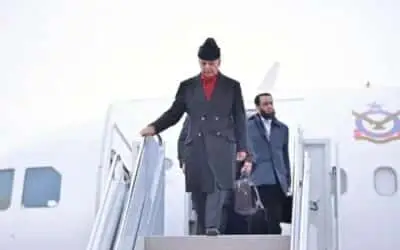
Finance Minister Muhammad Aurangzeb visited Washington on July 18 2025, to address a pressing economic issue; the 29% reciprocal tariff imposed on Pakistani exports to the United States, part of legacy trade restrictions introduced during the Trump administration, targeting countries with sustained trade surpluses.
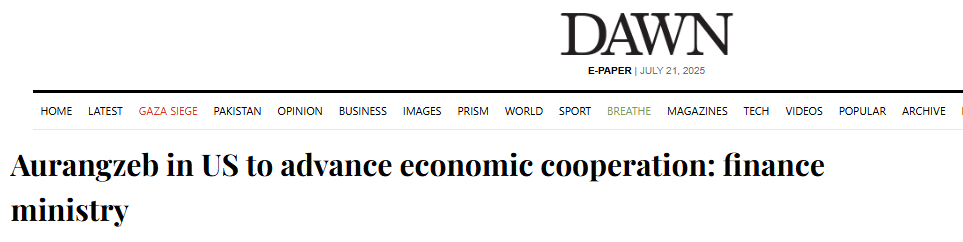
Source: Dawn
With Pakistan recording a $3 billion trade surplus in 2024, the two nations have found themselves at odds over trade terms. Aurangzeb’s primary goal was to secure tariff concessions and expand the scope of bilateral cooperation to include investment, digital economy, and advanced technology sectors. During the visit, the minister held high-level meetings with the U.S. Commerce Secretary Howard Lutnick and U.S. Trade Representative Jamieson Greer, continuing a series of virtual engagements that had been underway for over a month.
According to official Pakistani sources, the discussions were described as “productive,” with both sides expressing optimism about reaching a mutually beneficial outcome within a week.
Pakistan’s Trade Pitch and Strategic Economic Priorities
At the core of the negotiations, Pakistani officials are advocating for tariff relief on critical exports, particularly textiles and agricultural products. These sectors form the backbone of Pakistan’s export economy, and Islamabad is pushing to preserve their competitiveness in the U.S. market by seeking exemption or reduction from the 29% reciprocal tariff. In response, Washington is reportedly considering the possibility of a Preferential Trade Agreement (PTA) or even a Bilateral Trade Treaty (BTT), which would be aligned with WTO-compliant frameworks and mutual trade incentives.

Source: Profit
In a bid to address the U.S. concerns over trade imbalances, Pakistan has offered significant import concessions, pledging to increase its purchase of U.S. crude oil, cotton, soybeans, and other hydrocarbons.
These measures are supported by the recently introduced National Tariff Policy (2025–26), which aims to rationalize duties and create a more predictable, transparent trade environment, ultimately making the Pakistani market more accessible to U.S. exporters.
Beyond the tariff discourse, Finance Minister Muhammad Aurangzeb framed the dialogue around a broader strategic investment agenda. He highlighted Pakistan’s readiness to welcome long-term U.S. capital in emerging and high-growth sectors such as minerals and mining, artificial intelligence, digital infrastructure, and even cryptocurrency and blockchain technologies.
One of the most notable opportunities discussed was the U.S. Export–Import Bank’s potential financing of $500 million to $1 billion in support of the $7 billion Reko Diq copper-gold project, a cornerstone of Pakistan’s resource-driven investment strategy.
Current Status of the Trade Dialogue
The initial outcomes of Finance Minister Muhammad Aurangzeb’s visit suggest promising progress on tariff negotiations, with both U.S. and Pakistani officials expressing optimism for a deal by early August. Islamabad has emphasized that this is a bid for mutual economic cooperation, not financial aid.
Talks have now broadened to include potential U.S. investments in strategic sectors like mining, tech, and infrastructure, aligning with Pakistan’s long-term economic goals. However, challenges remain: the U.S. has presented a comprehensive list of tariff and regulatory demands, and expects concrete deliverables before August 15, or risk excluding Pakistan from favorable trade terms.
Furthermore, Pakistan’s proposal will be measured against global benchmarks. As multiple trade negotiations proceed in parallel, Islamabad’s strategy must withstand scrutiny under WTO rules and hold up when compared to deals being negotiated with other U.S. trade partners. This comparative pressure adds a critical dimension to the negotiations, reinforcing the need for a deal that is not only economically sound but also diplomatically competitive.
Strategic Implications for Pakistan
Economic Realignment
A successful tariff deal would be a short-term boon for key export sectors; textiles, apparel, rice, etc. with potential annual benefits of $2–3 billion. Augmented imports of U.S. cotton and soybeans could also reduce domestic input prices and support industrial efficiency.
Investment Upside
Channeling U.S. capital into mining, digital infrastructure, and tech could be transformative. Investment in Reko Diq, if paired with Export‑Import Bank financing, can jumpstart a mineral export boom. AI, blockchain, and crypto projects may diversify Pakistan’s economic base.
However, Pakistan must enhance governance, regulatory transparency, and project execution capacity. The Special Investment Facilitation Council (SIFC), co-chaired at the highest level, will be pivotal in implementing reforms.
Geopolitical Leverage
Building an enhanced economic partnership with the U.S. serves Islamabad’s ambitions to balance strategic ties. The recent White House engagement with the powerful army chief, Field Marshal Syed Asim Munir, bolsters Islamabad’s diplomatic position. Economic interdependence could act as a stabilizer in regional politics.
Potential Risks and Challenges
While the negotiations signal progress, several risks could undermine their success. A key concern is the implementation gap, translating diplomatic intent into actionable reforms. Pakistan must ensure regulatory clarity, transparency, and structural changes to maintain investor confidence.
Internally, domestic opposition from affected industries may resist tariff and non-tariff reforms, requiring the government to balance external demands with local sensitivities. Externally, U.S. political volatility, including potential shifts in trade policy due to electoral cycles poses uncertainty, as seen during previous administrations.
Moreover, Pakistan faces comparative pressure, as other U.S. trade partners may secure more favorable terms. To remain competitive, Islamabad must strategically leverage its trade surplus, resource assets, and investment potential.
Future Outlook and Expected Developments
Looking ahead, the U.S.-Pakistan trade dialogue is likely to yield incremental yet strategic outcomes across the short, medium, and long term. In the near term, by mid-August 2025, Pakistan may secure modest tariff relief, with potential reductions of 10–15%, particularly benefiting the textile sector. This could be accompanied by the formal signing of a Preferential Trade Agreement (PTA) or a Bilateral Trade Treaty (BTT), conditional on Pakistan’s commitment to tariff rationalisation and improved investment readiness.
Over the next 6 to 12 months, the focus is expected to shift toward realizing investment commitments. Key initiatives could include the launch of U.S.-backed projects in Reko Diq, the mineral sector, and technology parks, supported by potential financing from the U.S. Export–Import Bank. Simultaneously, Pakistan’s National Tariff Policy (2025–26) is set to be implemented, aimed at reducing import duties on essential U.S. raw materials such as cotton and soybeans, further strengthening trade symmetry. In the longer term (2 to 5 years), Pakistan may experience a broader diversification of its export base, expanding into IT services, mining exports, agri-tech, and digital financial services. This trajectory, if sustained through consistent reforms, could deliver a structural increase in U.S. foreign direct investment (FDI) and foster a more resilient, strategically integrated bilateral economic relationship.
Conclusion
Finance Minister Aurangzeb’s visit was more than a tariff negotiation, it was a pivotal step in reimagining Pakistan‑U.S. economic engagement. A successful deal is contingent on timely implementation, regulatory reform, and sustained diplomatic resolve. If Islamabad can secure a balanced agreement, it may unlock years of market access, capital inflows, and long-term economic resilience. However, failure to deliver on domestic reforms or meet U.S. conditions promptly could cancel these gains.