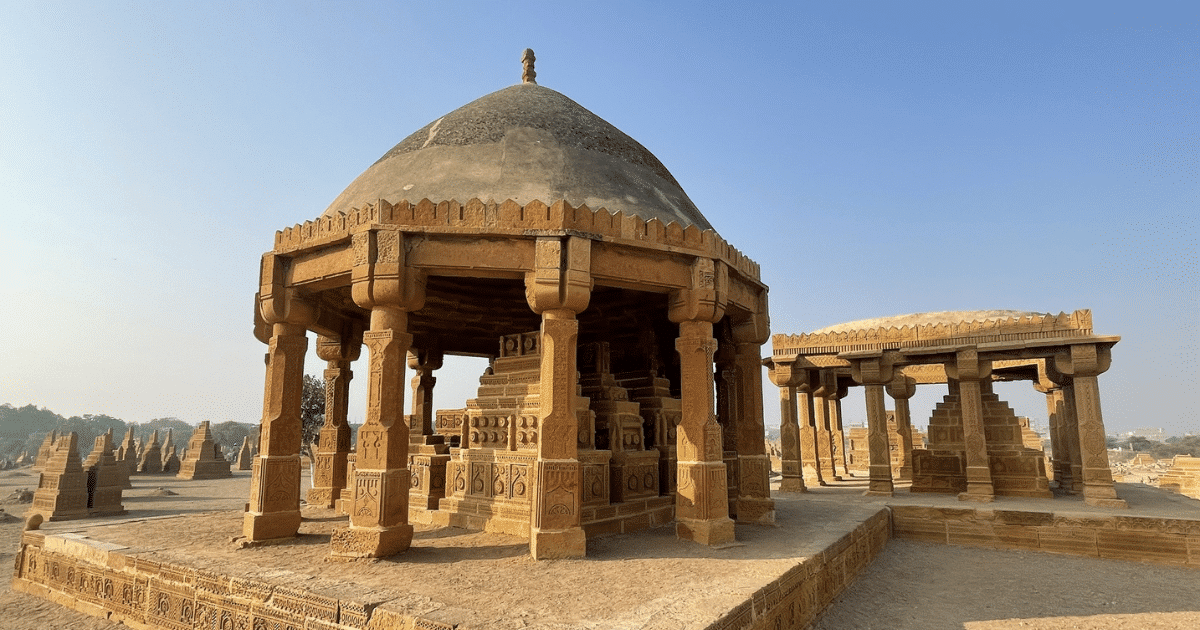




The country of Pakistan has its share of historical wonders, and one of the most intriguing yet less known of them lies in the country of Pakistan, the Makli Necropolis in the province of Sindh. This was one of the largest graves in the world, and situated close to the ancient city of Thatta, it has been acclaimed a UNESCO World Heritage Site. Makli, in an over 10 square km area, is no graveyard but a stone city that narrates the story of kings, queens, saints, scholars, and warriors who lived hundreds of years ago. Makli has stunningly carved tombs from 1st century, and it is a silent witness to the richness of culture and spirituality of Pakistani history. It is the 11th largest graveyard of the world.
History of Makli Necropolis
Makli Necropolis has a history of more than 700 years back beginning in the 14th century when the Samma dynasty existed and Thatta was a prosperous political and cultural capital of Sindh. The site is thought to have started as a mere burial ground outside the shrine of Sufi saint Shaikh Hamad Jamali, whose spiritual stature won adherents and supporters among rulers. With time, Makli became the graveyard of kings, nobles, saints, and ordinary people such and it has turned out to be a city of the dead.
Over the centuries, the necropolis had retained the shape and splendor of its own style and was added to by various rulers, the Arghuns, Tarkhans, the Mughals, and others. Makli boasts anywhere between half a million to a million graves and is considered to be one of the largest cemeteries in the world today. The legacy created by each period took the form of different architectural designs and artistic elements, and complex carvings, making Makli no ordinary graveyard but a living museum of the multifaceted history of Sindh.
You May Like To Read: Army Chief Rejects Leadership Rumors, Affirms Commitment to Stability and Balanced Diplomacy
Building Wonders, and Art Designs
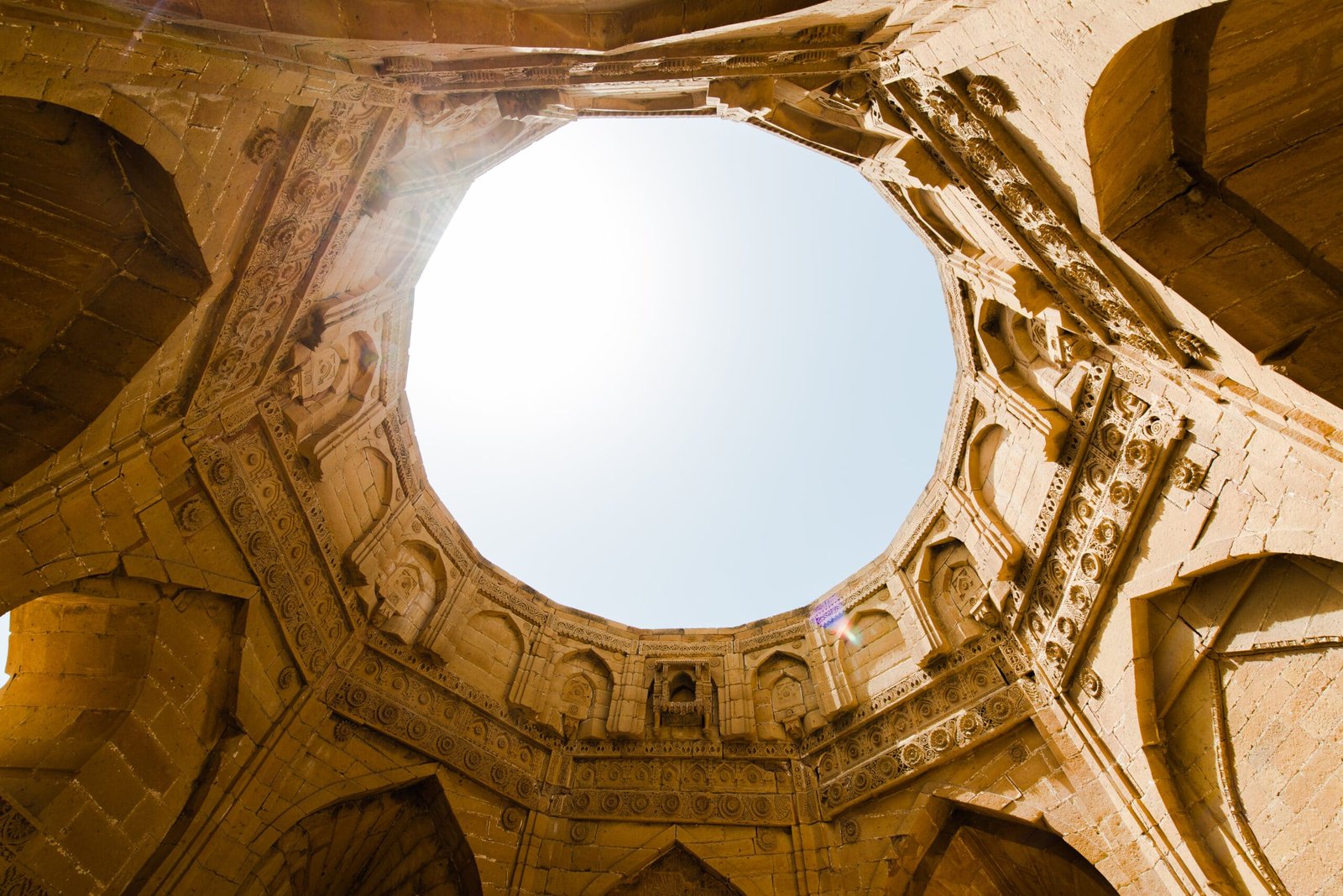
Makli Necropolis is a spectacular display of architectural beauty and the prowess of artisans. Its tombs and mausoleums are characterized by a rare fusion of Islamic, Persian, Mughal, and Hindu, because of various cultural interactions experienced in Sindh over many centuries. Numerous buildings are made out of carved yellow sandstones with the light carvings of flower fascinations, circular patterns, and Quranic gravings. Those carvings are so accurate that hundreds of years after their creation, they still amaze visitors and historians, admiring them with their beauty.
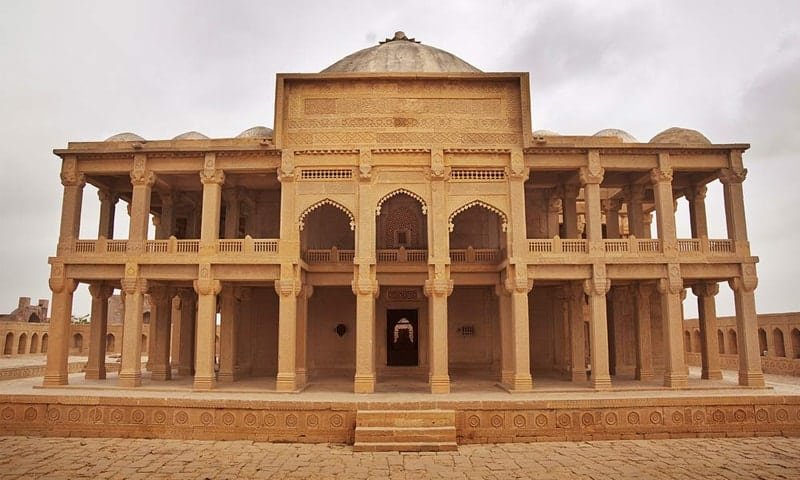
The tomb of ruler Jam Nizamuddin II of the Samma dynasty is one of the most famous monuments of the Makli due to the overall symmetry and precision in stone work. Tomb Isa Khan Tarkhan the Younger is bright because of namely ornamental blue and turquoise honeycomb tiles, which shine in the sun of Sindh, although centuries have passed. Not as large and indeed smaller, although just as beautiful, are the graves of the saints and scholars; these are also taken care of by poetic verses in stone, quietly reminding visitors about the rich spiritual heritage of the area.
The design variation also narrates the rules of a changing world. Although some of the tombs are simple and small, with others being grand and monumental, they display the social stratification and strength of the ancestor buried in the tomb. The application of domes and arches, and minarets, caters to the changing forms of architecture of its era, making Makli an open-air museum featuring the medieval art of Pakistan. Its structures, both damaged and in good shape, talk of the skill, dedication, and pride of its builders.
Cultural, and Spiritual Significance
Since time immemorial, Makli Necropolis has been more than a graveyard; it is a shrine entwined with the spiritual life of Sindh. Throughout the centuries, it was linked to saints and mystics, as well as scholars whose doctrines defined the culture of the region. The site was visited by pilgrims all over Sindh and more distant places (P. 5). People would come on a spiritual pilgrimage to get spiritual guidance and blessings at the graves of venerable spiritual masters. Makli The mausoleum of Shaikh Hamad Jamali is considered the spiritual cornerstone of Makli and to this day remains an important part of local custom as the symbol of peace, humility, and devoutness.
Makli was also a significant learning and contemplation centre because of this spiritual connection. Not all the people buried here were just rulers and nobles, because there were poets, teachers, and religious scholars who left wisdom that they left behind. The combination of the aesthetic beauty and the spiritual purpose of the tombs in Makli exemplifies how Sindh related faith and culture in its life in the Middle Ages. The place exists even nowadays, being reminiscent of how much the region values knowledge, spirituality, and the eternal soul search.
You May Like To Read: International Media Bias: How to Strengthen Pakistan’s Global Voice
Makli Today
With time, the majesty of the Makli Necropolis has braved the cold, hard blow of nature and neglect. Wind, rain, and sea air have eroded many tombs after many centuries, and human activities like vandalism, the uncontrolled tourism sector, and urban incursion have further destroyed the site. Although it became a UNESCO World Heritage Site in 1981, preservation has been scarce and is always in place at times. The delicate carvings of stones, which were sharp and detailed, are wearing off, and some of the monuments are threatened with demise unless a quick restoration is implemented.
Nonetheless, Makli has not been forgotten. More recently, the Department of Archaeology and Museums of Pakistan, with the help of international organizations and experts on heritage, has made an effort in documenting and partly restoring some of the important tombs. The necropolis is also getting a new light as historians, architects, and photographers cast their attention on the value of the necropolis as a cultural asset, as well as heritage tourism. When maintained with care, it could be one source of learning and education to be used as a tourist attraction spot, modeling future generations by maintaining evidence of the prosperity that Pakistan once had. Today, we can stand between its silent tombs and still hear the echoes of the past as a reminder that the empires may end, but stories live on stone.