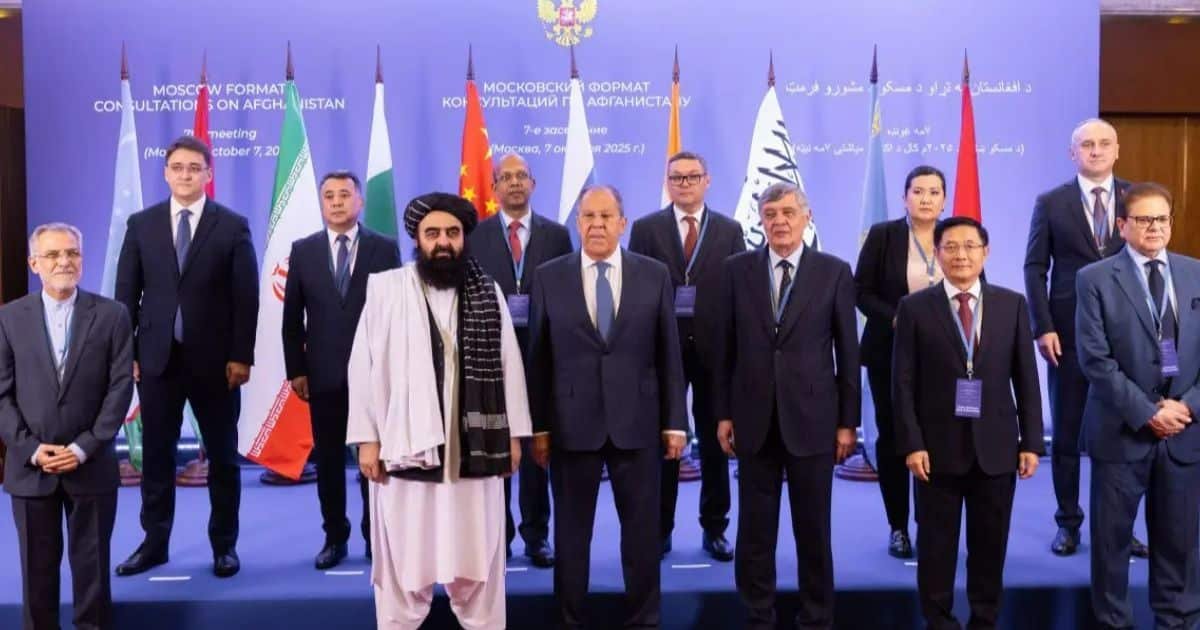


The Moscow Format Consultations on Afghanistan concluded today with a strong, unified message from ten influential regional countries, including China, Russia, Iran, India, and Pakistan, opposing any attempt by external actors to re-establish military infrastructure in Afghanistan or its neighboring states.
The joint statement, issued after deliberations attended by special representatives and senior officials, declared as “unacceptable the attempts by countries to deploy their military infrastructure in Afghanistan and neighbouring states,” noting that such actions would undermine regional peace and stability. This collective position follows recent statements by U.S. President Donald Trump regarding the potential retaking of the strategically vital Bagram Airbase.
The Foreign Minister of Afghanistan:
“We will not accept any foreign presence on our soil, and we welcome Russia’s recognition of the Islamic Emirate of Afghanistan.” pic.twitter.com/vY5YEMQcgD
— W.A. Mubariz – وکیل احمد مبارز (@WakeelMubariz) October 8, 2025
Pakistan Stresses Counter-Terrorism Priority
Ambassador Muhammad Sadiq, representing Pakistan, utilized the closed-door session to forcefully raise the critical issue of cross-border terrorism. Pakistan reaffirmed its commitment to a peaceful and secure Afghanistan, emphasizing the urgent need for collective regional efforts to effectively counter terrorism and dismantle all terrorist groups operating from Afghan soil.
Ambassador Sadiq highlighted the necessity of strengthening regional cooperation in political, economic, counter-terrorism, and anti-drug collaboration to ensure lasting peace and stability.
You May Like To Read: Government’s Strategy to Control Inflation and Its Impact on Everyday Life
Afghan Participation and Focus on Economic Recovery
In a significant development, the Afghan delegation, led by Foreign Minister Amir Khan Mottaqi, participated in the deliberations for the first time as a full member of the Moscow Format. Participants reaffirmed their unwavering support for a sovereign, united, and peaceful Afghan state.
The regional powers called on the international community to intensify humanitarian assistance while simultaneously focusing on Afghanistan’s economic recovery. They supported the active integration of Afghanistan into the system of regional connectivity and urged countries deemed responsible for the current predicament to fulfill their commitments to Afghanistan’s future development.
Enhanced Bilateral Cooperation
On the sidelines of the consultations, Ambassador Sadiq held a constructive and in-depth 90-minute meeting with Afghan Foreign Minister Mottaqi. The engagement focused on advancing bilateral cooperation across key areas, including economic cooperation, trade, transit, and regional security.
Both sides underscored the importance of enhanced regional connectivity and agreed to explore practical measures to facilitate trade and transit, including streamlined customs procedures and improved infrastructure links. Discussions also covered the current security situation and the need for sustained dialogue and collaboration to address shared security concerns, ensuring the safety of transport routes and cross-border commerce.
You May Like To Read: Social Media and the Gen-Z Revolt: How Digital Networks Fueled Nepal’s Protests