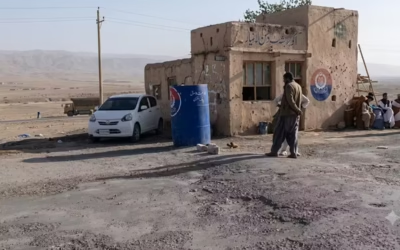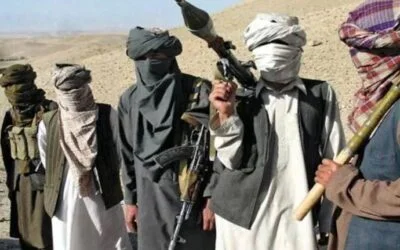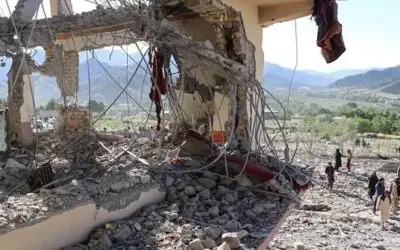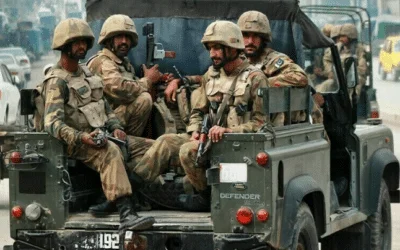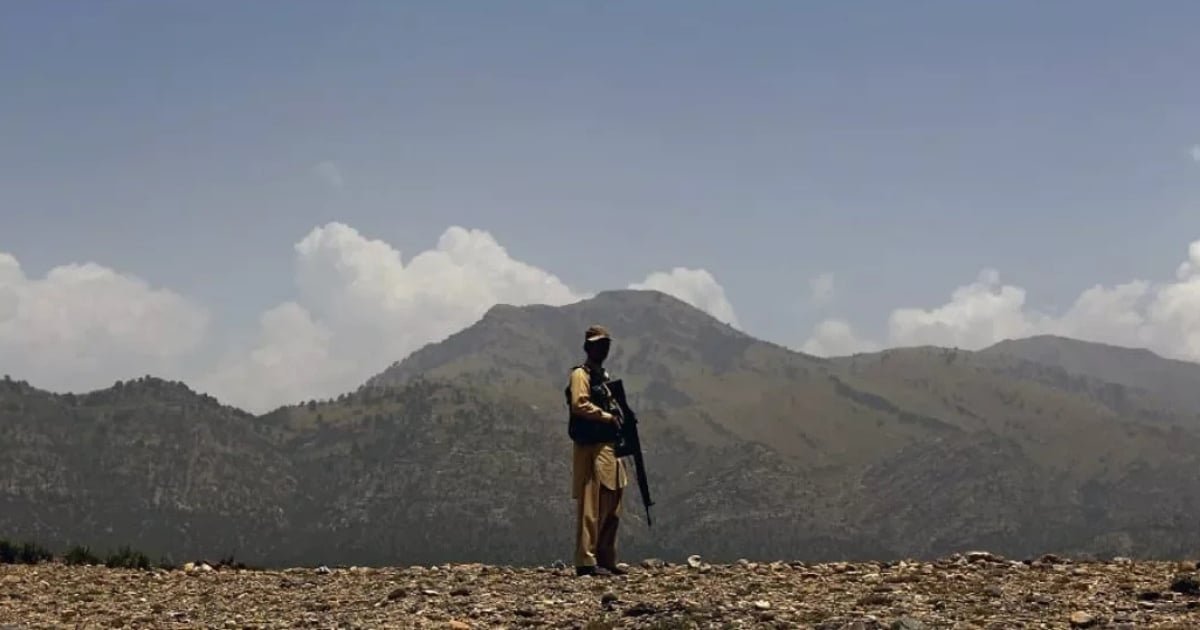


Fitna-al-Khawarij (FAK) markets its project as an “Islamic” alternative to Pakistan’s constitutional order—promising swift justice, security, and moral clarity. The record in areas it has controlled or influenced tells a different story. Across former FATA districts and parts of Khyber Pakhtunkhwa (KP), the group’s rule has been defined by coercive taxation (extortion), arbitrary edicts, attacks on education—especially for girls—and the hollowing out of basic services. Far from delivering justice, the FAK’s model reliably produces displacement, underdevelopment, and chronic fear.
Governance, or Racketeering by Another Name
In lieu of a rules-bound fiscal state, the FAK substitutes threat-backed “taxes.” Demands delivered by phone, messenger, or armed emissaries are framed as religious dues but function as protection money. Traders, contractors, and diaspora families have been targeted; refusal risks violence. Investigative work has documented how extortion calls—often from Afghan numbers—terrorize markets in Peshawar and elsewhere, shrinking investment and embedding a climate of impunity. The group’s own financing doctrine leans on diversified revenue streams anchored in coercive rent-seeking.
This is not taxation that funds schools, clinics, or courts. It is predation that crowds out lawful enterprise. Businesses internalize the “FAK surcharge” as a cost of survival, informality expands, and local administrations—already resource-starved—lose both authority and revenue.
‘Islamic Justice’ Without Due Process
The FAK’s claim to deliver swift, Sharia-based justice collapses under scrutiny. In practice, “courts” are opaque, unreviewable, and enforced by fear, not law. International crisis mapping of the insurgency years in FATA shows how Taliban-style rule dismantled customary and statutory dispute resolution, replacing it with edicts backed by targeted killings and intimidation. The effect was a justice vacuum—arbitrary punishments without appeal—and the evisceration of any social contract between governed and governors.
Systematic Attacks on Education—Especially for Girls
FAK-linked violence against schools and educators has a long, bitter record—from Swat to the tribal belt. The 2012 attack on Malala Yousafzai was emblematic of a broader campaign against girls’ education, teachers, and secular curricula. The chilling effect is measurable: families withdraw daughters, female teachers flee, and communities normalize early dropout as a safety strategy. While the Afghan Taliban’s nationwide ban on girls’ secondary education is a distinct context, it clarifies the ideological commonalities that underpin the FAK’s own hostility to modern schooling and women’s public participation. Societies that suppress half their population’s human capital cannot plausibly promise development.
The Taliban’s Minister of Education says that girls’ schools are likely to remain closed permanently. After the initial ban, there was hope they might reopen, but that hope is now gone. They lied. The Taliban haven’t changed and remain the same fanatics they were. pic.twitter.com/CNpCkEhHK3
— Habib Khan (@HabibKhanT) August 25, 2024
Displacement as a Development Trap
Where the FAK entrenched itself, mass flight followed. During the peak conflict years, millions were displaced from FATA/KP—an upheaval that destroyed livelihoods, severed schooling, and overloaded host communities. Even as returns began years later, many families faced ruined infrastructure, contested property, and trauma. Protracted internal displacement is a development time bomb: it depresses local investment, interrupts health and education outcomes for a generation, and entrenches poverty that outlasts the fighting. These long tails of harm are the true legacy of the FAK’s “governance.”
Public Services: The State Retreats, the Strongman Arrives
The FAK does not build grids, staff clinics, or maintain roads; it exploits them. Once state workers are threatened or assassinated, service provision collapses. Water systems and rural health centers become intermittent or shuttered; vaccination drives stall; judicial and policing functions atrophy. The group’s propaganda recasts this implosion as a return to “pure” order, but the lived reality is darker: fewer teachers, fewer nurses, fewer engineers—and a political economy where young men are pulled into armed patronage instead of skilled employment. This pattern has been documented for years across the tribal belt and mirrors dynamics seen under Taliban-style rule elsewhere.
Human Rights: Fear as Policy
Beheadings, public floggings, and assassinations are not collateral; they are instruments of rule. Human rights monitors chronicled the FAK’s deliberate targeting of civilians, the use of human shields, and the coercion of communities to enforce edicts. The predictable consequence is civic shrinkage: women and minorities recede from public life; journalists and lawyers exit; local civil society dissolves. Once plural voices vanish, rumor outcompetes reporting and armed decree stands in for deliberation—further degrading any prospect of accountable governance.
Regional Spillovers and Strategic Reality
Security assessments underscore that the FAK is operationally distinct from—but ideologically aligned with—the Afghan Taliban. That alignment matters: sanctuary, cross-border facilitation, and rhetorical validation complicate Pakistan’s stabilization of border districts. For communities, the distinction is academic; what they experience are the daily costs of insurgent “rule”: extortion, school closures, and fear.
You May Like To Read:
- Jaffar Express Derails in Mastung District Following Railway Track Blast
- Pakistan and U.S. Reaffirm Commitment to Counterterrorism in Islamabad Dialogue
- Majeed Brigade Declared Foreign Terrorists | Pakistan’s Southwest to the U.S. Watchlist
The Counter-Narrative: What Actually Works
A credible alternative to the FAK’s mirage rests on three pillars:
- Rule-of-law services, not only force. Security operations can clear space, but only functioning courts, policing, and civil registries can hold it. Investments must prioritize district-level justice and dispute resolution accessible to women and the poor.
- Human capital first. Rebuilding girls’ secondary education and teacher security is non-negotiable; scholarships, safe-transport schemes, and female-teacher recruitment are development multipliers that directly undercut extremist appeal.
- Squeeze the extortion economy. Targeted financial intelligence, protection for complainants, and trader-security compacts reduce the FAK’s cash flow and restore market confidence. Publicly tracking extortion hotspots—down to bazaar level—creates deterrence and trust.
Bottom Line
The FAK’s “Islamic Emirate” is a branding exercise that repackages coercion as justice and plunder as taxation. Where it prevails, schools shutter, families flee, clinics go dark, and enterprise withers. The development ledger is unambiguous: the group’s governance is a blueprint for underdevelopment. Pakistan’s policy response must therefore measure success not only in cleared valleys or neutralized cells, but in reopened schools, revived local courts, and markets that can operate without paying a gunman’s tithe. Anything less leaves space for the mirage to return—along with the chaos it conceals.