




In recent years, extremist organisations such as ISIS (also known as Daesh), Al‑Qaeda and its regional affiliates like Islamic State – Khorasan Province (ISKP) have abused the name of Islam in order to legitimise violence, recruit disillusioned youth and further power-political agendas. Their tactics combine twisted scriptural interpretation, emotional propaganda and exploitation of social grievances. While cloaked in religious language, these narratives diverge sharply from Islamic theology and ethics. In Pakistan and beyond, the damage is two-fold: innocent lives lost, and Islam’s reputation among global audiences undermined.
Ideological Manipulation, and Selective Scripture
Extremists often begin by cherry-picking Qur’anic verses or Hadiths out of context to create a narrative of existential struggle. For example, ISIS and related groups have claimed that Muslims are under siege and that only armed jihad offers salvation, a reading far removed from the predominant Islamic teaching of peace, mercy and justice. According to a recent report by the Wilson Center on ISIS’s religious-freedom abuses, ISIS forced conversions, destroyed shrines, imposed harsh punishments on minority faiths, and rewrote school curricula, actions clearly contrary to mainstream Islamic ethics.
In South Asia the ISKP has employed a Takfiri ideology, declaring other Muslims “apostates” and thus legitimate targets of violence. In Pakistan’s Balochistan province the ISKP has attacked not only minority communities but also Sunni Muslims in government or security agencies, labelling them state-stooges rather than true believers.
You May Like to Read: The Takfiri Contagion: Analyzing the Theological Evolution and Spread of Excommunication Narratives in Pakistan’s Extremist Milieu
By casting themselves as pure guardians of Islam, they manipulate scripture and tradition to validate their own brutality. But Islamic theology does not support unjust violence, collective punishment of innocents or the marginalisation of entire communities. The Prophet Muhammad taught justice, compassion and the sanctity of life, values that these groups flagrantly disregard.
Recruitment through Emotional Propaganda and Social Grievance
Terrorist organisations are skilled at exploiting the vulnerable, youth suffering unemployment, migrants, marginalized communities, those feeling alienated. Research notes that Al‑Qaeda in particular has targeted impoverished and uneducated youth with the message that Islam is under threat and only they can restore it.
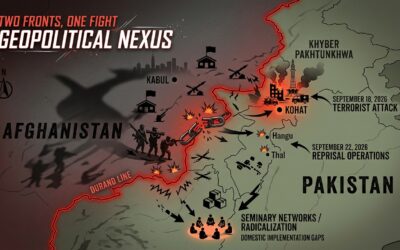
In the Pakistani-Afghan border region the porous frontier, weak governance and long-standing grievances provide fertile ground for radicalisation. The ISKP has built sophisticated media machinery (its “Al-Azaim Media Foundation” produces content in Urdu, Pashto, Uzbek, Farsi and English) to recruit and spread its interpretation of jihad rather than actual scholarship.
Emotional propaganda emphasises victimhood (“Muslims are attacked worldwide”), heroism (“become a mujahid”), and belonging (“join a community that cares for you”). All of this is layered over real grievances, poverty, injustice, exclusion, but then redirected toward violent ends. What starts as social resentment becomes channelled into extremist action.
You May Like to Read: Youth Radicalization in the Digital Age: From Online Propaganda to Real-World Threats in Pakistan
Divergence from Authentic Islamic Ethics
Beyond the manipulation of texts and emotions, the actions of groups like ISIS, Al-Qaeda and ISKP directly contradict Islam’s core ethical foundations. In Islam, warfare is heavily regulated, civilians are protected, scholars emphasise the sanctity of life and emphasise reconciliation, mercy and social justice. The indiscriminate bombings, mass killings, use of children, sectarian targeting and forced conversions carried out by these groups flagrantly violate these principles. For instance, the carefully documented abuses by ISIS against the Yazidis and other minorities were recognised as genocide by a joint UK Parliamentary inquiry.
In Pakistan, the ISKP’s propaganda booklet published in 2025 even lambasted other militant groups as hypocrites: it accused the Tehreek‑e‑Taliban Pakistan (TTP) and the Afghan Taliban of failing to truly implement “shariah” as conceived by ISKP. This ideological purity test is itself at odds with mainstream Islam, which emphasises the diversity of opinion in jurisprudence and scholars historically caution against takfirism, the practice of declaring other Muslims non-believers.
You May Like to Read: Reclaiming the Narrative: Islamic Scholars’ Counter-Ideological Campaign Against the ‘Khawarij’ Label for Modern Terrorist Groups
Harm to Global Perceptions of Islam and Muslim Communities
The consequences of this hijacking of faith extend beyond the immediate victims of terror. For Pakistan and the broader Muslim world, the association of Islam with violence undermines community trust, fuels Islamophobia, and complicates inter-religious relations. The majority of Muslims reject extremist ideology, yet the media spectacle generated by high-profile attacks often conflates Islam with terrorism.
In Pakistan, this external perception can impact tourism, foreign investment and diplomatic standing. Domestically, it burdens moderate scholars and communities with the task of constant denunciation and religious clarification. At the same time, the damage to Islam’s moral authority is profound: when violent actors self-identify as “Islamic State”, “Caliphate”, or “Defenders of Islam”, they force mainstream Islam to respond defensively, rather than proactively generating its historic message of peace, social justice, and inter-faith respect.
Conclusion
At its core, the exploitation of Islam by extremist groups is an ideological deception. They misquote scripture, weaponise social grievances and replace religious ethics with violent power politics. While these groups promise a pure, valorised version of Islam, their real agenda is control, coercion and fear. For Pakistan and the world’s Muslims, the task is two-fold: to confront extremist narratives with authentic theological understanding and social efforts, and to reaffirm Islam’s foundational principles of mercy, justice and human dignity. Only then can the hijacking of faith be exposed for what it truly is, a distortion, not a representation, of Islam.