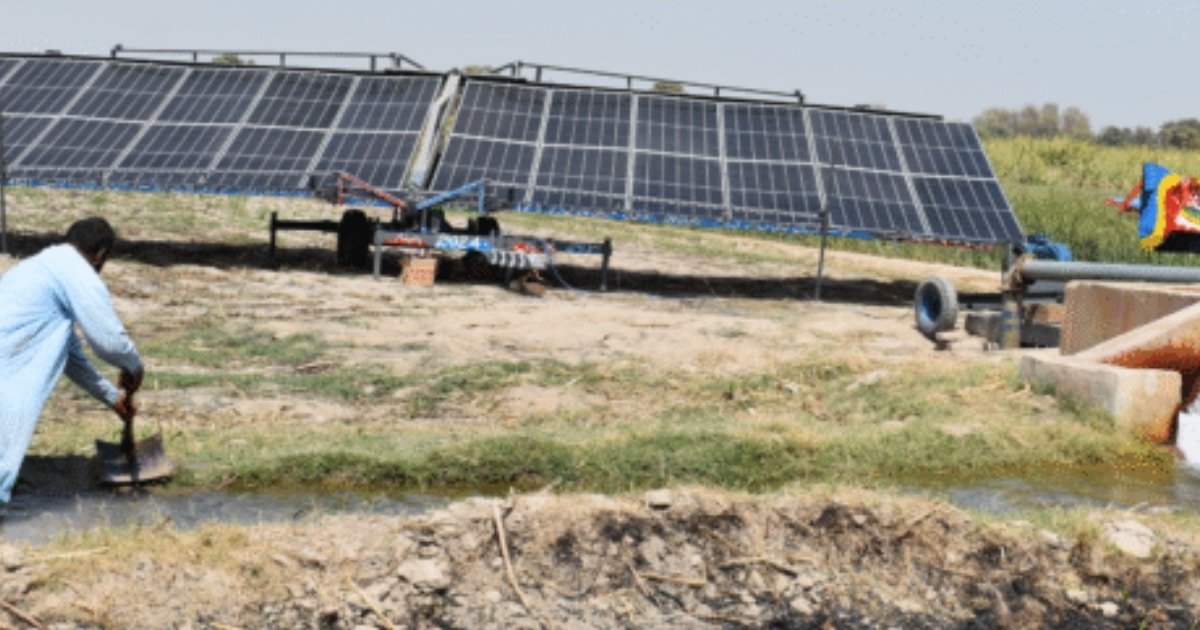




In the remote village of Dasht in southern Balochistan, farmer Karim Baksh no longer worries about rising diesel prices or global energy shocks.
For years, his watermelons depended on a diesel-powered tube well. But after Russia’s invasion of Ukraine in 2022 sent fuel prices soaring, running the pump became unaffordable. Crops suffered and income dropped.
In 2023, Baksh took a bold step — he borrowed 300,000 rupees ($1,075) and installed solar panels beside his field.
Three years later, under the scorching Balochistan sun (where temperatures can hit 51°C), his pump runs on free solar power. “Now, I don’t care if diesel prices increase,” he says with a smile. “As long as the sun shines, I can grow my watermelons.”
Baksh’s story reflects a quiet but powerful transformation unfolding across Pakistan. Faced with unreliable electricity and volatile global fuel prices — made worse by the US-Iran war and disruptions in the Strait of Hormuz — millions of Pakistanis are turning to solar energy.
Since 2018, the rooftop solar boom has helped Pakistan save over $12 billion in fuel imports. The share of solar in the country’s energy mix jumped from 2.9% in 2020 to 32.3% in 2025. Net-metering connections have crossed 280,000 and continue to rise rapidly.
Pakistan’s solar boom has topped 20GW, slashing $12bn in import costs and buffering the country against the Gulf energy crisis. pic.twitter.com/iaOhSjB0gF
— Pakistan TV Digital (@PakistanTVcom) April 8, 2026
In cities like Lahore and Karachi, middle-class families are installing solar systems to slash electricity bills. In rural areas, especially in Balochistan and Punjab, farmers are switching from diesel tube wells to solar-powered ones for reliable irrigation.
However, the shift is uneven. Most beneficiaries are upper-middle and upper-class households or commercial users who can afford the upfront cost. Poorer families often remain dependent on the national grid, which is now partly subsidised by solar users through net-metering arrangements.
A large part of this solar revolution is powered by cheap imports from China, which dominates the global supply chain. While this has reduced Pakistan’s dependence on imported oil and gas, some experts warn it is replacing one form of import dependence with another — this time in technology and equipment.
The government has shown mixed signals: it initially encouraged solar through net-metering and tax relief, but later reduced buyback rates due to concerns over the impact on the power sector’s finances.
Still, for farmers like Karim Baksh, solar has brought stability. As he loads his watermelons onto trucks bound for Turbat and Gwadar, he is already planning to expand — adding more panels and sending his produce to bigger markets in Quetta and Karachi.
In a country vulnerable to global energy crises, simple solar panels on rooftops and farmlands are quietly becoming one of Pakistan’s most effective tools for energy security and resilience.
You May Like To Read: North Korea Conducts Three-Day Weapons Testing Spree Amid Rising Tensions
Check out our latest video: