




For decades, outer space was imagined as a scientific sanctuary, a realm where astronauts represented the “best of humanity” and missions symbolized global cooperation. But in the 21st century, that romanticism is colliding with hard geopolitics and commercial ambition. Satellites now underpin military strategy, private firms run thousands of orbital assets, and lunar mining projects are no longer science fiction. Yet international law has failed to keep pace, leaving outer space a frontier where disputes, crime, and militarization could spiral without clear rules.
The question is no longer whether humanity will militarize and commercialize space. That has already happened. The more urgent question is what kind of legal order—or disorder—will govern it.
From Scientific Exploration to Strategic Asset
The Cold War’s first space race was about prestige, with the U.S. and Soviet Union showcasing technological supremacy. But today’s reality is starkly different. Space infrastructure has become the backbone of civilian life and military operations alike: GPS, weather systems, communication satellites, and reconnaissance platforms are critical for everything from Uber rides to missile targeting.
This dual-use nature makes space assets inherently vulnerable. Anti-satellite (ASAT) tests—conducted by the U.S., China, Russia, and India—demonstrate how easy it is to disable or destroy satellites. Cyberattacks on space systems are equally concerning; even temporary disruptions could cripple economies or armed forces. In this context, militarization is not hypothetical—it is ongoing.
Commercialization: The Rise of Space Tycoons
Parallel to state militarization, commercialization has exploded. Elon Musk’s SpaceX dominates the global launch market, Jeff Bezos’s Blue Origin eyes asteroid mining, and hundreds of startups—from India’s Pixxel to China’s Galactic Energy—are building satellite constellations.
Private actors now own and control critical assets. For instance, SpaceX’s Starlink constellation, used in Ukraine during the Russian invasion, blurred the line between civilian infrastructure and strategic military utility. Decisions by private executives suddenly influence war outcomes, raising accountability questions: Can a CEO deny service in a conflict zone? Should private firms be held liable under international humanitarian law?
Without legal clarity, private space enterprises risk creating a Wild West above Earth, where corporate interests shape geopolitical outcomes.
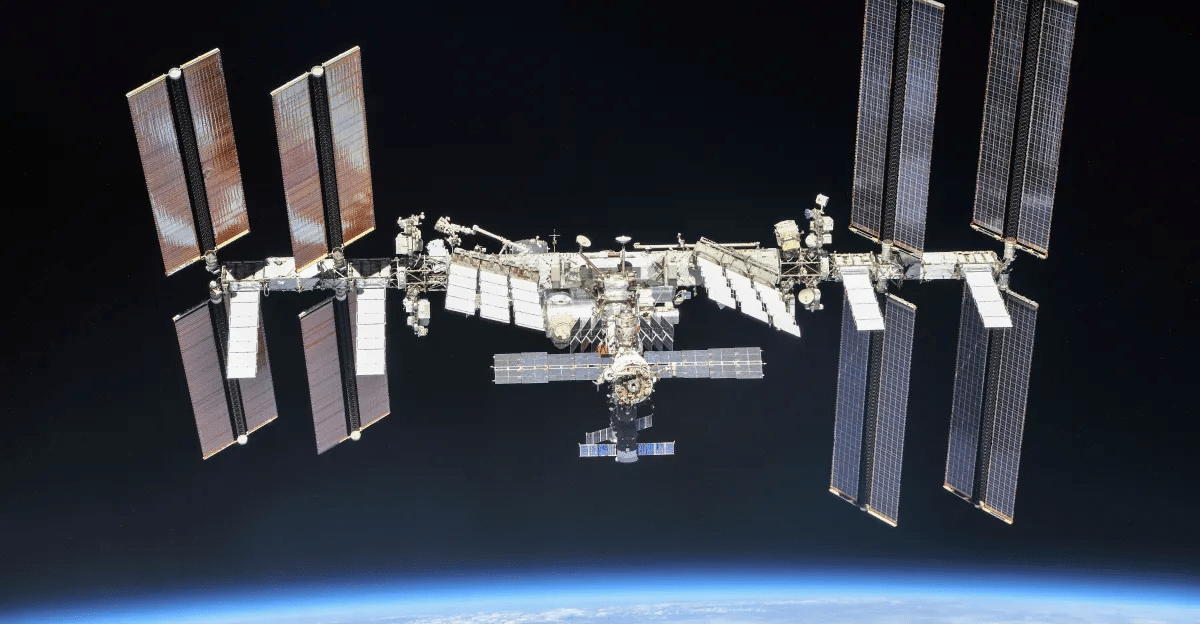
The Legal Vacuum: Old Treaties, New Problems
The 1967 Outer Space Treaty (OST) is the cornerstone of space law. It bans weapons of mass destruction in orbit, prohibits national appropriation of celestial bodies, and declares space the “province of all mankind.” But it leaves vast gaps.
- No clarity on resource ownership: Can companies mine the Moon or asteroids and sell those resources? The U.S. and Luxembourg say yes, passing domestic laws granting such rights. China and Russia disagree.
- No rules for private military contracts in orbit: Unlike Earth, where mercenary laws and conventions exist, outer space has no equivalent.
- Ambiguity on liability: If space debris from a destroyed satellite crashes into another nation’s assets, who pays? The 1972 Liability Convention exists, but enforcement is weak.
Attempts to modernize space law are fractured. The U.S.-led Artemis Accords promote transparency and cooperation but are criticized for entrenching U.S. dominance. China and Russia propose an arms-control treaty for space, but Western powers doubt their sincerity, pointing to their own ASAT programs.
Space Crime: From Piracy to Sabotage
As commercialization grows, so too will criminality. Several scenarios are no longer unthinkable:
- Space piracy: Hijacking or jamming of satellites for ransom.
- Corporate sabotage: Competitors targeting rival satellites through cyberattacks.
- Resource disputes: Private firms clashing over lunar mining zones.
- Jurisdictional confusion: If a crime occurs aboard a commercial space station with multinational crews, which country prosecutes?
Already, space law borrows from maritime law to address jurisdiction. Astronauts are subject to the jurisdiction of their state of nationality. But this framework strains under commercialization. If a Nigerian astronaut aboard a U.S.-operated private station sabotages a Japanese module, who prosecutes? Such legal puzzles remain unresolved.
You May Like To Read: The Silent Frontline: Africa’s Emerging Role in the New Cold War Between the U.S., China, and Russia
Militarization: The Next Battlefield
Space is often called the “fifth domain of warfare,” after land, sea, air, and cyber. The creation of the U.S. Space Force in 2019 and China’s Strategic Support Force reflects this reality. Military doctrines increasingly treat space not as a support function but as a battlefield in its own right.
The danger is escalation. A state-sponsored cyberattack on satellites could trigger retaliation on Earth, blurring lines between space and terrestrial conflict. Meanwhile, space debris created by kinetic ASAT attacks threatens all nations, not just the targeted satellite owner. This makes space security not just a strategic issue but a collective survival problem.
The Future: Toward a “Lawfare” in Orbit
If international law lags, powerful actors will shape norms unilaterally. Already, we see:
- U.S. reliance on Artemis Accords to build a coalition around its interpretation of lunar governance.
- China-Russia lunar station plan as a rival governance structure.
- Private companies testing boundaries, such as declaring ownership over extracted lunar ice.
This norm-setting battle is itself a form of lawfare. Whoever defines the “rules of the road” in space—whether through treaties, soft-law practices, or corporate behavior—will control not just resources but legitimacy.
Who Governs the Final Frontier?
The militarization and commercialization of space ensure that disputes, crime, and lawfare are inevitable. Without comprehensive governance, we risk repeating Earth’s geopolitical rivalries in orbit, magnified by fragile infrastructure and high-stakes assets.
The challenge is urgent: to craft legal frameworks that balance security, commercial ambition, and collective responsibility. Otherwise, the final frontier may not inspire awe but fear—an arena where power, profit, and crime dictate the rules in the absence of law.
You May Like To Read: The Reconfiguration of the Middle East: Post-Gaza Ceasefire Dynamics and the Future of Regional Alliances