



The vast expanse of outer space, once a domain reserved for Cold War superpowers, has re-emerged as a geopolitical arena where the United States, China, India, and a host of private actors are vying for influence. Unlike the early space race of the 1960s, which was largely a bipolar contest between Washington and Moscow, today’s competition is multi-polar, commercialized, and legally ambiguous. The question that looms over the international community is simple but profound: who writes the rules of the new space race?
From Cold War Prestige to Strategic Infrastructure
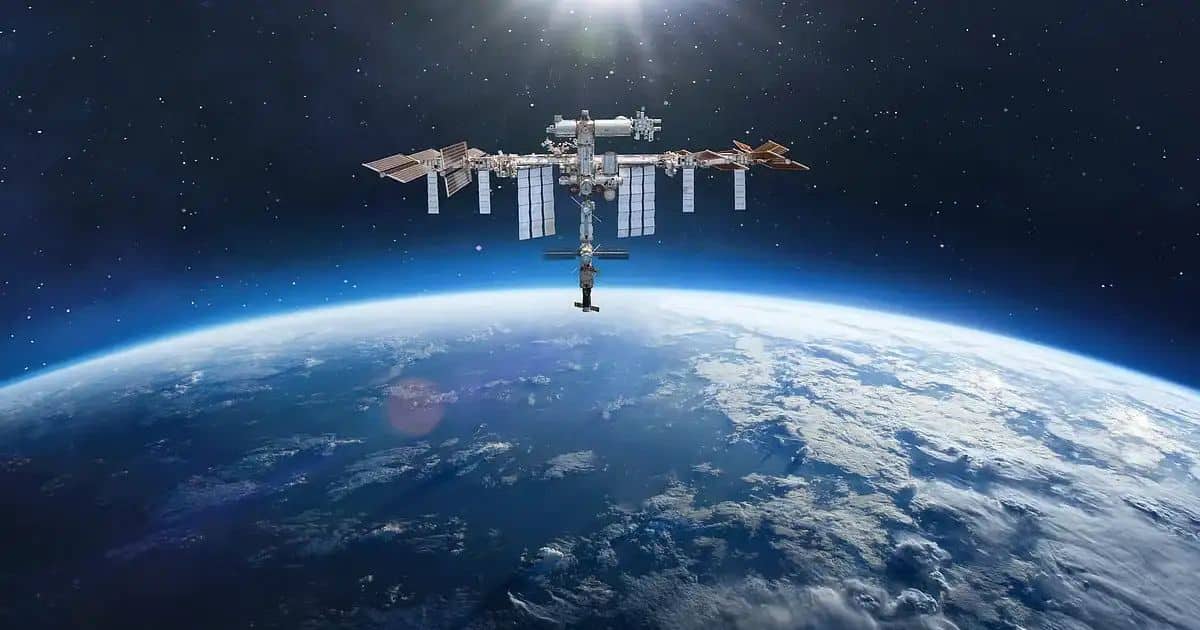
In the mid-20th century, space exploration symbolized national prestige. The Soviet Union’s launch of Sputnik in 1957 and the American Apollo moon landings were not just technological milestones but geopolitical statements. Today, the motivations extend far beyond symbolism. Satellites have become indispensable for global communications, navigation, weather monitoring, and military reconnaissance. In short, space is no longer about bragging rights—it is about infrastructure critical to the global economy and national security.
This redefinition means that the stakes of competition have dramatically increased. Space-based assets are now so vital that they are seen as strategic vulnerabilities. The destruction of a satellite, whether through cyberattacks or anti-satellite (ASAT) weapons, could paralyze military operations or crash financial systems. This has transformed space from a scientific domain into an extension of terrestrial geopolitics.
The U.S.–China Rivalry in Orbit
No rivalry defines the current space contest more clearly than that between the United States and China. Washington maintains the largest satellite fleet in orbit and is the most experienced space power, but Beijing has rapidly closed the gap. China’s Chang’e missions to the moon, its Tianwen-1 Mars rover, and the operational Tiangong space station highlight a trajectory of ambition.
For the U.S., China’s rise is viewed through the prism of strategic competition. Washington fears Beijing could weaponize space or seek to establish dominance over lunar resources. This explains why the U.S. launched the Artemis Accords—a coalition of over 30 countries pledging to cooperate under U.S.-framed norms for lunar exploration and resource extraction. China, however, rejects the Accords and instead partners with Russia to build a rival International Lunar Research Station (ILRS).
This bifurcation risks creating parallel space governance regimes—one led by Washington, the other by Beijing and Moscow—mirroring broader geopolitical fractures.
India and the Aspirations of Emerging Powers
India has positioned itself as a formidable space power, particularly after the success of its Chandrayaan-3 mission, which made it the first nation to land near the moon’s south pole in 2023. New Delhi’s Indian Space Research Organisation (ISRO) has shown remarkable cost-efficiency in space exploration, making it a potential partner for countries priced out of Western programs.
Geopolitically, India straddles multiple alignments. While it collaborates with the United States, Japan, and Australia through the QUAD framework on space situational awareness, it also pursues its independent interests in lunar and planetary exploration. This balancing act makes India both a competitor and a partner, reflecting its broader strategic posture in global affairs.
Other emerging powers, including Japan, South Korea, and the United Arab Emirates, have also launched ambitious missions, underscoring how space has become a crowded and competitive field.
Private Actors and the Commercialization of Space
Unlike the Cold War, today’s space race is not solely state-driven. Companies such as SpaceX, Blue Origin, and Rocket Lab in the West, and state-backed firms in China, are redefining the economics of space access. SpaceX’s reusable Falcon 9 rocket has slashed launch costs, enabling a surge in satellite constellations like Starlink, which itself has geopolitical implications.
Starlink’s role in providing internet to Ukraine during Russia’s war highlights how private assets can become geopolitical tools. Similarly, Jeff Bezos’s Blue Origin and Elon Musk’s Mars colonization plans point toward a future where private entities could wield influence rivaling nation-states. This raises uncomfortable questions: should companies be allowed to extract resources from asteroids or the moon without a clear international regulatory framework?
You May Like To Indonesia Defends Visa Ban on Israeli Athletes as IOC Suspends Future Sporting EventsRead:
A Lawless Arena: The Legal Vacuum in Outer Space
International law has not kept pace with technological realities. The 1967 Outer Space Treaty remains the cornerstone of space governance, prohibiting the placement of weapons of mass destruction in orbit and declaring celestial bodies as the “province of all mankind.” Yet it says little about resource extraction, private ownership, or the militarization of conventional weapons in space.
Attempts to modernize governance have been fragmented. The Artemis Accords aim to create transparency, interoperability, and peaceful exploration, but critics argue they reflect U.S. interests more than universal principles. Meanwhile, China and Russia advocate for a treaty banning the weaponization of space, though skeptics doubt their sincerity given both nations’ ASAT capabilities.
The absence of a universally accepted legal regime means that great powers and private companies are effectively writing the rules through practice, treaties, and bilateral agreements—leaving smaller states marginalized.

Risks of Militarization and Fragmentation
The blurred line between civilian and military space technologies heightens the risk of escalation. Satellite jamming, cyber intrusions, and kinetic ASAT tests—such as India’s Mission Shakti in 2019 or China’s 2007 test that created thousands of debris fragments—illustrate the potential dangers. The proliferation of debris not only threatens current assets but also the long-term sustainability of space activities.
Moreover, if parallel governance regimes solidify—U.S.-led vs. China-Russia-led—space could become another domain of Cold War-style bloc politics. This would undermine cooperation in scientific ventures like planetary defense against asteroids or climate monitoring, where collective action is essential.
The Battle Over Rules, Not Just Rockets
The 21st-century space race is not defined solely by who lands first on Mars or mines lunar ice. It is equally about who establishes the norms, writes the rules, and sets the precedents that govern humanity’s expansion beyond Earth. In this context, space is not a lawless void but a contested legal and political frontier.
Unless the international community develops inclusive, enforceable, and forward-looking frameworks, the risk is clear: space may become yet another theater of rivalry, marked not by the wonder of discovery but by the anxieties of geopolitics.
You May Like To Read: Trump–Xi Summit Expected to Be Tepid Amid Cold War II Tensions