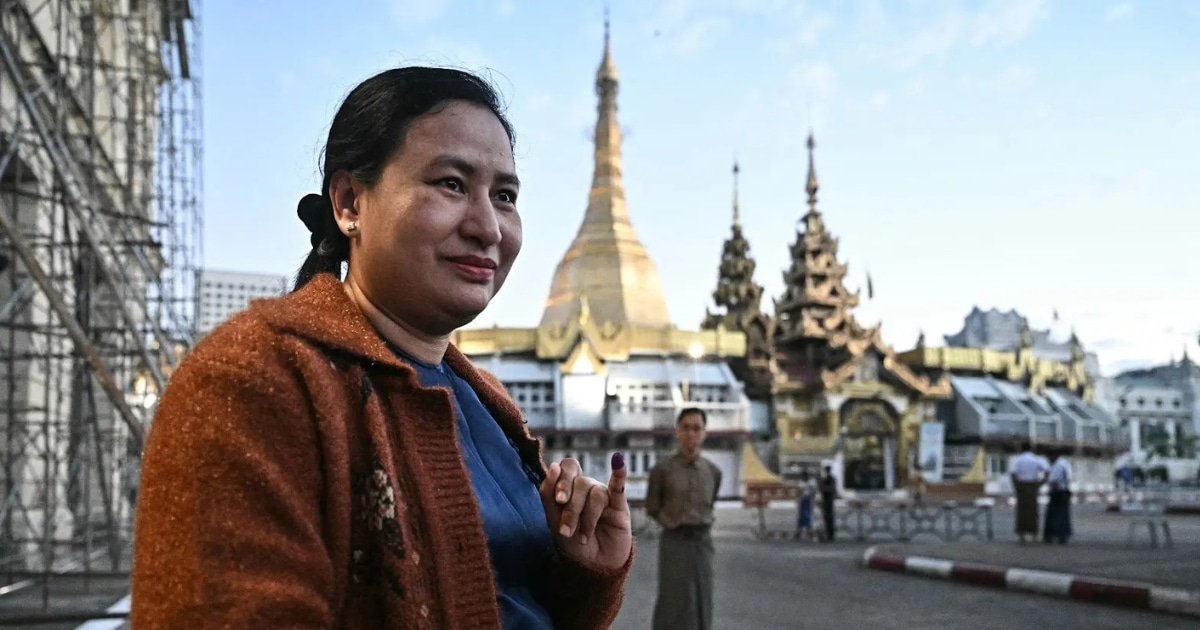


Myanmar’s first general election since the 2021 military coup commenced on Sunday under a heavy security presence and widespread international condemnation. Despite the ruling junta’s claims that the three-phase vote will bring “political stability,” reports from major urban centers indicate a starkly low voter turnout compared to previous democratic cycles.
URGENT:
Tom Andrews @RapporteurUn urges governments to reject sham polls in #Myanmar as junta ratchets up coercion of citizens to vote. Warns election starting 28 December is engineered to manufacture a façade of legitimacy. pic.twitter.com/OsTeXKpRCt— UN Special Procedures (@UN_SPExperts) December 28, 2025
A Contested Mandate
The election, which excludes the now-dissolved National League for Democracy (NLD) and its detained leader, Nobel laureate Aung San Suu Kyi, has been characterized by human rights groups and Western nations as a “sham exercise.”
Key Developments from Phase 1
- Widespread Boycotts: In conflict-affected regions like Chin State, streets remained empty following boycott calls by local resistance groups. Residents in Yangon and Mandalay reported a lack of the “energy and excitement” seen in the 2015 and 2020 polls.
- Military Dominance: The military-aligned Union Solidarity and Development Party (USDP) is fielding candidates for nearly 20% of all seats, facing little to no viable opposition.
- Phased Schedule: While the first phase took place on December 28, subsequent rounds are scheduled for January 11 and January 25, 2026, covering 265 of the country’s 330 townships.
International Rejection
Tom Andrews, the United Nations Special Envoy for human rights in Myanmar, issued a sharp rebuke on Sunday, stating that the election is “not a pathway out of the country’s crisis” and urged the international community to reject the results.
In contrast, junta spokesman Zaw Min Tun defended the process, asserting that the polls would lead to a “better future.” Junta chief Min Aung Hlaing, seen voting in civilian attire in Naypyitaw, remained non-committal when asked about his presidential ambitions, citing the parliamentary process for selection.
You May Like To Read: Pakistan Joins OIC, and Rejects Israel’s Recognition of Somaliland
Statistical Context
Historical data from the International Foundation for Electoral Systems (IFES) noted a 70% turnout in the 2015 and 2020 elections. Preliminary observations from Sunday suggest that current participation is a mere fraction of those figures. With no minimum turnout requirement in the junta’s legal framework, the USDP is expected to claim victory despite the lack of public engagement.
The international community continues to monitor the situation, with the United States signaling it will not recognize the legitimacy of the military-controlled government.