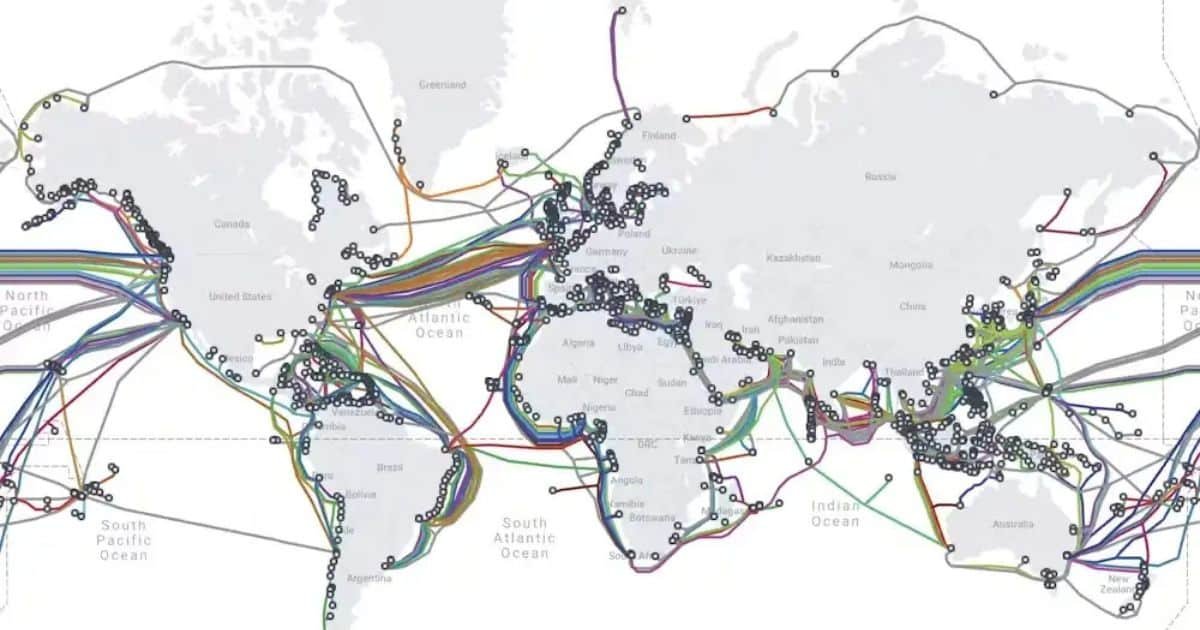




When most people think of global security, they picture military bases, fighter jets, or cyberwarfare. Yet, the true arteries of the modern world lie beneath the oceans: undersea fiber-optic cables. Carrying more than 95% of all international internet traffic, these cables form the backbone of global finance, communication, and intelligence exchange. In recent years, they have quietly transformed from mere infrastructure into a contested geopolitical frontier — where states, corporations, and even covert actors compete for control.
The Strategic Value of Cables
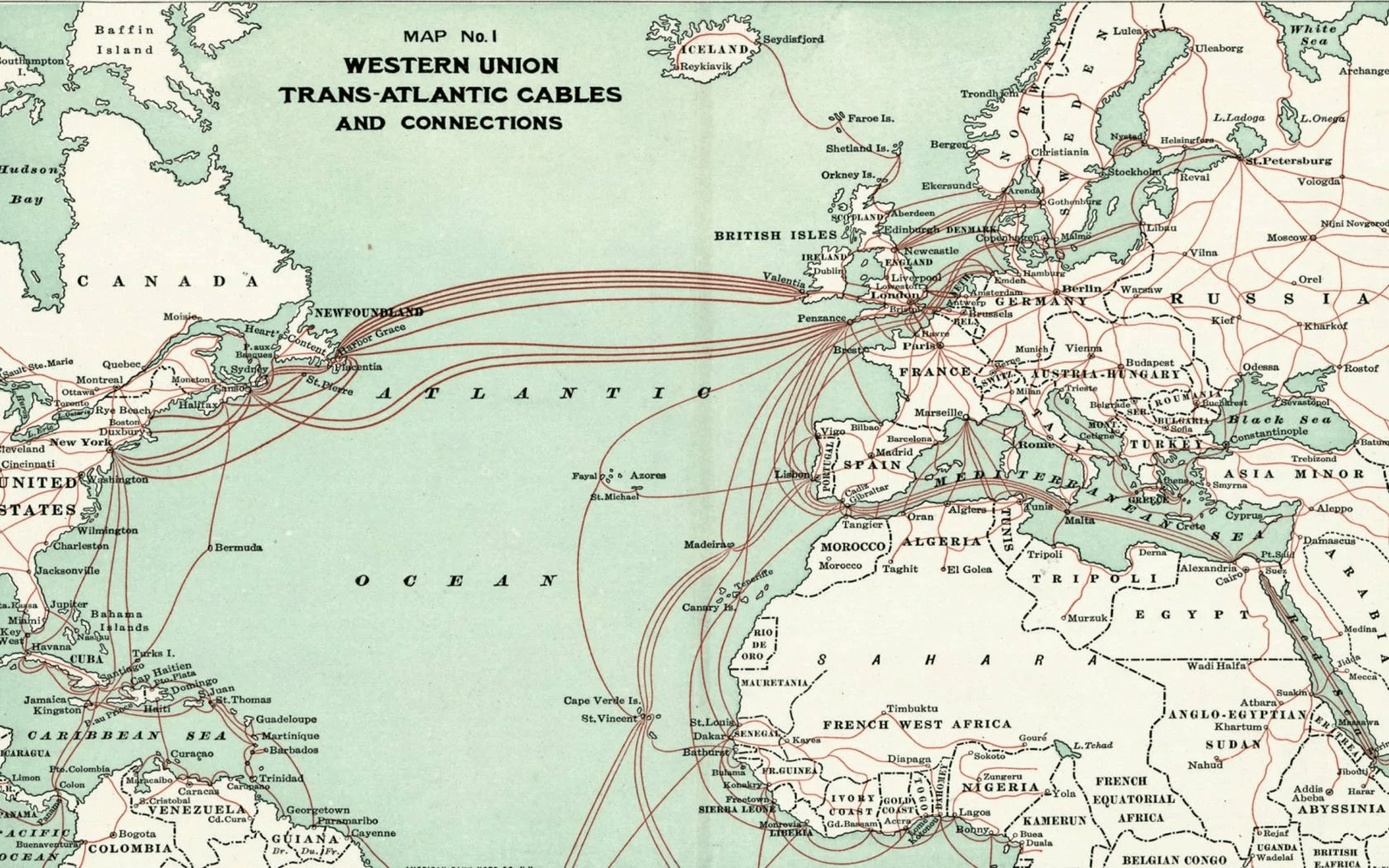
The world’s 1.4 million kilometers of undersea cables connect continents and power nearly every digital interaction. Financial transactions, military coordination, cloud computing, and video calls all rely on them. Unlike satellites, which handle only a fraction of data flows, cables are cheaper, faster, and more reliable. This makes them a single point of systemic vulnerability — an invisible asset whose compromise can disrupt economies and even paralyze states.
For decades, these networks were treated as apolitical infrastructure built through commercial partnerships between telecom firms. Today, however, their strategic role has placed them at the intersection of national security and great power competition.
Great Power Rivalries Beneath the Waves
The U.S.–China Contest
The United States and its allies increasingly view cable infrastructure through a security lens, wary of Chinese firms like Huawei Marine Networks participating in cable-laying consortia. Concerns over surveillance, backdoors, and dependency have already led Washington to block certain projects that would have directly connected Asia with the U.S. via Chinese-built lines.
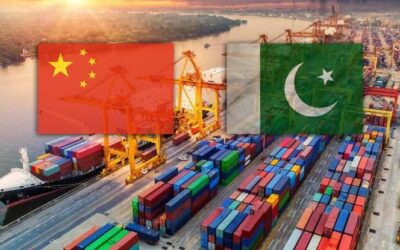
China, for its part, sees cable networks as essential for its Digital Silk Road, complementing its Belt and Road Initiative. By building and financing cable routes across Africa, the Pacific, and the Middle East, Beijing is extending both economic influence and potential leverage in times of crisis.
Russia’s Silent Capabilities
Russia has drawn attention for its fleet of specialized vessels suspected of mapping and potentially tapping or sabotaging cables in the North Atlantic. NATO has repeatedly warned that Russian activities in these waters signal an intent to hold Western digital lifelines at risk. Given how much NATO’s military logistics rely on digital networks, cable disruption is increasingly recognized as a potential act of hybrid warfare.
Vulnerabilities and Precedents
Cables are fragile — typically no thicker than a garden hose — and lie exposed on the ocean floor. While most damage comes from fishing trawlers or earthquakes, deliberate sabotage is not hypothetical.
- In 2017, multiple cables near Somalia were severed, disrupting internet access for weeks.
- In 2022, two undersea cables linking Shetland and the Faroe Islands to mainland Scotland were cut in quick succession, sparking speculation of deliberate tampering.
- The Nord Stream pipeline sabotage in 2022 highlighted the vulnerability of undersea infrastructure more broadly, with Western intelligence warning cables could be next.
The concern is not just physical severing but also covert tapping. The U.S. National Security Agency (NSA) has long been rumored to intercept data via undersea networks, while other intelligence services have likely pursued similar operations.
Private Companies as Geopolitical Actors
Unlike traditional defense assets, cables are largely owned and operated by private consortia. Technology giants like Google, Meta, and Microsoft have become key players, financing and controlling major routes such as the transatlantic “MAREA” cable. This raises complex questions: Should private corporations hold such strategic control over infrastructure that underpins global defense and commerce?
Governments have responded by tightening regulations. The U.S. has enhanced oversight of foreign participation in cable projects, while the European Union has begun mapping critical routes for better monitoring. Yet, the blurred lines between corporate ownership and national interest remain a fundamental challenge.
Securing the Invisible Battlefield
Securing cables is inherently difficult. They traverse international waters, run across politically unstable regions, and require massive investment to monitor. Unlike airspace or territorial waters, there is no robust international legal framework to govern protection. UNCLOS (United Nations Convention on the Law of the Sea) offers only limited safeguards, and enforcement is weak.
In response, states are increasingly militarizing their approach:
- NATO established a dedicated Undersea Infrastructure Coordination Cell in 2023 to monitor threats.
- The UK Royal Navy commissioned the multi-role vessel RFA Proteus, equipped to patrol and protect cables in the North Atlantic.
- The U.S. Navy and its allies are expanding cooperation on seabed warfare, treating it as a distinct operational domain.
These measures reflect a growing recognition: control over data cables may become as strategically important in the 21st century as control over oil shipping lanes was in the 20th.
You May Like To Read: Trump Reasserts Claim That India Plans to Reduce Russian Oil Imports
The Next Frontier: Data Sovereignty and Cybersecurity
Beyond sabotage, the governance of undersea cables raises issues of data sovereignty. If a cable is financed, built, or controlled by a rival state or corporation, does it compromise national autonomy? Does traffic passing through such lines become vulnerable to foreign surveillance?
Cybersecurity experts warn that even without physical interference, cables can be targeted by malware at landing stations or manipulated by rerouting traffic through jurisdictions with weaker oversight. This adds a new layer of complexity to debates about digital sovereignty and supply-chain security.
A Battle Out of Sight
As the digital economy becomes inseparable from national defense, undersea cables have shifted from being mere commercial utilities to geostrategic assets. Their vulnerability to sabotage, espionage, and geopolitical competition makes them one of the most critical yet under-discussed arenas of global rivalry.
Much like space in the Cold War, the seabed has become an unseen battleground — where power is asserted not through tanks or missiles, but through control over the very veins of the digital world. The next great crisis in international security may not erupt on land or in cyberspace, but deep under the oceans, where the world’s data quietly flows in the shadows.
You May Like To Read: Trump–Xi Summit Expected to Be Tepid Amid Cold War II Tensions