The Illusion of Stability: Eight Decades After WWII
Since the end of World War II in 1945, the global community believed it had entered an era where another devastating global war would be nearly impossible. The world’s leading powers established institutions such as the United Nations, promoted international law, and maintained nuclear deterrence to prevent major interstate wars. For generations, scholars and policymakers spoke of a “long peace,” a period in which direct conflict between great powers was seen as increasingly unlikely. Nuclear weapons, especially after the cataclysmic bombings of Hiroshima and Nagasaki, were treated as the ultimate guarantee of peace through what analysts called “mutually assured destruction.” But the year 2025 has challenged this complacent belief. The latest Global Peace Index (GPI) shows global peacefulness at its lowest since World War II, with record numbers of conflicts and escalating tensions between major and middle powers.
A World With More Wars, Not Fewer
The GPI 2025 reports that there were 59 active state‑based conflicts in 2023, the highest number since WWII. These wars have not been neatly resolved or contained by international organisations, and fewer conflicts now end with decisive victories or negotiated peace agreements than in the past. Only a small fraction of conflicts today conclude through negotiation, reflecting the failure of traditional conflict‑resolution mechanisms.
This degradation in global peace does not mean the world is engulfed in another world war in the traditional sense. Rather, it shows that conflicts have become more numerous, internationalised, and prolonged. Unlike the relatively clear battle lines of global wars in the 20th century, today’s wars are interconnected and messy, with multiple actors and international involvement in intrastate conflicts.
There are now some 60 major conflicts with major displacement continuing around the globe—the highest spike in international conflict the world has seen since World War II.#TopRisks2025https://t.co/v6oENW1cOd
— Eurasia Group (@EurasiaGroup) December 24, 2025
Fragmented Power and the Decline of Global Institutions
One of the biggest changes in the post‑WWII world has been the fragmentation of alliances and influence. Power is no longer concentrated among a handful of major states; instead, the number of politically influential countries has nearly tripled since the Cold War, from just 13 to over 34. This broader spread of influence has made global politics more complex, reducing the ability of any single institution, even the United Nations, to manage disputes effectively.
Traditional alliances that once served as stabilising forces are being reshaped. In Europe, for example, NATO members are increasing military spending to 5% of GDP by 2035, and revising defense strategies in response to Russia’s invasion of Ukraine and rising uncertainty about American commitments. At the same time, Asia sees rising cooperation among countries concerned about regional power dynamics. In South Asia, middle‑level powers such as India, Pakistan, and others find themselves under pressure to align with larger blocs or regional security arrangements. This shift suggests that neutrality or non‑alignment is becoming much harder to maintain in an increasingly polarised world.
The Death of Neutrality and Middle Distance Powers
For much of the post‑war period, neutrality was a respected diplomatic position for countries like Switzerland and others. Today, even neutral nations acknowledge the limits of their traditional approaches. Switzerland’s own military leadership recently stated that absolute neutrality would not guarantee defence against a major advanced attack. This reflects a broader trend: middle‑level powers are being forced to choose sides or enter strategic partnerships as global tensions rise.
In regions such as the Middle East, South Asia, and the South China Sea, local disputes have drawn in external powers with global or regional interests. These disputes often remain “frozen” or feature intermittent violence, from Ukraine and Gaza to parts of Africa. Conflicts are now interconnected, and external involvement has become a defining feature of modern geopolitics. Amid this reality, states once comfortable with neutrality find themselves having to balance strategic partnerships with the need to maintain sovereignty and avoid entanglement in costly wars.
The New Economics of War: A Global Shift
In the decades after WWII, economic theory and globalisation helped integrate nations through trade and mutual dependence, making large wars less appealing. That economic security is now partly unraveling. In 2024, world military spending hit a record $2.72 trillion, a massive surge driven by geopolitical tensions and rising defence commitments. This represents the largest annual increase since the Cold War era, with more than 100 countries boosting their defence budgets.
This global shift toward militarisation is not without cost. Increased defence spending often comes at the expense of social, health, and developmental programmes. In many countries, resources that once supported education and infrastructure are now diverted toward advanced weaponry and strategic capabilities. Global economists warn that this trend could weaken long‑term growth and social stability while increasing the risk that economic stresses trigger further conflict.
“The world is spending far more on waging war than on building peace.”@antonioguterres as new UN report reveals global military spending hit a record $2.7 trillion in 2024.https://t.co/pxmpgokxVC pic.twitter.com/9y4bId3GYw
— United Nations (@UN) September 15, 2025
Pakistan and Regional Strategic Economies
In South Asia, defence prioritisation has intensified. Pakistan continues to allocate significant parts of its budget to national security in response to regional tensions and uncertainty about strategic balance, even as economic pressures persist. Similarly, India’s rapidly expanding economy, now among the largest in the world, has enabled it to significantly expand its military capabilities. Analysts note that South Asia’s security dynamics are shaped not only by traditional rivalries but also by broader geopolitical shifts involving China and the Indian Ocean region.
The 2025 Global Peace Index data reflects these regional stresses. Pakistan ranks 144th out of 163 countries on the peace index, while India is placed at 115th, indicating significant concerns related to militarisation, conflict risks, and political stability.
Pakistan’s Diplomatic Engagement in Global Affairs
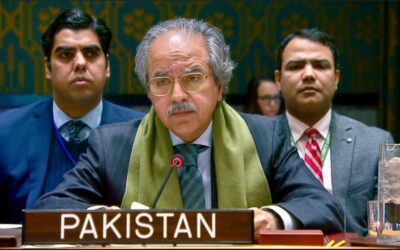
In 2025, Pakistan has emerged as a proactive player in global diplomacy, seeking to balance regional security challenges with international responsibilities. Its emphasis on dialogue, negotiation, and multilateral cooperation reflects a deliberate strategy to contribute to global peace while safeguarding national interests. In July 2025, Pakistan assumed the Presidency of the United Nations Security Council (UNSC), a position that allowed it to shape discussions on conflict resolution and preventive diplomacy. During its tenure, Pakistan spearheaded initiatives aimed at strengthening mechanisms for the peaceful settlement of disputes, culminating in a resolution that reinforced the importance of negotiation under the framework of the UN Charter.
Pakistani diplomats emphasised that dialogue and diplomacy must remain central to international stability. By positioning itself as a constructive participant in the UNSC, Pakistan has highlighted its belief that preventive diplomacy and mediation are more effective than reactive measures after conflicts erupt. This approach also reflects a recognition of the increasing interconnectedness of modern conflicts, where regional disputes can quickly draw in global powers.
Regional Leadership and Multilateral Initiatives
Pakistan’s diplomatic engagement extends beyond the UN. At the Shanghai Cooperation Organisation (SCO) and other regional forums, Islamabad has consistently advocated for structured dialogue and cooperative approaches to conflict resolution. Officials stress that regional stability is essential not only for national security but also for economic development and human welfare.
Moreover, Pakistan has actively engaged in humanitarian diplomacy, urging ceasefires and humanitarian access in conflict zones such as Gaza. Its efforts aim to mobilise international cooperation while maintaining an impartial stance on humanitarian issues. Analysts note that Pakistan’s approach positions it as a bridge between the Global South and global powers, highlighting its ability to mediate, coordinate, and contribute to stability in volatile regions.
The Architecture of Modern Conflict
The nature of war has evolved. In World War II, armies mobilised millions of soldiers and vast industrial capacity to fight conventional battles across borders. Today, military strategy is multifaceted, involving not just conventional forces but cyber, space, autonomous systems, and economic measures. Future major conflicts, should they escalate beyond local or regional disputes, are likely to be defined by technologies and systems rather than sheer numbers of troops.
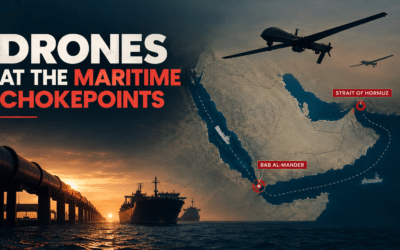
Ukraine’s war against Russia illustrates this transformation. The conflict has become a testing ground for advanced technologies, especially drones and partially autonomous systems. Ukraine has reportedly deployed nearly 2 million drones in 2024, including a significant number with AI capabilities that can navigate, coordinate, and operate under contested conditions.
This reflects a broader trend that new forms of conflict that blur the line between war and peace, where regular armies, militia groups, cyber operatives, and AI‑enabled systems all play roles.
Systemic Warfare: Cyber and AI on the Frontline
One of the most striking shifts in modern warfare is the emergence of systemic conflict, where the objective is not necessarily to capture territory but to degrade an opponent’s systems. Critical infrastructure, such as power grids, communications networks, and transportation hubs, has become a primary target. Cyberattacks aimed at crippling an adversary’s capabilities could precede or even replace traditional military operations.
Research from 2025 underscores the rising threat of autonomous AI cyber weapons that could disrupt critical systems. Studies on Military AI Cyber Agents show how autonomous agents could target critical infrastructure with devastating efficiency, posing unprecedented strategic risk if not properly countered with strong regulation and defence mechanisms.
Beyond Nukes: New Frontiers of Destruction
Nuclear weapons remain the most destructive tools in the world’s arsenals, and the risk they pose has not disappeared. The 2025 India‑Pakistan clashes, a brief but intense conflict that ended with a ceasefire after four days, reminded the world how nuclear deterrence shapes behaviour in South Asia. Neither side crossed the nuclear threshold, but the episode reinvigorated global concern about the catastrophic consequences of escalation in nuclear‑armed regions.
Yet, nuclear weapons are no longer the only “end‑day” threat. Modern technologies such as hypersonic missiles, capable of striking distant targets in a matter of minutes, further compress the window for diplomatic de‑escalation and can trigger crises with little notice. In late 2025, analysts noted steps toward deploying nuclear‑capable hypersonic missiles in Eastern Europe, reflecting how nations are adapting even older deterrence strategies to modern technology.
The Role of Autonomous Systems
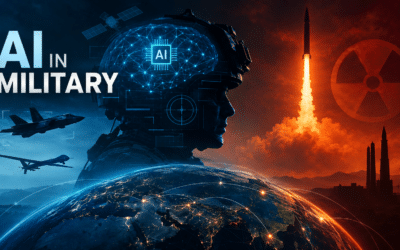
Beyond nuclear and hypersonic weapons, the expansion of artificial intelligence in military systems raises new risks. Autonomous weapons, AI‑guided missiles, and self‑learning combat systems have the potential to make conflicts more unpredictable. Technical research warns that fully autonomous weapons could behave unpredictably, erode human oversight, and increase the likelihood of unintended escalation.
These advances are not limited to high‑end militaries. Even non‑state actors are experimenting with autonomous drones or cyber tools, making it harder for international law and traditional military conventions to keep pace.
Environmental and Economic Toll of Militarisation
War is not just destructive on the battlefield; it carries deep economic and environmental costs. Analysts warn that military rearmament, particularly by large alliances such as NATO, could significantly increase carbon emissions due to expanded operations and production needs. One study projected that military expansion could add hundreds of millions of tonnes of greenhouse gases annually, undermining global climate goals even as the world struggles with climate change.
Economically, conflict and militarisation together cost the global economy nearly $20 trillion in 2024, equivalent to close to 12 percent of global GDP. This figure includes direct military spending and the broader economic impact of violence on business, trade, and development.
Where Does Pakistan Stand?
For Pakistan, these global shifts have direct importance. Pakistan has long been a nation at the intersection of regional power dynamics. Its strategic location, nuclear capability, and proximity to key geopolitical fault lines mean that how the world navigates rising tensions will deeply affect its security and development priorities.
In the Global Peace Index, Pakistan’s lower score reflects challenges related to militarisation, socio‑political stability, and regional tensions. However, it also highlights the importance of pursuing diplomatic engagements, economic partnerships, and constructive participation in regional security dialogues to reduce conflict risks.
Conclusion: The Long Road Ahead
The world of 2025 stands at a crossroads. The ideals of stability and peace that followed World War II have been strained by rising conflicts, fragmentation of global influence, and a new wave of technologies that change how wars might be fought. The data clearly shows that global peacefulness has deteriorated for more than a decade, and that conflicts today are more widespread, more internationalised, and harder to resolve than at any time in the post‑war era.
Yet, this does not mean that global war is inevitable. Rather, it emphasises the need for renewed commitment to peacebuilding, conflict prevention, and international cooperation. As nations navigate a world with cyber threats, AI systems, and shifting alliances, diplomatic channels, robust international norms, and mutual respect among sovereign states will be as essential as ever.
For Pakistan and the wider world, the challenge is not just avoiding war, it is investing in development, inclusive dialogue, and policies that reduce tensions rather than magnify them. Only then can the world hope to break the cycle of fragmentation and build a genuinely stable and peaceful future.