


Online Radicalization in Pakistan
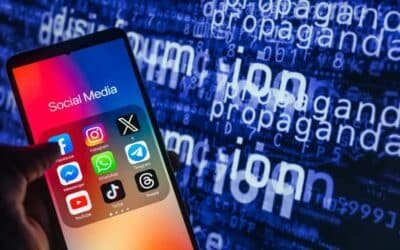
Terrorist organizations in Pakistan in recent years began to utilize the internet and social media in propagating their message and recruiting individuals, particularly the youth. They no longer rely only on physical locations such as mosques or madrasas, rather also on Facebook, Twitter (X), YouTube, Telegram, and even video games and chat applications to attract new followers.
Some of the groups, such as Fitna-al-Khawarij (FAK), ISIS-Khorasan (ISIS-K), and Fitna-al-Hindustan (FAH), have also used online platforms to disseminate violent materials, false religious messages, and videos to gain attention for their group. More than 150 social media accounts operated by extremist groups were found to spread hate speech, false religious interpretations, and anti-state propaganda. The fighters were recruited, money raised, and fear propagated using these accounts.
Among the most concerning tendencies is the fact that these groups appeal to the emotional narratives, and employ religious manipulation to shape the minds of young people. They share, on social media, the videos of war zones, position themselves as the defenders of Islam, and promise them rewards in the afterlife. This type of brainwashing via the Internet is difficult to track, particularly in cases when it occurs in a closed or coded messaging app.
Pakistan is not the only one to struggle with this. Online radicalization has also increased at a high rate in other countries. However, the risk is even greater in Pakistan, where a growing number of people are using the internet and there is a lack of digital literacy. The increased application of the internet by terrorists indicates that the battlefield is no longer in the mountains and borders but in laptops and smartphones. This complicates the task of the security forces in Pakistan in a very big way.
State Institutions on the Forefront of the Cyber Counter-Terrorism
Various government agencies in Pakistan are currently collaborating to prevent terrorists from spreading their message over the internet. These agencies, meant to counter spread of cyber-terrorism, include intelligence services, the police, and cyberspace crime specialists. They are supposed to track and eliminate terrorist materials on the web and arrest the individuals involved. The agencies usually collaborate and exchange information e.g the ISI discovers a terror group through Telegram, they can report to the FIA to follow the IP address and make arrests, and the PTA can block the websites.
Federal Investigation Agency (FIA)
The Cyber Crime Wing of the FIA (now transformed into NCCIA) is at the forefront in monitoring and deleting extremist content on the internet. This department tracks websites, social networks, and messaging programs. In 2024, FIA claimed to have looked into more than 300 online accounts associated with terrorism. Interpol and other countries also help the FIA to monitor accounts that are run outside Pakistan.
National Counter Terrorism Authority (NACTA)
The primary organization that responds to terrorism is NACTA. It gathers the data of various extremist/terrorist-agencies and sends it to law enforcement. NACTA has, in recent years, assisted in identifying extremist networks that use the internet to convey false religious messages and hate content. NACTA also cooperates with the media and religious scholars in the development of counter-narratives and positive messages that combat extremist notions.
Intelligence Agencies (I.S.I. and I.B.)
The intelligence agencies of Pakistan i.e., Inter-Services Intelligence (ISI) and the Intelligence Bureau (IB) work behind the scenes. These agencies keep track of encrypted communication software such as Telegram and Signal, in which terrorists tend to conceal their conversations. They also employ superior solutions such as digital forensics in tracking extremist content to its origin. Intelligence Agencies have been credited with assisting in foiling an ISIS-K cell online that had been plotting attacks in Punjab, which demonstrated the necessity and effectiveness of intelligence activities in cyberspaces.
Pakistan Telecommunication Authority (PTA)
The PTA blocks websites and social media pages that propagate terrorism, violence, or sectarian hate. PTA has taken down more than 58,000 bad links in 2023 alone, most of which were terrorist propaganda. PTA also collaborates with international platforms such as YouTube, Facebook, and Twitter (X) to report and delete unlawful content quickly.
Military Cyber Teams
The Pakistan military has also formed special cyber units to protect against online attacks. The units assist in detecting disinformation campaigns funded by foreign forces and safeguarding national security systems against cyberattacks by malicious organizations.
Legal and Policy Structures
To combat online terrorism, Pakistan has enacted several laws and policies. These laws enable the government to censor dangerous websites, apprehend individuals who propagate extremist notions, and those who utilize the internet to commit acts of terrorism. But it is also feared that there is a fear of misuse and no checks.
Act of Prevention of Electronic Crimes (PECA) 2016
The Prevention of Electronic Crimes Act (PECA) is the primary legislation that is enforced to address cyber terrorism and was enacted in 2016. This act confers arrests upon the FIA Cyber Crime Wing in cases that involve:
- Proliferation of hate speech,
- Posting radical videos,
- Terrorist recruitment via social media, and
- Proclaiming terrorism or prohibited groups.
Role of Pakistan Telecommunication Authority (PTA)
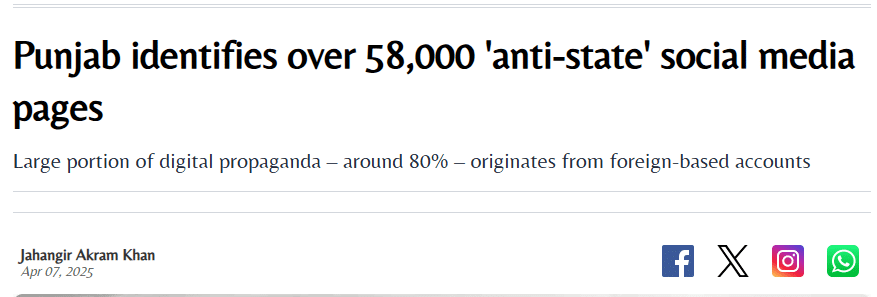
PTA has the mandate of blocking the websites and social media pages that encourage terrorism or sectarian violence, and to ensure close collaboration with international technology giants, such as Google, Meta (Facebook), and TikTok, to report or remove extremist materials. It blocked more than 58,000 URLs of hate speech, terrorism, and anti-state propaganda.
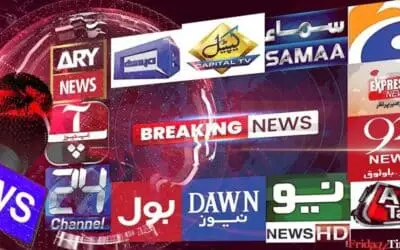
Source: Samaa
National Action Plan (NAP)
In 2015, the National Action Plan (NAP) was introduced, a core focus of NAP is the cessation of using the internet and social media to propagate terrorism. NAP is not a law, but it determines national strategy, and it has resulted in:
- Formation of cyber surveillance units,
- Better organization of the security agencies, and
- The prohibition of a large number of radical websites and social pages.
Disruption Strategies to Online Propaganda
Pakistan is employing a combination of technical means, counter-narratives, and popular campaigns to prevent terrorists from spreading their messages over the internet. The strategies are not only supposed to eliminate harmful content but also to reform the minds of individuals who can be lured by extremist ideas.
Takedown and Surveillance of Extremist Materials
The FIA Cyber Crime Wing and PTA monitor websites, social media accounts, and messaging apps belonging to proscribed groups. As per the PTA Annual Report 2023, over 58,000 URLs were blocked, which had terrorist or hate content. The FIA also collaborates with other social media networks such as Facebook, YouTube, and Twitter (X), whereby they report and ask to remove the harmful content to prevent the propagation of propaganda as well as restrain online recruitment.
Artificial Intelligence and Data Tracking
Pakistan is beginning to employ the use of AI-based tools to monitor keywords, hashtags, and phrases used on terrorism, identify suspicious patterns of behavior, and identify secret radical cells through Telegram, Discord, and game applications. NACTA and FIA are developing digital monitoring dashboards whereby AI can be used to skim through online content rapidly and identify harmful content.
Promoting Counter-Narratives
It is not sufficient to remove extremist content, but positive alternatives should be encouraged. NACTA and the Ministry of Information have initiated media campaigns in support of peace, tolerance, and unity. Religious scholars and clerics have been equipped to develop counter-narratives against the misuse of Islam by religiously inaccurate terror groups. This strategy includes social media campaigns with the use of hashtags.
Youth and Civil Society
The terrorist-recruiters usually prey on the youths, particularly those individuals who are angry, isolated, and hopeless. To avoid this, schools and universities are being requested to carry out workshops on online security and the threat of extremist materials. Youth-based programs such as the Paigham-e-Pakistan, encourage messages of peace grounded in Islamic teachings. Bytes for All, and Media Matters for Democracy are civil society organizations that collaborate with the government in combating hate speech and spread of misinformation on the internet.
The Future: Problems, Successes and the Way Forward
The struggle of Pakistan against digital terrorism has achieved significant success, but its problems are still critical. Encrypted messaging systems such as Telegram and Signal have remained favourite tools among terrorist groups, and monitoring their messages has proved to be a challenge to the agencies.
An emerging issue is the need to balance national security and civil liberties, especially in cases where the laws are abused. In addition, a significant part of the extremist material is not stored on Pakistani-based servers, which means that it is necessary to collaborate with foreign technology companies and other governments across the border.
Nevertheless, in spite of these problems, some actual success has been achieved. Online recruiters were arrested with the help of intelligence-led operations, especially in Punjab and KP, and digital cells connected to ISIS-K were dismantled. To continue this success, Pakistan should invest in AI-based monitoring tools, educate judges, police, and prosecutors, and develop an overall cyber-based counter-terrorism plan.
Collaboration with international institutions such as the UN, FATF, and Interpol, as well as civil society, will be critical. With terrorism evolving in the cyber world, Pakistan needs to be ahead of the game through innovation, better institutions, and smart partnerships to guarantee long-term peace and security.