



The Rise of Mini-Laterals in Global Politics
In recent years the world has witnessed a slow but steady drift away from large, formal multilateral forums toward smaller, purpose-built groupings, minilaterals or “mini-laterals.” These are compact coalitions of states formed around specific interests: security, technology, supply chains, or climate action. They move fast, keep deliberations tight, and exclude states whose presence might complicate agreement. The result is a new arena of global bargaining in which intimate clubs often set rules and norms that once would have been thrashed out in the United Nations or the World Trade Organization.
Why Traditional Multilateralism is Losing Ground
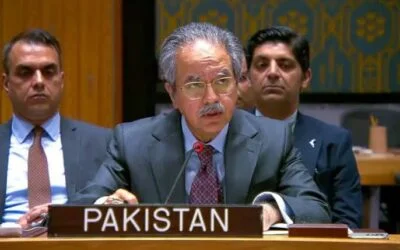
There are clear reasons for this shift. Traditional multilateral institutions are large by design: they seek universality and legitimacy, but that scale brings slow decision-making and watered-down outcomes. The UN Security Council’s paralysis over crises from Gaza to Sudan has been repeatedly noted, undermining public confidence in its ability to act decisively when lives are at stake. Faced with urgent challenges, states increasingly prefer smaller formats where like-minded partners can agree on operations and share the political cost.
You May Like to Read: Shifting Spheres of Influence: Is Pakistan Tilting Toward a Gulf–Asia Axis in a Multipolar World?
Indo-Pacific Alliances Show the New Model
The Indo-Pacific provides the clearest illustration. Groups such as the Quad and AUKUS were forged to respond to a region in flux; they focus on maritime security, technology cooperation and deterrence without the procedural burdens of wider forums. These minilaterals are flexible. They can intensify cooperation quickly, add specialised working groups, and pursue concrete deliverables from joint exercises to technology transfer. For many governments, this practical utility outweighs the symbolic inclusiveness of global institutions.
Beyond Security: Trade, Climate, and Health Clubs
Minilaterals are not limited to security. We now see plurilateral trade initiatives, climate partnerships, and small coalitions for pandemic preparedness. Policymakers like the idea of “coalitions of the willing.” Groups large enough to matter but small enough to reach decisions. That said, minilaterals carry risks. By excluding states, they risk creating fragmentation in global governance, leaving many countries outside the rulemaking process and weakening the universal norms that institutions such as the UN were designed to uphold. Scholars warn that proliferation of narrow clubs can erode cohesion on global public goods and increase the chance of rival blocs setting competing standards.
Opportunities and Risks for Pakistan
For Pakistan and similar middle powers, the changing terrain brings opportunities and dilemmas. On one hand, nimble minilaterals allow like-minded states to form partnerships that directly address shared threats, for instance, regional security arrangements or targeted economic corridors. On the other hand, the rise of exclusive formats can marginalise states that are not in the inner circle of any given grouping, pushing them to seek alternative alignments or deepen ties with other regional powers. For countries that prize strategic autonomy, the test will be whether they can join purpose-driven clubs on favourable terms while preserving broader multilateral ties.
You May Like to Read: Energy Transition in South Asia: Is Pakistan Doomed to Remain Hydrocarbon Dependent?
Great Power Competition Fuels the Shift
The politics behind the shift are also revealing. Great power competition, especially between the United States and China, has made consensus in global institutions harder to achieve. Where the UN was once the natural stage for contestation and compromise, rival powers now prefer to contest influence through networks and selective partnerships. Minilaterals can serve as instruments of influence: coalitions send signals, create technical standards, and marshal resources in ways that shift the balance of power without the formalities of treaty-making. This strategic use of small groups is changing how bargains are struck across defence, trade, and technology.
You May Like to Read: Beyond the UN: The Rise of Ad Hoc Global Governance, and Its Impact on International Law
Limits of Small Group Diplomacy
That said, minilaterals are not a full replacement for multilateralism. Many global problems, climate change, nuclear non-proliferation, refugee flows, require universal commitments and distributive arrangements that only large institutions can credibly administer. The danger is that as minilaterals proliferate, the capacity of global institutions to coordinate broad responses will weaken, creating gaps in cooperation where global public goods are concerned. Analysts argue for a complementary approach: use small groups for rapid, technical cooperation while preserving and reforming universal institutions to handle inclusion, legitimacy and burden-sharing.
Navigating a Dual Strategy for Pakistan
For Pakistan, the immediate policy imperative is pragmatic engagement. New minilateral formats will matter in defining regional security and economic architecture; Islamabad should be ready to engage where its interests are at stake, from maritime security to technology and supply-chain resilience. At the same time, Pakistan, like many countries, has a stake in a functioning UN and multilateral system. The best path is a two-track strategy: participate selectively in minilateral initiatives that advance national interests, while pushing for reforms that make global institutions more effective and representative.
You May Like to Read: From OIC to IOMed: Can Pakistan Leverage Muslim Multilateralism for Conflict Mediation?
Concluding: Balancing Agility with Legitimacy
The current moment is not simply a story of decline for the UN; it is about evolution in how states cooperate. Minilaterals meet the demand for speed and results in an era of contestation and complexity. But if they are to coexist with inclusive global governance, leaders must ensure that the gains of agility do not come at the cost of legitimacy and shared responsibility. The choices taken now will shape whether the world becomes a patchwork of exclusive clubs or a layered system where small alliances and universal institutions reinforce, rather than replace, each other.