


Early Life, and Military Career
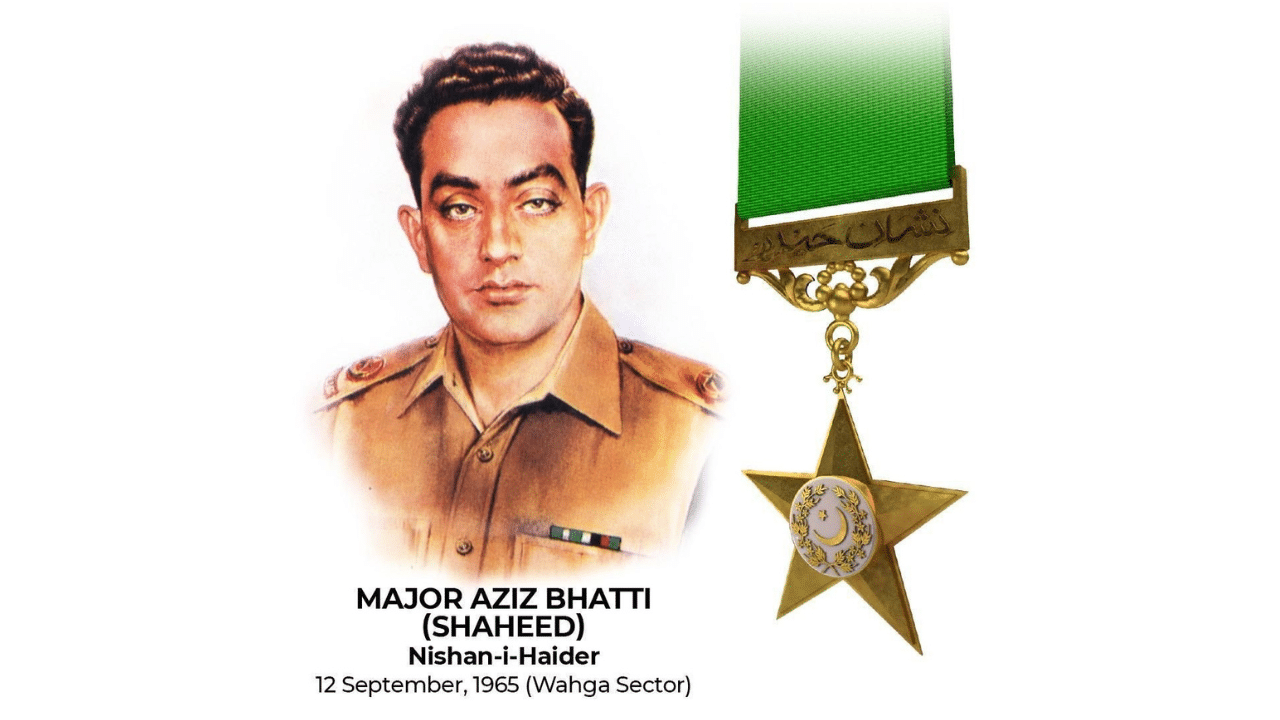
The celebrations on Defense Day, held every 6th of September each year, remind Pakistanis of the sacrifices and bravery of those who stood up to protect the nation in 1965. Of these heroes, Major Raja Aziz Bhatti Shaheed occupies a noble position in history. The national icon of loyalty and sacrifice was created in his honor when he demonstrated his bravery on the front lines in Lahore.
Raja Aziz Bhatti was born in 1928 in Hong Kong. When Pakistan gained its independence in 1947, he migrated to Pakistan with his family. He was a leader and loved his country since childhood. He later attended the Pakistan Military Academy and graduated in the very first batch of 1950. In the Punjab Regiment, he soon became renowned for his discipline, commitment, and fearlessness. These aspects would come to shine in the 1965 war, as he demonstrated his unsurpassed loyalty to Pakistan.
Role in the 1965 War
By the time the war between India and Pakistan broke out in 1965, Lahore was one of the prime targets of the Indian army. A company of the Punjab Regiment, under Major Raja Aziz Bhatti, was defending the Burki position near Lahore, a powerful defensive position. Major Bhatti and his men fought back to save the city on 6th September 1965, when Indian troops attacked them in great numbers.
He maintained his troops for over one day without even taking a breather, as the enemy shelled and attacked him incessantly. The unique thing about him was his leadership style, where he did not remain at the back of the battle line but instead joined his men to lead the front line. His presence inspired his troops to even greater heights of spirit and determination to fight.
He was advised by superior authorities to accept a position of greater safety. Still, Major Bhatti had the nerve to say that until he died, the enemy would not avoid Burki. He was commissioned to control the firing of artillery against moving Indian tanks, which he managed to stop. His bravery and devotion also contributed to protecting Lahore from falling into enemy hands.
Nishan-e-Haider, and Martyrdom
Six days of constant combat had passed, and on 10th September 1965, Major Raja Aziz Bhatti was still in the Burki sector. He was tired but determined, and hung on at the front to fire artillery at Indian tanks and infantry. At this time, he was hit by the enemy and chose to become a martyr in the cause of his dearest country.
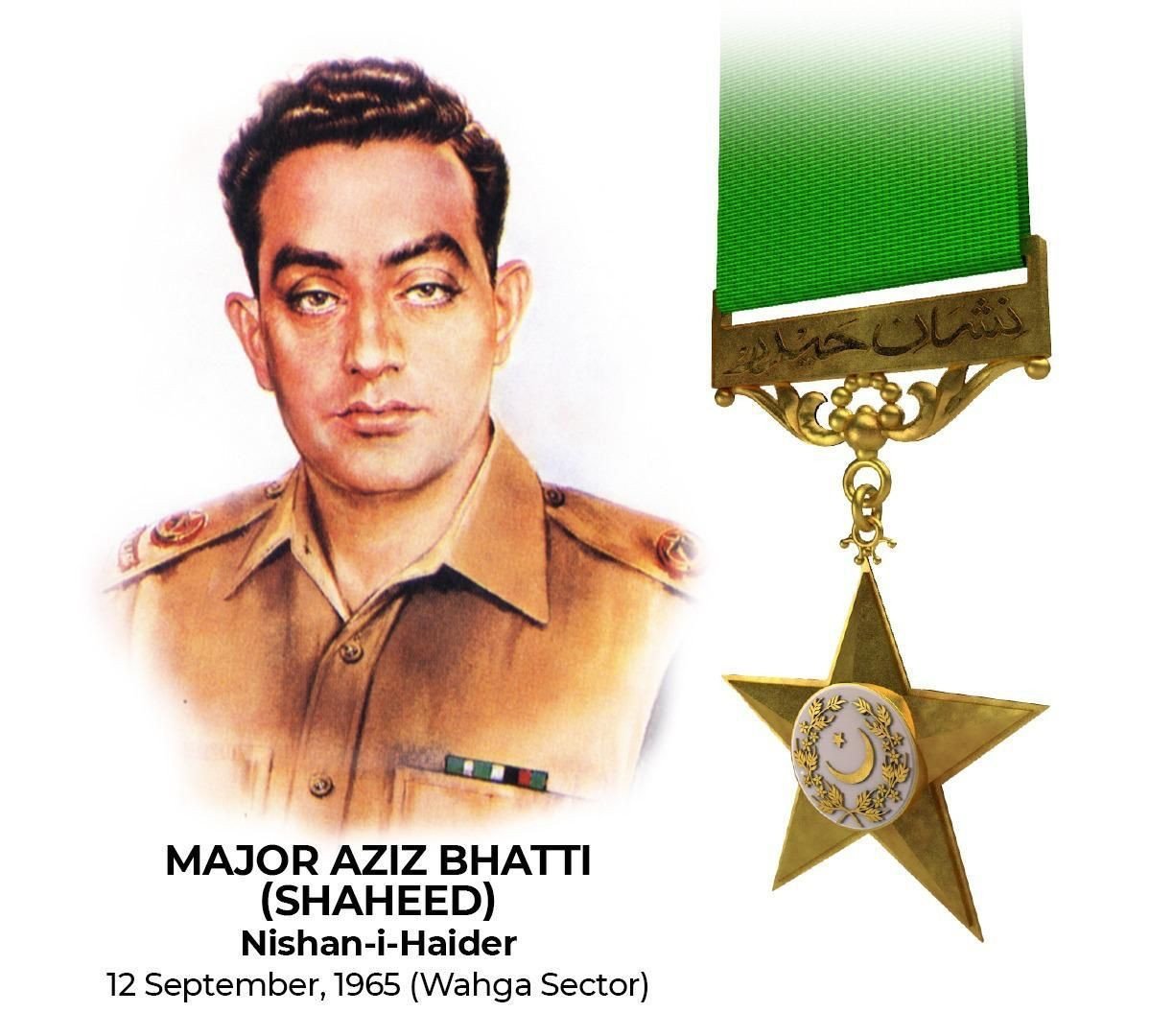
His sacrifice was not in vain. Major Bhatti stood firm and declined to withdraw; by doing so, he had decisively helped Pakistan prevent the enemy from advancing towards Lahore, one of the country’s most important cities. This was because he was a great leader and brave enough to win the Nishan-e-Haider, Pakistan’s greatest military award. He is the second winner of this award, the second among the most respected heroes in Pakistan, after Captain Muhammad Sarwar Shaheed.
The martyrdom of Major Raja Aziz Bhatti became synonymous with the nation’s courage and valor. His death boosted the morale of the military and others to rise and fight in support of Pakistan.
Historicity, and Nationwide Fame
The legacy of Major Raja Aziz Bhatti Shaheed continues to shine through, guiding the nation. Schools teach his story, we celebrate his name in the annual Defense Day ceremonies, and more than a few roads, schools, and institutions bear his name to remind us of him. To the citizens of Pakistan, he is a soldier of the past, but a hero whose courage, sacrifice, and patriotism can still be felt today.
Pakistan’s generations find an example in him because he refused to retire, choosing instead to fight on behalf of his men and ultimately sacrificing his life to protect Lahore. The Nishan-e-Haider around his chest is not a medal, nor is it something to be proud of, but a constant reminder of what he sacrificed to be free. He is one of the greatest martyrs of Pakistan, and his martyrdom will not be forgotten.
To this day, as Pakistan observes Defense Day on September 6, the memory of Major Raja Aziz Bhatti stands as a beacon of togetherness and strength. He is not only remembered as a hero of 1965 but as an eternal protector of the front lines of Pakistan whose courage motivates every new generation.
You May Like To Read: India’s Escalating Military Procurement and Missile Tests Threaten Regional Stability