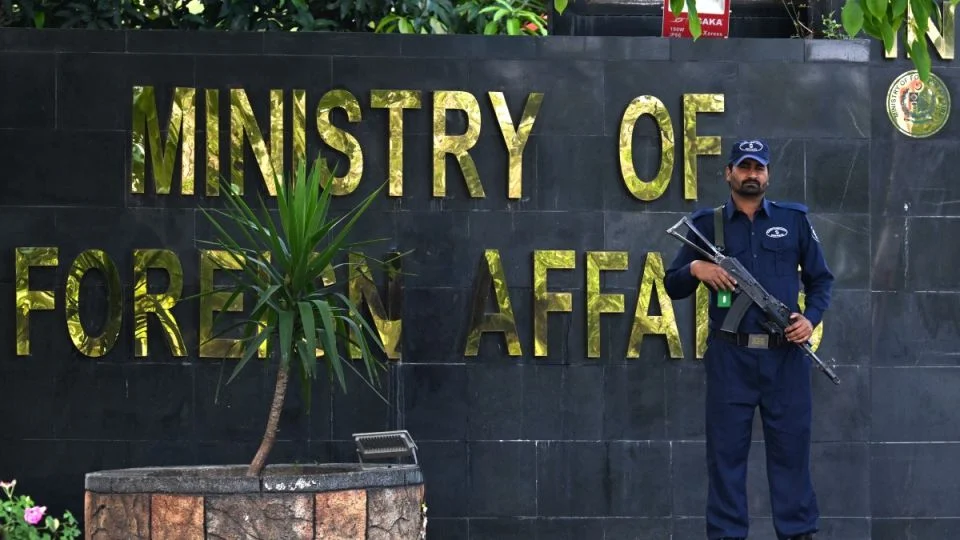



The Ministry of Foreign Affairs reaffirmed on Thursday that Pakistan remains actively engaged in diplomatic efforts to defuse the Strait of Hormuz standoff, working alongside regional partners to secure a durable political settlement under the Islamabad Memorandum of Understanding (MoU) framework.
At his weekly media briefing, Foreign Office Spokesperson Tahir Andrabi detailed Islamabad’s diplomatic posture, the division of responsibilities among regional states—including Oman and Qatar—and Pakistan’s ongoing review of the operational framework for the Saudi-led multinational maritime coalition.
reviewing the framework and operational details of a newly announced Saudi-led multinational maritime coalition.
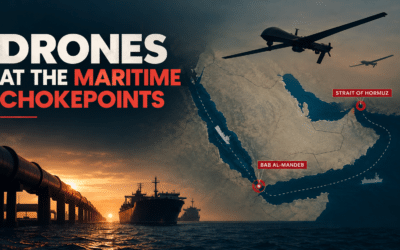
The coalition is aimed at safeguarding shipping routes through the Bab al-Mandeb Strait, the Red Sea, and the Gulf of Aden.— Dialogue Pakistan (@DialoguePak) August 7, 2026
1. Regional Diplomacy and the Strait of Hormuz Framework
-
Division of Diplomatic Labor: Pakistan described ongoing peace initiatives as a coordinated effort among “brotherly states,” with different nations taking the lead on specific aspects of the crisis. Oman is leading negotiations with Tehran regarding navigation through the Strait of Hormuz under Article 5 of the June Islamabad MoU signed between the U.S. and Iran.
-
Focus on Comprehensive Settlement: The Foreign Office emphasized that Pakistan’s primary engagement centers on achieving a political agreement rather than negotiating individual “symptoms of the crisis,” such as shipping blockades or sporadic attacks on maritime traffic, which are expected to resolve once the core agreement is implemented.
-
Implementation of the Islamabad MoU: Building on earlier facilitation efforts alongside Qatar, Pakistan continues to support the framework mandating toll-free commercial navigation and technical consultations on shipping routes and operational management in the Gulf.
2. Evaluation of the Saudi-Led Multinational Maritime Coalition
-
Operational Assessment: Pakistan is currently evaluating the terms of reference (TORs) and operational modalities of the Saudi-led multinational maritime security arrangement before deciding on the extent of its operational participation.
-
Military Consultation: The Ministry of Foreign Affairs is actively consulting with Naval Headquarters and military leadership as the coalition structure matures ahead of a key planners’ meeting on August 12–13.
-
Coalition Command & Scope: Announced in Riyadh following consultations with representatives from 43 nations, the coalition aims to safeguard shipping routes across the Bab al-Mandeb Strait, the Red Sea, and the Gulf of Aden against hostile threats and blockades. Saudi Arabia appointed Rear Admiral Abdullah bin Salem Al-Shehri as the coalition’s inaugural commander.
3. Position on Gaza International Stabilisation Force
-
Premature Proposal: Addressing inquiries regarding potential Pakistani participation in a future peacekeeping or peace-enforcement mission in Gaza, the Foreign Office stated that formal considerations are currently premature.
-
Formal Proposition Requirement: Any decision regarding Pakistani troop deployment to an International Stabilisation Force in Gaza will be made only after a concrete, formal proposition is officially submitted to the government.
Strategic Analysis: Pakistan’s Multitrack Middle East Diplomacy
The Foreign Office’s briefing illustrates a deliberate strategy aimed at balancing diplomatic mediation with defensive security commitments:
1. Distinction Between Mediation and Crisis Management
By distinguishing between immediate crisis intervention and structural mediation, Pakistan preserves its standing as a key architect of the Islamabad MoU while allowing littoral states like Oman to handle localized technical navigation talks. This enables Islamabad to remain focused on broader political frameworks without becoming bogged down in routine operational disputes.
2. Institutional Prudence in Military Commitments
While Pakistan maintains strong strategic alignment with Saudi Arabia—highlighted by high-level visits involving Prime Minister Shehbaz Sharif and Chief of Defence Forces Field Marshal Asim Munir—the thorough evaluation of the maritime coalition’s TORs reflects a cautious, institutional approach. By consulting military leadership prior to defining operational roles, Islamabad ensures its overseas commitments remain defensive, legal, and aligned with national security priorities.