



On July 12, 2025, Lahore police averted what could have been another tragic episode of religion-based violence, when a mob attempted to attack an Ahmadi worship place in Samanabad. The incident, which unfolded during Friday prayers, underscores the persistent vulnerability of religious minorities in Pakistan and raises critical questions about the state’s ability—or willingness—to protect them. While the police intervention was swift and decisive this time, the underlying tensions that led to the mob’s mobilization reveal deeper systemic issues that remain unaddressed.
The Incident: A Narrow Escape
According to police reports, officers from multiple stations, including senior officials up to the rank of SSP, rushed to the scene after receiving an emergency call from the Ahmadi community. The mob, allegedly comprising members of a religious-political group, had gathered outside the worship place, chanting slogans and demanding its closure.
Witnesses described a tense standoff, with worshippers—including women and children—fleeing through backdoors in panic. Police eventually dispersed the crowd and detained several individuals, but not before the Ahmadis endured yet another moment of terror in their own country.
What triggered the mob’s anger?
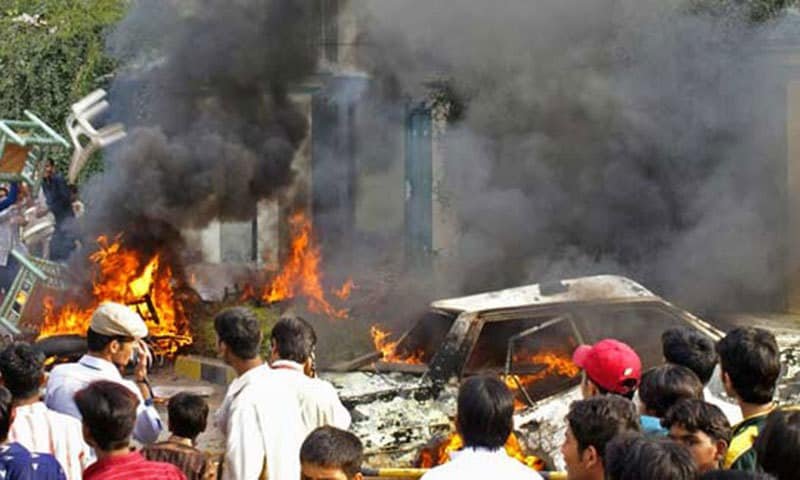
Source: Dawn
The protesters accused the Ahmadi community of violating a government-mandated schedule for worship—allegations the Ahmadis firmly denied. This allegation, however minor it may seem, is part of a broader pattern in which Ahmadis are routinely targeted under the pretext of legal technicalities. Pakistan’s anti-Ahmadi laws, particularly Ordinance XX of 1984, prohibit them from “posing as Muslims,” a vague provision often weaponized to justify harassment, violence, and even deadly mob attacks.
A Recurring Nightmare for Ahmadis
This was not an isolated incident. Pakistan’s history is marred by systematic persecution of Ahmadis, who have faced everything from social boycotts to lynching. Just last year, a similar mob attack in Punjab’s Jaranwala left multiple Ahmadi homes and churches burned while police stood by until it was too late.
The fact that Lahore police acted preemptively this time is commendable, but it does not absolve the state of its complicity in fostering an environment where such attacks are normalized.
The real issue lies in the legal and societal frameworks that enable this persecution. Pakistan’s blasphemy laws, combined with inflammatory rhetoric from certain religious groups, create a climate where violence against minorities is not just tolerated but often encouraged.
The Samanabad incident is a stark reminder that no amount of police presence can fully protect Ahmadis as long as discriminatory laws remain in place and extremist groups operate with impunity.
Dilemma between Legislation and Persecution
While the Lahore police deserve credit for their rapid response. On one hand, authorities intervene to prevent bloodshed; on the other, they uphold laws that delegitimize Ahmadi religious identity. Due to this vagueness in the legislation the mobs find it convenient to persecute the religious minorities in Pakistan.
Moreover, the involvement of a “religious-cum-political party” in the mob raises troubling questions. If such groups can openly mobilize crowds to intimidate minorities without legal consequences, it suggests the failure of law enforcement agencies, and incriminates the clerics for inciting violence. The police’s engagement with local religious leaders to maintain peace after the fact is a temporary fix, not a solution. True peace cannot exist without justice and justice requires repealing the laws that make Ahmadis second-class citizens.
A Glimmer of Hope or Another False Dawn?
For now, the Ahmadi community in Lahore can breathe a sigh of relief. But relief is not safety, and safety is not equality. The state must go beyond reactive policing and address the root causes of religious violence. This means revisiting draconian blasphemy laws, holding extremist groups accountable, and ensuring that all citizens regardless of faith—can worship without fear.
Until then, every averted attack will remain just that—averted, not prevented. And for Pakistan’s Ahmadis, the next mob could be just around the corner.
The Persistent Shadow of Persecution
The Lahore police’s swift action may have prevented bloodshed, but it does little to dismantle the systemic persecution facing Pakistan’s Ahmadi community. This incident like so many before exposes the grim reality that legal discrimination and extremist incitement remain entrenched in the country’s social fabric.
While commendable, reactive policing cannot substitute for meaningful legal and societal reform. The state’s contradictory stance –protecting Ahmadis from mob violence while upholding laws that strip them of religious rights, only perpetuates a cycle of fear and violence.
True progress demands more than crisis management; it requires the repeal of draconian blasphemy laws, accountability for extremist groups, and an unwavering commitment to equality. Until then, Pakistan’s religious minorities will continue to live under the constant threat of violence, their safety dependent not on justice, but on the fragile mercy of mobs and the timing of police response. The Samanabad episode is not a victory—it’s a warning.