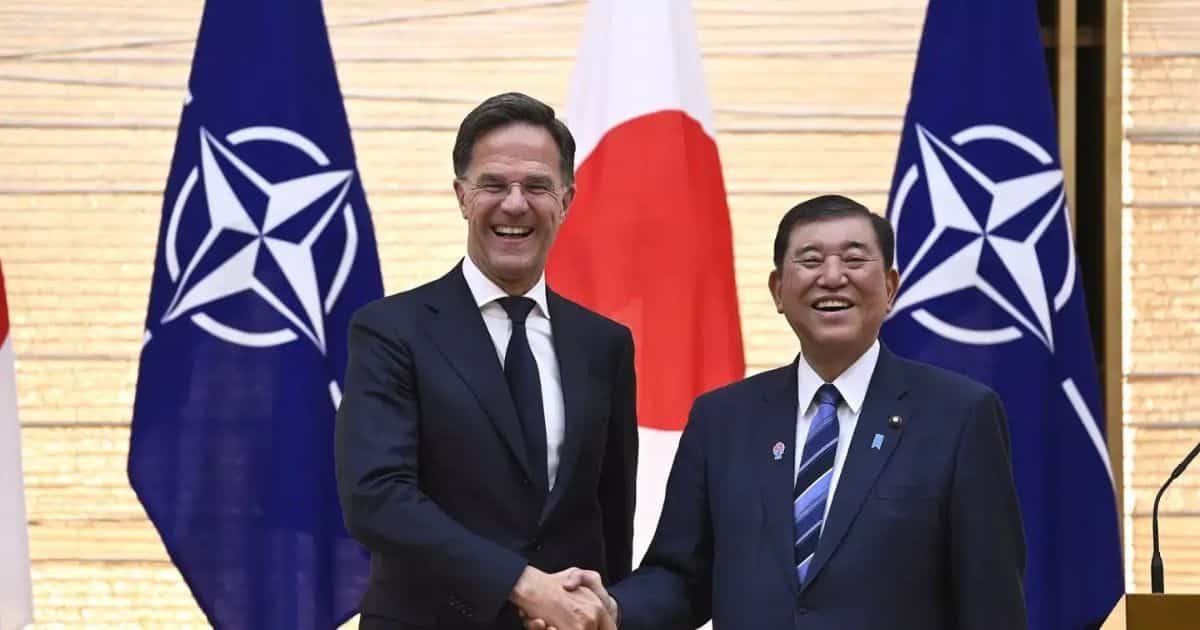





NATO-Japan Cyber Dialogue in Expo 2025
NATO Day at Expo 2025 in Osaka, NATO and Japan focused on cybersecurity and hybrid threats. It was organized under the theme of Peace, Human Security, and Dignity Week and attended by diplomats, defense officials, and experts who discussed how to protect critical infrastructure, combat disinformation, and enhance resilience against cyberattacks.
This discussion was based on the increasing participation of Japan in the cyber programs of NATO. Japan has already joined the NATO Cooperative Cyber Defense Centre of Excellence in Tallinn and has interacted with the Communications and Information Systems Group of NATO in enhancing the security of networks and crisis response. Those previous steps helped to make the Expo discussions more realistic, avoiding only the discussion of the common threats but also the opportunities of cooperation in such areas as 5G, artificial intelligence, and secure communications. The factor of high-level technology in Japan, combined with the experience of the NATO collective defense, provided the partnership with a complementary quality, and Expo 2025 is an opportunity to make it even more comprehensive.

Outcomes of the Collaboration
The NATO-Japan discussion on cybersecurity at Expo 2025 had some fruitful results. The two parties confirmed that cyber defense had become a key component in national and international security, and not a technical problem. They also agreed to share more information on cyber threats, intensify collaboration in the joint training, and investigate models of responding to massive cyber attacks that impact the critical infrastructure. These declarations indicate the key idea of NATO, which is that cyberspace is a domain of common defense, and the intention of Japan to be closer to those partners that have similar interests.
The other notable result was that of the Japanese role as a connector between Asia and the West in digital security. Connecting its high-tech industry to the experience of NATO in joint defense, Japan has indicated its readiness to make its contribution to the broader global standards in the fields of secure communications, artificial intelligence, and 5G networks. This also demonstrated the readiness of Japan to deal with hybrid threats, which merge the activity of cyberattacks with disinformation and political influence campaigns, both of which also become increasingly challenging to both NATO members and Japan itself.
In general, the Osaka discussion revealed that NATO and Japan are on the path to a new stage of symbolic alliances and to a new strategy of interaction. Although the promises made were not binding treaties, they represented an obvious move to the more profound integration of cyber policies, combined exercises, and technological partnership. This result supported the notion that Expo 2025 is not just an innovative spectacle but also a venue in which innovative patterns of international security collaboration were being determined.
You May Like To Read: Lithium Geopolitics: Will the EV Boom Spark a New Resource War?
Global Implications
The NATO Japan cyber discussion taking place during Expo 2025 had broader implications for the rest of the world, not just in the Euro-Atlantic region. NATO and Japan made their presence unified on digital defense to show other states in the Asia-Pacific region that cyber threats need a collective approach, instead of national approaches. Their collaboration brought out the fact that cybersecurity is not restricted to military networks, as it is now spread to energy systems, finance, communications, and even public faith. This focus on resilience to the hybrid threat, including disinformation and cyberattacks, showed how digital stability became one of the pillars of international security.
The Osaka experiences are especially applicable to such countries as Pakistan. Pakistan has its own share of digital security challenges, such as increasing cybercrime, affecting critical infrastructure, and susceptibility to hybrid approaches. The NATO-Japan model demonstrates the significance of institutional capacity building, the establishment of cooperation among the population and the private sphere, and the need to invest in innovative tools, including AI-monitoring systems and safe communication systems. Although Pakistan is not officially tied to NATO, it can emulate these models by building on its relationship with its neighboring organizations as well as borrowing the global best practices. In this way, it will be able to increase its resilience and make the region more cyber-stable.
You May Like To Read: Russian Foreign Ministry Urges Restraint on Pakistan-Afghanistan Border