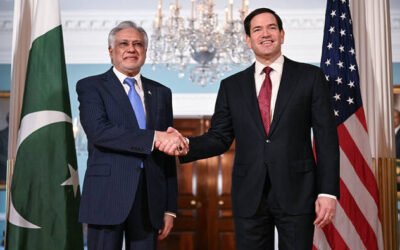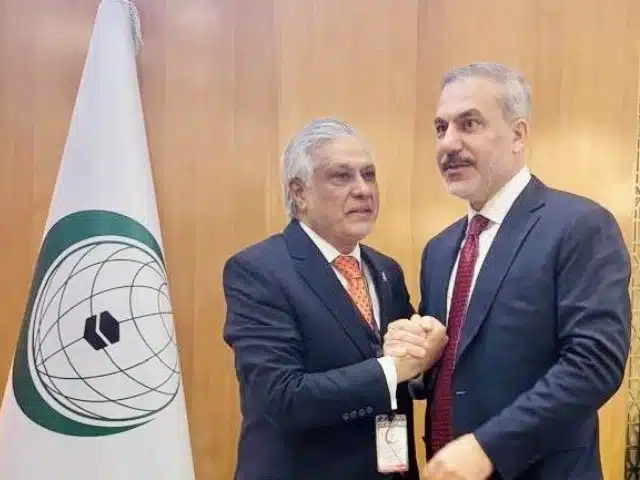





Deputy Prime Minister and Foreign Minister Senator Mohammad Ishaq Dar held a telephonic consultation with Turkish Foreign Minister Hakan Fidan on Thursday to discuss escalating violence in the Palestinian territories and coordinated diplomatic responses across the Islamic world.
The two foreign ministers expressed grave concern over persistent Israeli military operations in Gaza and the Occupied West Bank, along with repeated violations at the Al-Aqsa Mosque compound in occupied East Jerusalem.
Key points addressed during the diplomatic exchange include:
Al-Aqsa Compound Violations: Strong condemnation of incursions by Israeli forces and settlers, which threaten the historic Arab, Islamic, and Christian identity of East Jerusalem.
Humanitarian Crisis: Alarm over worsening living conditions, ongoing civilian casualties, and deliberate obstacles facing humanitarian aid delivery across Palestinian territories.
Jordanian Summit Proposal: Strategic alignment in support of Jordan’s initiative to convene an extraordinary meeting of Arab and Islamic nations to unify diplomatic pressure.
Diplomatic Coordination: Commitment to joint action following similar high-level discussions held by Pakistan with Egyptian Foreign Minister Badr Abdelatty.
The bilateral exchange coincided with warnings from fourteen Arab and Palestinian organizations regarding unprecedented Israeli attempts to alter the status quo of Jerusalem, alongside reported ceasefire violations and ongoing military raids across Gaza and the West Bank.
Critical Analysis
The high-level engagement between Pakistan and Türkiye reflects a growing effort among non-Arab Islamic powers to step into the diplomatic void left by fragmented regional dynamics. By backing Jordan’s call for a joint Arab-Islamic summit, Islamabad and Ankara aim to build a cohesive multilateral block that can challenge Israeli policy through international platforms.
However, the continued reliance on joint statements and multilateral summits highlights the operational limitations facing non-combatant states. While public condemnations and diplomatic coordination maintain political alignment across the OIC, they have yet to produce concrete mechanisms—such as economic leverage or binding UN sanctions—capable of halting ground-level incursions at Al-Aqsa or stopping ceasefire violations in Gaza.
Without direct strategic enforcement or unified economic pressure from key regional stakeholders, diplomatic coordination risks remaining symbolic, serving primarily as domestic political signaling rather than an effective deterrent against unilateral territorial changes in East Jerusalem and the West Bank.