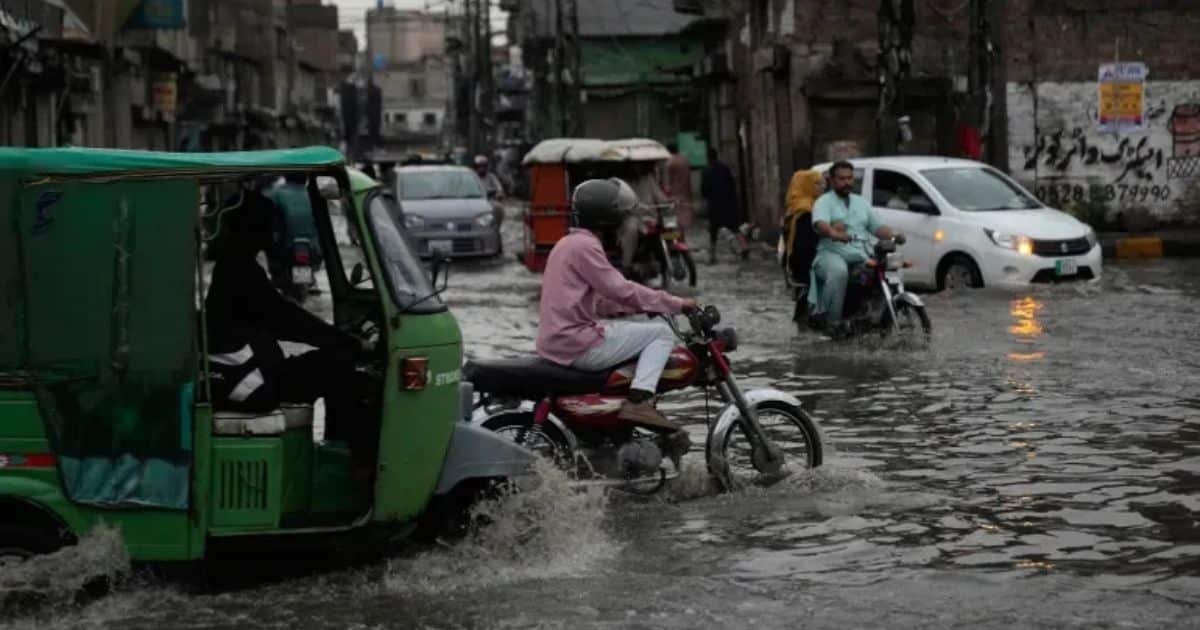





Pakistan’s recent floods have once again placed the country in the global spotlight as a frontline state in the climate crisis. Torrential monsoon rains, intensified by shifting weather patterns, have displaced tens of thousands, inundated farmlands, and destroyed critical infrastructure. While climate change undeniably amplifies the frequency and ferocity of such disasters, Pakistan’s governance failures, weak planning, and inconsistent policies have exacerbated their impact. The floods are thus not merely a natural calamity but a governance crisis that illustrates how climate vulnerability and state fragility reinforce one another.
Climate Change, and Escalating Vulnerability
Pakistan contributes less than 1% to global greenhouse gas emissions, yet it consistently ranks among the ten most climate-vulnerable countries in the Global Climate Risk Index. Intensifying monsoons, accelerated glacial melt in the Himalayas, and prolonged heatwaves have created a volatile hydrological cycle. This year’s floods mirror patterns witnessed in 2010 and 2022, when widespread inundation displaced millions and caused damages worth billions of dollars.
Yet what is striking is that warnings from climate scientists about the increasing frequency of “super floods” have not been fully internalized into policy frameworks. Pakistan’s reliance on outdated water management systems—particularly the canal and dam networks designed in the colonial era—leaves it ill-prepared for unprecedented rainfall intensity. Climate change may be global in origin, but its impacts in Pakistan are magnified by chronic underinvestment in resilience.
You May Like To Read: Pakistan and the UN: A Peacekeeping Giant but a Policy Lightweight?
Government Initiatives: Progress and Shortcomings
Successive governments have touted initiatives like the National Disaster Management Authority (NDMA), provincial disaster bodies, and flagship projects such as the 10 Billion Tree Tsunami. These programs, while symbolically significant, have struggled with execution. The NDMA remains hampered by weak inter-agency coordination, lack of early warning systems, and insufficient funding. Critics argue it often reacts to crises rather than proactively preparing for them.
For example, despite lessons from the 2022 floods, the government has made limited progress in expanding climate-resilient housing or constructing modern flood defenses. Evacuation protocols and relief logistics remain fragmented, with affected populations often depending more on local charities and volunteer networks than on state institutions. The gap between rhetoric and capacity is widening, raising questions about whether Pakistan has learned from its past catastrophes.
The 2010, and 2022 Precedents: Lessons Missed
The devastating 2010 floods, which submerged nearly one-fifth of the country, were hailed as a wake-up call for reform. Similarly, the 2022 floods displaced more than 30 million people and triggered international pledges exceeding $9 billion at the Geneva Donor Conference. Yet little of that funding has translated into durable infrastructure or adaptive planning.
The persistence of similar patterns—river overflows, dam breaches, unplanned urban sprawl in floodplains—underscores institutional inertia. Instead of building back better, Pakistan appears to rebuild back the same. Political turnover and short electoral cycles discourage long-term climate adaptation strategies, leaving the country locked in a cycle of “disaster-response-reconstruction” without structural reform.
Economic Fallout, and Donor Fatigue
The economic toll of the floods is staggering. Agriculture—already hit by fertilizer shortages and energy crises—suffers repeated setbacks as crops are washed away. This not only undermines food security but also worsens inflation. Roads, railways, and energy infrastructure require billions in reconstruction, straining an already debt-burdened state.
International donors have extended humanitarian relief, but donor fatigue is evident. With multiple global crises—Ukraine, Gaza, and climate disasters elsewhere—Pakistan struggles to attract sustained international attention. More critically, donor skepticism grows when pledges are not matched with transparent utilization of funds. Reports of inefficiencies and leakages discourage further commitments, leaving vulnerable communities caught between climate shocks and governance failures.

The Security Dimension
Floods are not only humanitarian or economic crises; they also have security implications. Displacement in already fragile regions risks creating fertile ground for militant recruitment, particularly where the state is absent, and non-state actors fill relief vacuums. The interplay of environmental stress and internal security challenges highlights the multidimensional nature of climate disasters in Pakistan.
Critical Policy Gaps
The government’s climate response suffers from three structural weaknesses:
- Reactive Posture: Relief takes precedence over preparedness. Investments in predictive modeling, early warning systems, and climate-resilient infrastructure remain minimal.
- Fragmented Governance: Federal and provincial authorities often duplicate roles, creating bureaucratic bottlenecks. Climate resilience demands coordination across ministries—finance, planning, water resources—not just environment agencies.
- Lack of Local Empowerment: Community-based disaster preparedness programs are underdeveloped. Instead of empowering local councils, disaster management remains centralized and top-heavy.
A Way Forward
To break the cycle of recurring devastation, Pakistan needs to shift from symbolic policies to systemic reform. This includes:
- Strengthening NDMA and PDMAs with clear mandates, adequate funding, and inter-agency coordination.
- Investing in climate-resilient infrastructure, including elevated housing, modern drainage, and expanded embankments along rivers.
- Leveraging international climate finance through transparent mechanisms, ensuring that global adaptation funds are efficiently absorbed.
- Mainstreaming climate into economic policy, treating resilience not as an add-on but as central to fiscal planning.
- Community-centered adaptation, integrating local knowledge into flood management and empowering village-level institutions.
The recent floods in Pakistan epitomize the dual challenge of climate vulnerability and governance fragility. While global warming intensifies the hydrological extremes battering the country, it is the state’s institutional weaknesses that transform these natural events into large-scale human disasters. The gap between global pledges and local execution remains Pakistan’s Achilles’ heel. Unless governance is reoriented from short-term optics to long-term resilience, Pakistan will remain trapped in a cycle where every monsoon season brings not only rain but renewed tragedy.
You May Like To Read: Beyond the Stalemate: A New Bargain for Kashmir