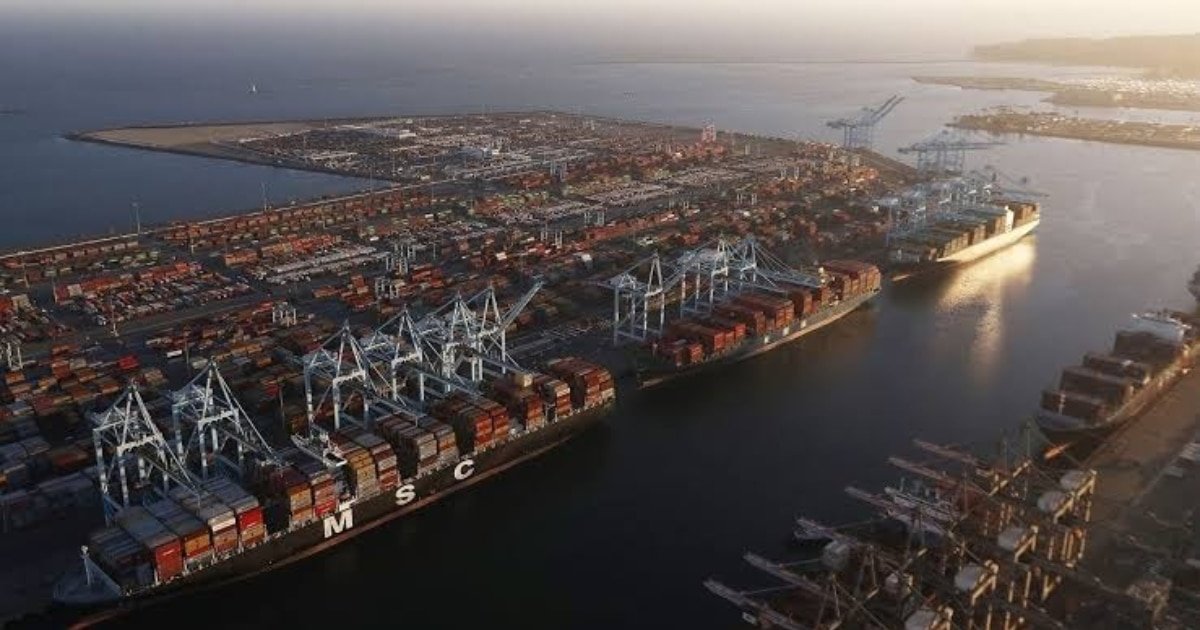





The Ministry of Maritime Affairs has launched an ambitious national initiative to expand Pakistan’s maritime footprint by identifying sites for three new deep-sea ports along the country’s 1,024-km coastline.
Pakistan plans new deep-sea ports
More details: https://t.co/RKkHR8nkn5#ARYNews pic.twitter.com/f332bqe4fQ
— ARY NEWS (@ARYNEWSOFFICIAL) November 13, 2025
Federal Minister for Maritime Affairs Muhammad Junaid Anwar Chaudhry on Thursday constituted a high-level, multi-agency 12-member committee tasked with selecting potential locations for Port 1, Port 2, and Port 3 under Pakistan’s long-term Hundred Years Vision.
The committee will hold its first meeting next week and submit a comprehensive feasibility report within three months, including hydrographic surveys, satellite analysis, technical assessments, and investment recommendations. Meetings will be held on a fortnightly basis to fast-track progress.
Pakistan’s Exclusive Economic Zone spans 240,000 sq km, supplemented by nearly 50,000 sq km of continental shelf. With Pakistan’s GDP projected to reach $1 trillion between 2030 and 2035, maritime trade is expected to accelerate sharply. Existing ports — Karachi Port (52% utilisation), Port Qasim (65%), and Gwadar Port (5–10%) — are projected to reach full capacity between 2035 and 2045 due to rising regional transit activity, CPEC-linked cargo flows, and expanding trade with Afghanistan, Central Asia, and Gulf–Africa corridors.
You May Like To Read: Trump Signs Spending Bill to End Record-Breaking U.S. Government Shutdown
Growing coastal urbanisation, tourism projects, and private development have also reduced available land near existing port zones, necessitating new large-scale maritime infrastructure.
The committee includes representatives from KPT, PQA, GPA, SIFC, the Surveyor General of Pakistan, Hydrographer of Pakistan, and the governments of Sindh and Balochistan. It will evaluate potential sites for deep-sea ports, port cities, shipyards, and energy hubs, assessing connectivity needs, environmental sensitivities, industrial linkages, and long-term sustainability.
The body will propose a phased development roadmap and establish a national framework for prioritising future port projects, ensuring close coordination with provincial and federal stakeholders.
Check out our latest video: