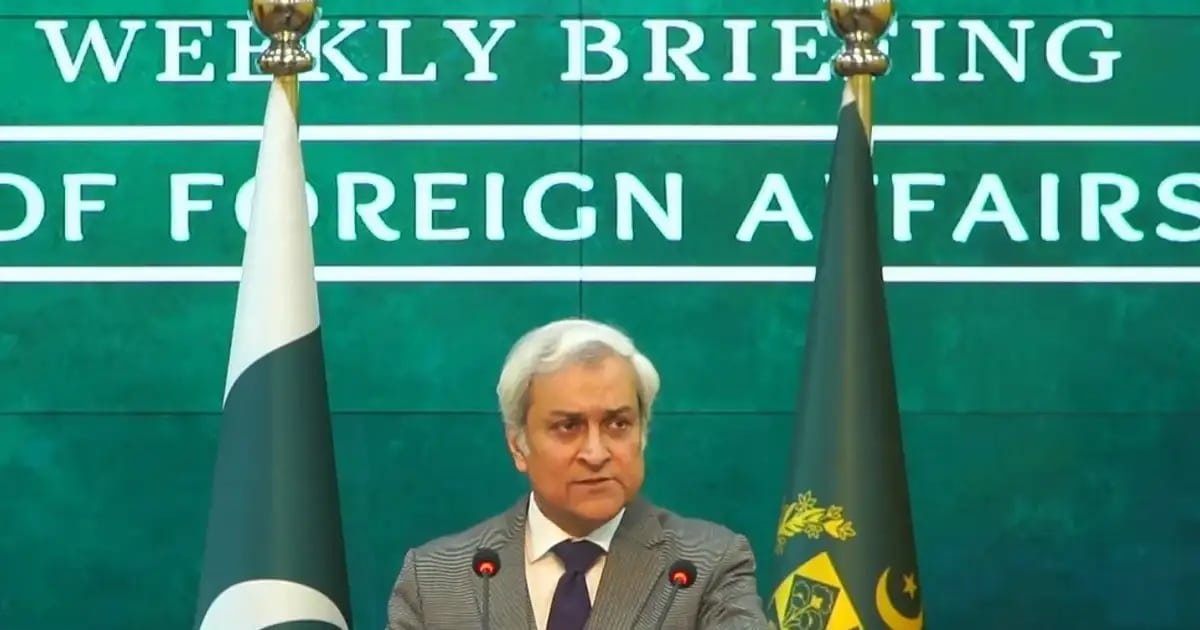





The Foreign Office (FO) of Pakistan has officially and “categorically” rejected the testimony of US Director of National Intelligence (DNI) Tulsi Gabbard, who recently identified Pakistan as a significant missile threat to the American homeland. In a strongly worded rebuttal on Thursday, FO spokesperson Tahir Hussain Andrabi dismissed the claims as lacking “factual accuracy” and underscored that Pakistan’s capabilities remain strictly regional and defensive.
The diplomatic standoff comes after Gabbard’s presentation of the 2026 Annual Threat Assessment, which placed Pakistan alongside Russia, China, North Korea, and Iran as primary missile concerns for the United States.
The Foreign Office Rebuttal: Credible Minimum Deterrence
Spokesperson Tahir Hussain Andrabi clarified that Pakistan’s missile program is architected specifically for the South Asian security landscape:
-
“Well Below” ICBM Range: The FO maintained that Pakistan’s missile reach is designed for regional deterrence and does not possess intercontinental (ICBM) capabilities.
-
India-Specific Doctrine: The program is “firmly rooted” in the doctrine of Credible Minimum Deterrence specifically against India, aimed at safeguarding sovereignty rather than global power projection.
-
Call for Mutual Respect: Andrabi urged Washington to adopt a “more measured and considered approach” that aligns with the strategic imperatives of South Asia.
🔊PR No.7️⃣3️⃣/2️⃣0️⃣2️⃣6️⃣
Statement by the Spokesperson regarding statement made by the United States Director of National Intelligence on Pakistan’s missile capabilities pic.twitter.com/2DILEJKn9D
— Ministry of Foreign Affairs – Pakistan (@ForeignOfficePk) March 19, 2026
Counter-Assessment: Concerns Over India’s 12,000km Reach
In a notable shift, the Foreign Office redirected the conversation toward the missile advancements of its neighbor:
-
India’s Global Trajectory: The FO highlighted that India’s development of missiles exceeding 12,000 kilometers reflects ambitions far beyond regional security.
-
Neighborhood Stability: Pakistan expressed concern that India’s transcontinental reach—capable of hitting Europe and North America—is a legitimate cause for concern for the international community.
Strategic Reality vs. Intelligence Projections
The FO’s stance was echoed by former Caretaker Foreign Minister Jalil Abbas Jilani, who utilized social media to dismantle the “strategic reality” of the US claims.
-
Gabbard’s Testimony: DNI Tulsi Gabbard told the Senate Intelligence Committee that Pakistan’s development “potentially could include ICBMs” and that threats to the US homeland would expand to 16,000 missiles by 2035.
-
Policy Trends: Analysts note that Pakistan’s inclusion in this list is a continuation of US policy shifts seen in December 2024, when the White House first alleged Pakistan was seeking targets outside South Asia and imposed sanctions on four entities related to its missile program.
@TulsiGabbardDNI assertion at the Senate hearing that the US homeland is within range of Pakistan’s Nuclear/Con missiles is not grounded in strategic reality.Pakistan’s N doctrine is India specific aimed at maintaining credible deterrence in S Asia,not projecting power globally
— Jalil Abbas Jilani (@JalilJilani) March 18, 2026
Diplomatic Implications
Pakistan remains committed to “constructive engagement” with the US but insists that such ties must be anchored in non-discrimination. The rejection of the DNI report signals Islamabad’s refusal to be lumped into a “global threat” category that ignores the specific balance of power in South Asia.
You May Like To Read: “Patience is Not Unlimited”: Saudi Arabia’s FM Prince Faisal Issues Final Warning to Iran
Check out our latest video: