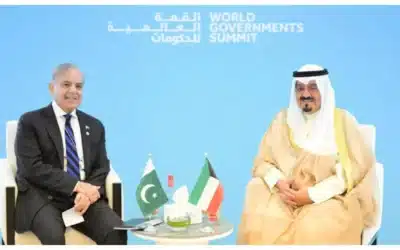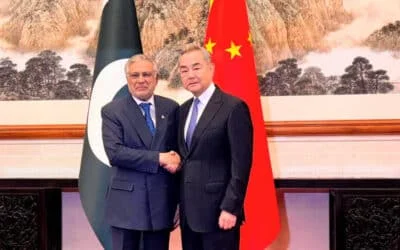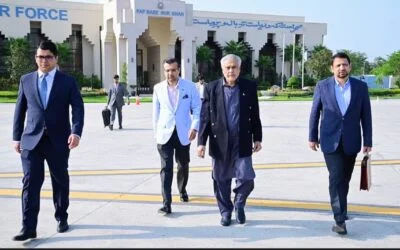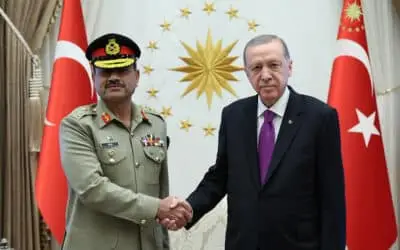


In its August 3, 2025 cover story, The Economist delivers a ringing endorsement of Field Marshal Syed Asim Munir’s post‑conflict diplomacy and strategic repositioning of Pakistan in U.S. and regional geopolitics. The same story was echoed by Radio Pakistan and The News International, each highlighting Munir’s quiet influence in reshaping bilateral ties.
White House Lunch
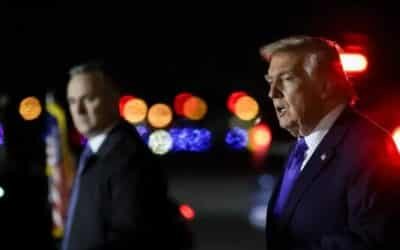
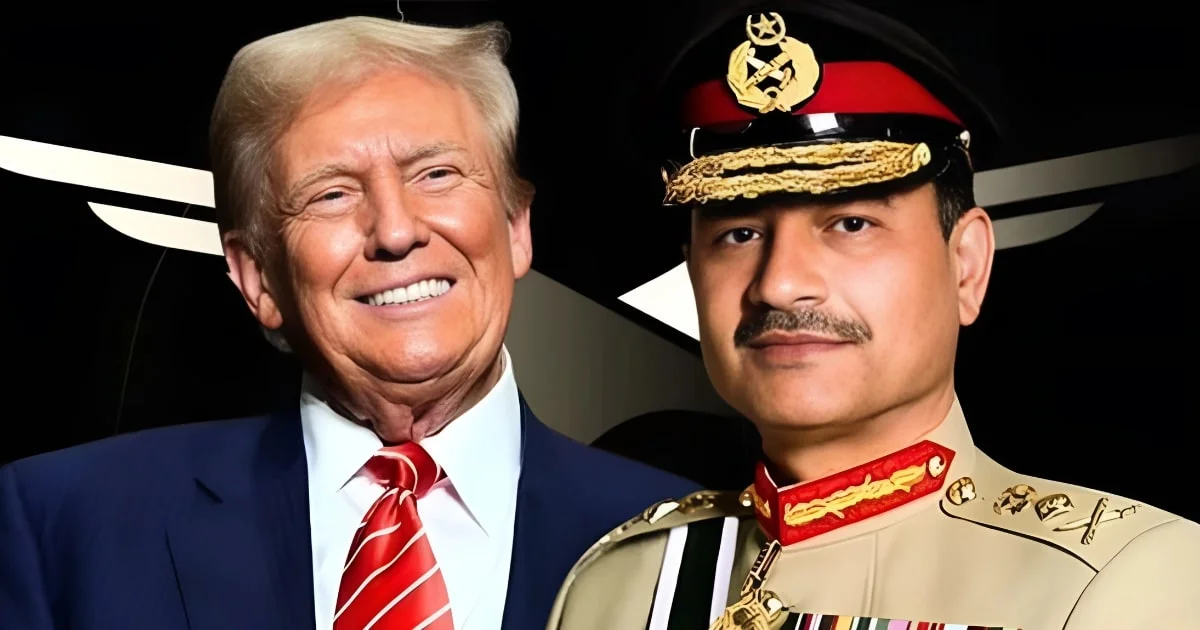
On June 18, 2025, Munir became the first-ever serving Pakistani army chief to meet privately with a sitting U.S. president—Donald Trump—over lunch in the White House Cabinet Room. Trump, in typically grandiose style, credited the Pakistani commander with helping defuse the May conflict with India, hailing both sides for their “smart restraint.”
Strategic Symbolism, and Economic Agendas
The Economist frames Munir’s rise as emblematic of a broader shift in American foreign policy, one that could recalibrate regional dynamics between India, China, and the Middle East. Islamabad appears to be staging a quiet comeback after years of geopolitical marginalization following the U.S. withdrawal from Afghanistan.
Munir’s approach blends hard diplomacy with economic overtures. Notably, he pitched Pakistan as a regional hub for crypto investments and critical minerals to Trump’s business circles. At the same time, he flattered the former president with indirect talk of a Nobel Peace Prize nomination.
An editorial from Radio Pakistan suggests that Trump’s allies are actively exploring Pakistani crypto and mining ventures, while Washington contemplates restoring military aid and tech-sharing agreements, such as night-vision systems and armored mobility platforms.
Trade, Regional Balance, and Diplomatic Finesse
During his June visit to Washington, Munir held strategic briefings with think tanks and national security advisors, outlining his vision of a “respect-based partnership” between Islamabad and Washington. As reported by Dawn, Munir emphasized Pakistan’s sacrifices in the global war on terror while proposing bilateral cooperation in agriculture, AI, and energy.

Source: Dawn
This positioning does not come at the expense of China. In fact, Pakistan’s recent talks to acquire 50 J‑35 stealth jets from Beijing demonstrate that Pakistan, under COAS’ guidance, is walking a delicate tightrope between deepening relations with both China and the U.S..
You May Like To Read: Trump’s Global Tariff Blitz: Rewiring Trade Dynamics Worldwide
Implications for India, Pakistan’s Governance, and Global Audiences
According to The News International, Munir’s outreach reflects a possible shift in Washington’s India-centric strategy. Trump’s imposition of a 25 percent tariff on Indian goods, while capping Pakistan’s at 19 percent, was widely seen as a subtle signal of favoritism.
India’s reaction has been predictably frosty. Prime Minister Modi dismissed any suggestion of U.S. mediation during the May conflict, insisting on direct bilateral military channels. As reported by The Guardian, Indian intelligence agencies have raised concerns over growing U.S.-Pakistan alignment.
Gains, and Risks
Munir’s skillful diplomacy has reignited Washington’s interest in Pakistan, anchored in promises of economic growth, regional stability, and counter-terrorism support. As noted by The Economist, this represents a significant geopolitical pivot.
But the gains come with caveats:
- Transactional diplomacy risks: With Trump’s return to power still contested and volatile, some analysts worry that Pakistan’s new alignment may rest on unpredictable foundations.
- Civil-military tensions at home: Munir’s growing public stature may further sideline elected institutions, a trend that has haunted Pakistani democracy for decades.
- Escalation with India: Munir’s bold rhetoric—that Pakistan “can be hit everywhere” if attacked—heightens the risk of another flashpoint, as documented by The News.
You May Like To Read: Iranian President’s Historic State Visit to Pakistan
Conclusion
In praising Field Marshal Asim Munir, The Economist highlights a new kind of military diplomacy—one centered not only on security cooperation but also on trade, tech, and international image-building. His ability to engage both Beijing and Washington places Pakistan in a unique strategic position. Whether this moment heralds long-term stability or exposes Islamabad to further volatility remains to be seen. What’s clear is that Munir has reshaped Pakistan’s global posture—for better or worse, the world is now paying attention.