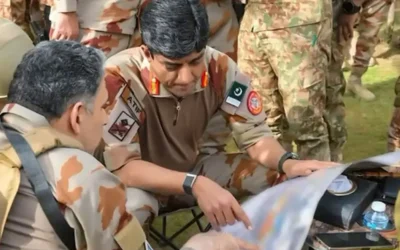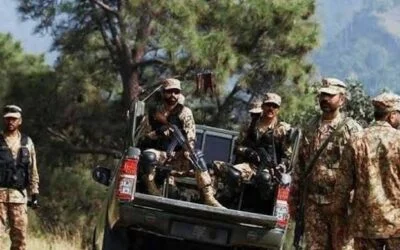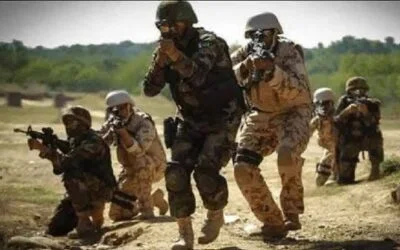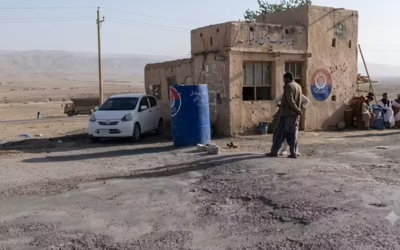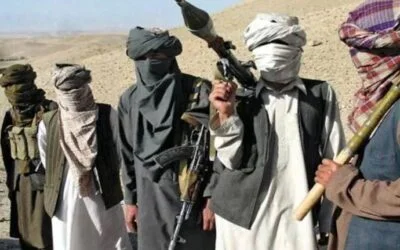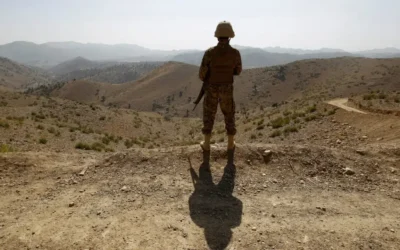

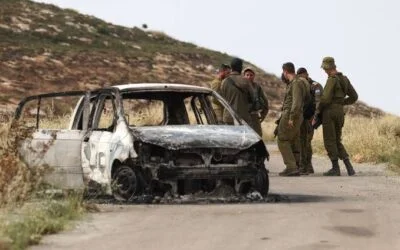


Fitna-al-Khawarij, also called the FAK, was an umbrella body that was formed in December 2007 by different militant groups in the tribal areas of Pakistan. Its main objective was to create Islamic Emirate in Pakistan and wage war against the Pakistani state and military. The militant group is responsible for various infamous fatal attacks, such as the 2009 attack on the GHQ, Rawalpindi.
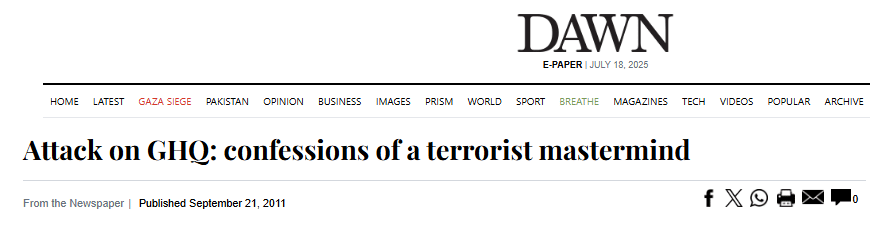
Source: Dawn
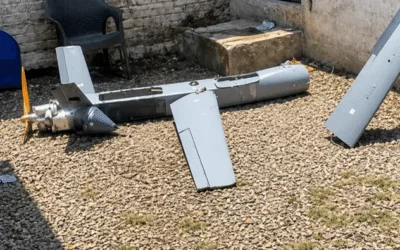
Similarly, this heinous militant faction was also behind the horrific 2014 Army Public School massacre in Peshawar wherein, hundreds of innocent kids were mercilessly martyred.
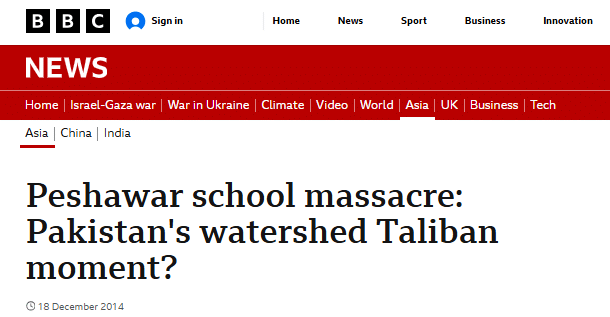
Source: BBC
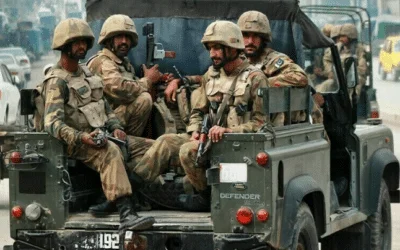
The Pakistan Army in turn conducted massive military campaigns like Operation Zarb-e-Azb in 2014 and Operation Radd-ul-Fasaad in 2017. These operations effectively crippled the FAK by eliminating their strongholds in North Waziristan, killing and arresting a considerable number of their leaders and fighters.
Consequently, fearing Pakistan’s Security Forces, the majority of FAK’s remaining militants escaped into Afghanistan. Across the border, on Afghan soil, FAK got a chance to reorganize, regroup, and restructure its command after Taliban took over Afghanistan in 2021. FAK now operates from its base situated in Eastern-Afghanistan, and has been conducting terrorist activities via the porous border i.e., Durand Line.
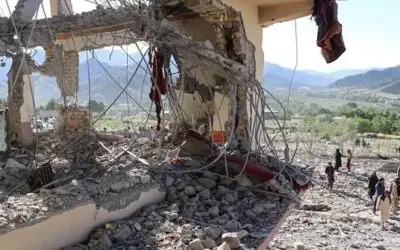
The leadership has also evolved with time. Noor Wali Mehsud succeeded Mullah Fazlullah who was killed in a U.S. drone strike in 2018. During his time, the outfit became more centralized and concentrated disseminating ideological propaganda, attracting other splinter groups under their flag.
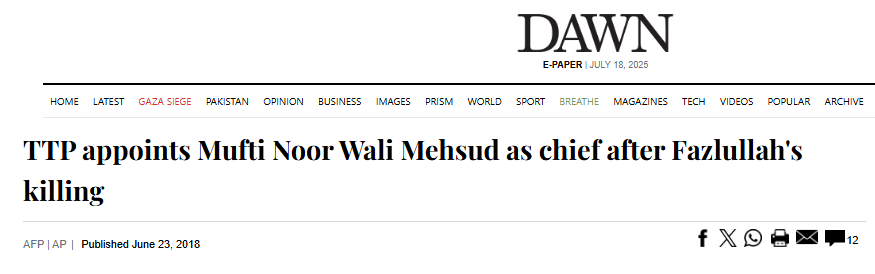
Source: Dawn
Afghan Taliban & FAK Nexus
When the Taliban assumed power in Afghanistan in August 2021, there was optimism that Afghan territory would no longer be used by militants to conduct terrorist strikes across borders.. This has however not been the case with FAK, operating from Afghan soil. To make matters worse Afghan authorities have not been doing anything to stop FAK rather, they have provided them with a safe haven.
It is reported that FAK has a stronghold within Afghanistan which is confirmed by numerous reports. FAK still has training camps and safe houses in eastern Afghanistan and the Afghan Taliban has not done anything significant to curb their movements and activities. FAK can use weapons abandoned by foreign powers and has increased its communication and recruitment abilities inside Afghanistan.

Source: Voice of America (VOA)
The FAK also has a firm ideological connection with the Afghan Taliban. Both organizations follow the Deobandi school of thought, and have a history of fighting together against U.S. and NATO troops—predominantly driven by religious ideologies. Most of the older FAK leaders used to fight with the Afghan Taliban, therefore, it is even more difficult to separate these two factions, or isolate them from one another. The Afghan Taliban do not see the FAK as a threat to regional stability but as Mujahideen.
The coalition of the Afghan Taliban and FAK has made Pakistan’s security environment complex. The inaction of the Taliban to deal with FAK has made the group more powerful, capable of organizing attacks, and sabotaging peace in the region. Consequently, Pakistan is affected by the twofold problem of increasing terrorism and the neighboring regime that does not want to collaborate—to eradicate the security threat posed to Pakistan by FAK.
Implications to Pakistan
The secure sanctuaries that FAK has in Afghanistan have proved detrimental to internal security and regional stability of Pakistan. In the last two years, there was a sudden rise in terrorist attacks in Pakistan, with the majority of the attacks attributed to FAK militants, based in Afghanistan. Over 70 per cent of the recent attacks in Khyber Pakhtunkhwa and Balochistan were carried out by FAK fighters, who planned and organised them on Afghan soil. These attacks have targeted security personnel, police stations, religious congregations, schools, civilians, and buses. Although they are acts of cowardice nevertheless, they instill fear and insecurity in the population and the border areas.
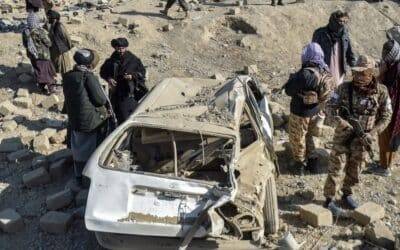
Pakistan has called on the Afghan Taliban to take action against the FAK on several occasions with limited results. This mounting frustration has caused Pakistan to resort to more hard measures, such as cross-border airstrikes. As an example of cross-border attacks, Pakistani jets struck FAK hideouts in Afghanistan’s provinces of Khost and Kunar killing several militants. The move was met with a fierce response by the Taliban government who termed the attack as an act of violation of sovereignty.
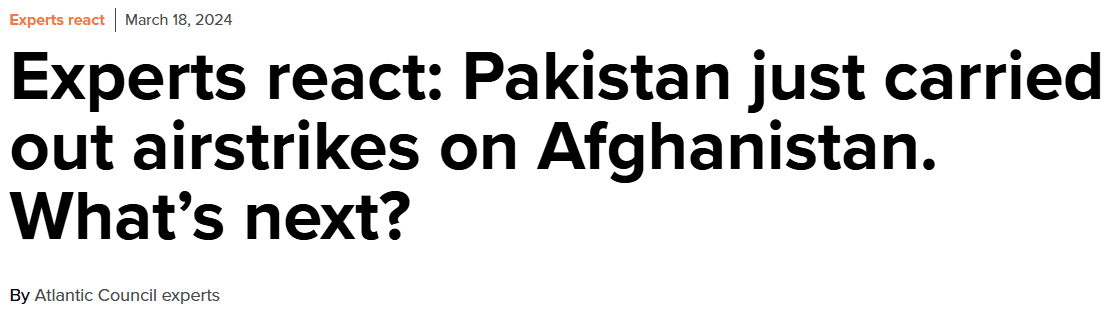
Source: Atlantic Council Expert
These incidents have raised the tension between the two countries. Major crossing points such as Torkham and Chaman have been closed due to skirmishes and disagreements. A number of fatal border clashes between Pakistan and Afghan frontier guards also took place due to which trade and movement of people were stalled. The persistence of FAK in Afghanistan has an impact on the regional development project, such as CPEC (China-Pakistan Economic Corridor) and energy pipelines such as TAPI. The unstable situation in the western part of the Pakistan and Afghan border is a cause of concern to foreign investors and international partners in the success of these mega projects.
Security Fallout and Regional Destabilization
FAK is gaining more power under the shield of the Afghan Taliban, and this precedent is giving a boost to other militant groups and jeopardizing regional peace and economic integration.
The first issue is the escalation between Afghanistan and Pakistan. There are already severe tensions because of the airstrikes and border closures by Pakistan. Such scenarios might result in more military conflicts between the two neighbors, and further strain their relations due to suspended cross-border movement and trade. Thus, turning the bordering region to a very dangerous and unpredictable place.
The second critical concern is the threat posed to regional development initiatives such as China-Pakistan Economic Corridor (CPEC) and TAPI gas pipeline which are aimed at enhancing trade and energy connectivity between South and Central Asia. Such projects require peace and security to sustain and grow. The ongoing FAK attacks in Balochistan and Khyber Pakhtunkhwa have made investors nervous and put off crucial development projects.
Under such circumstances the concerns of humanitarian crises also stem. Violence between nations and insecurity mostly compels civilians to evacuate their homes. Hundreds of families in the Kurram and Bajaur districts have been displaced temporarily in 2023, because of cross-border shelling and terrorist activity. There is also a growing tension due to the mounting pressure on Afghan refugees, currently in Pakistan.
The presence of FAK in Afghanistan, offers other militant groups room to expand their operations and engage in other forms of extremism. These militant outfits include ISIS-K (Islamic State Khorasan Province) and Al-Qaeda—who can recruit fighters while staying safe on Afghan soil. Such groups may take advantage of the turmoil and utilize the area to attack neighboring states turning the Pakistan-Afghanistan border into a safe haven for global jihadist groups.
Conclusion
It is a complex challenge that is being experienced in Pakistan today. The Afghan safe havens of the FAK have turned national security problems into a regional crisis. The Afghan Taliban have failed to act decisively to prevent FAK from using Afghan territory to engage in cross-border terror attacks, despite the repeated calls by Pakistan. Under such circumstances Pakistan is left with uncomfortable options i.e., conducting strikes within the Afghan border to neutralise the threats, due to which the relations can further worsen between Islamabad and Kabul.
Pakistan has to strike a balance between effective border security and astute regional diplomacy to go ahead. Security, diplomacy, and regional cooperation are the only way to ensure that the FAK does not become stronger, and is effectively neutralized to prevent it from contributing to further instability in the region.