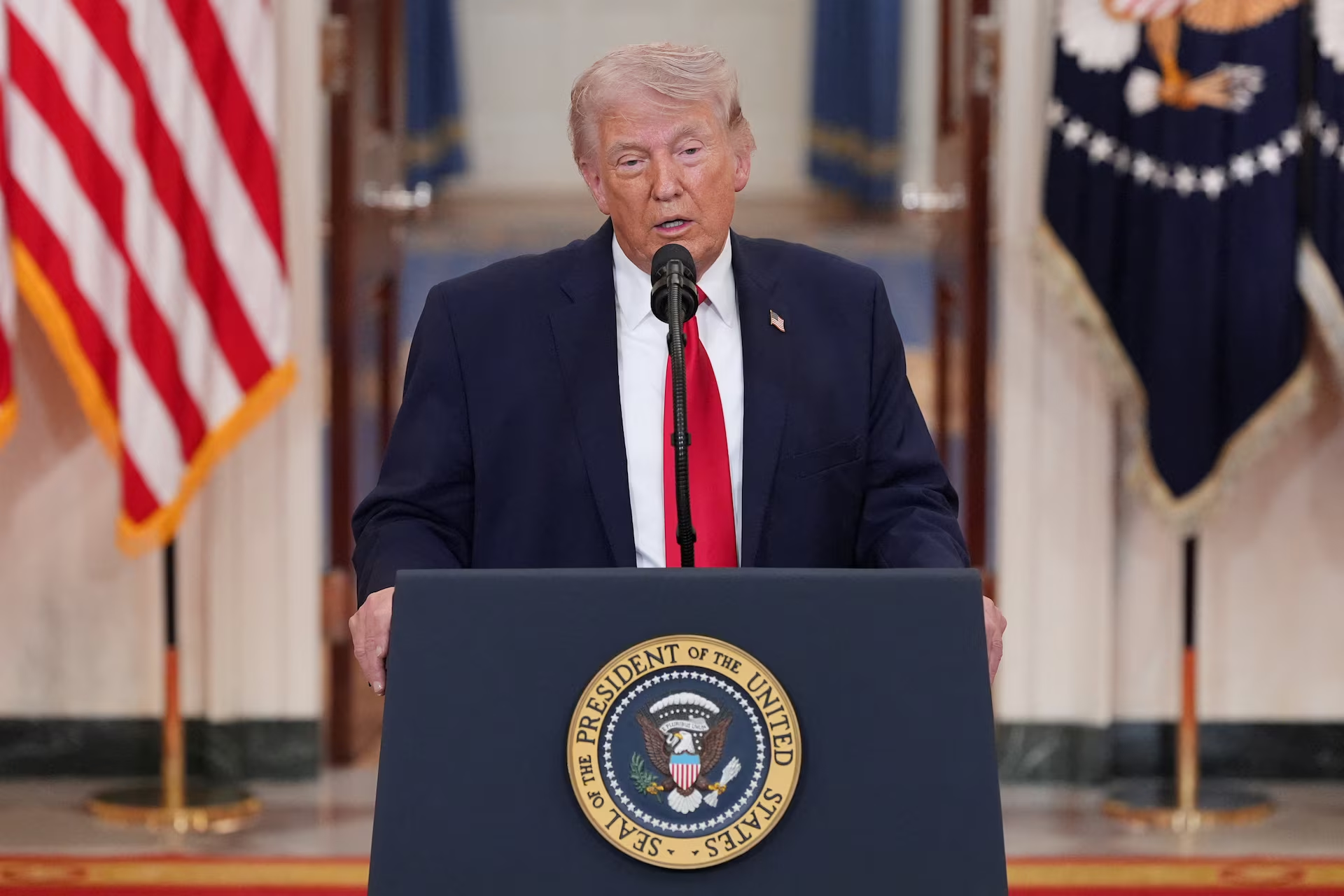





Americans tuning in for President Donald Trump’s first prime-time speech to the nation on the ongoing war with Iran were left waiting for a breakthrough. Instead, the roughly 20-minute address on Wednesday evening largely recycled points the president has been making for weeks.
Many expected Trump to declare either the end of the conflict or a significant escalation, such as potential ground operations. What they got was a confident recap: the war is necessary, the U.S. is winning decisively, and it will “finish the job” very soon.
“We are gonna finish the job. We are getting very close,” Trump told viewers from the White House.
Trump finally tried to sell the American public on his Iran war. But his primetime address instead underscored the US president’s growing defensive posture, as pressure mounts on global shipping routes, gas prices and his political party https://t.co/HYNsodG6ev
— Bloomberg (@business) April 2, 2026
No New Details on Ending the Conflict
Analysts watching the speech noted the lack of fresh information.
“I did not detect anything new. Essentially, it was a summary of all of the tweets he has issued over the last 30 days,” said Trita Parsi of the Quincy Institute.
Sina Azodi, assistant professor of Middle East Politics at George Washington University, echoed the sentiment: “I failed to grasp what he was trying to do and convey. It was really a repetition of everything that he had said in the past.”
Trump repeated his core arguments: the strikes have crippled Iran’s nuclear program, navy, air force, and missile capabilities. He painted a picture of near-total victory, claiming the U.S. and Israel have “systematically dismantled” Iran’s ability to threaten the region.
However, within hours of the speech, Iran launched another missile attack toward Israel, and reports emerged of Iranian cruise missiles targeting shipping near Qatar and Bahrain.
Trump Claims “Regime Change” Has Already Happened
In one of the more striking moments, Trump asserted that regime change in Iran has effectively occurred — not by design, but as a result of the deaths of top Iranian leaders, including former Supreme Leader Ali Khamenei.
“Regime change was not our goal… but regime change has occurred because of all of their original leaders’ death. They’re all dead,” he said.
Critics quickly pushed back. Jamal Abdi of the National Iranian American Council called the claim “clearly false,” arguing that the strikes have instead strengthened the regime’s hardline core, with Mojtaba Khamenei now in place and the IRGC continuing the fight.
Rising Gas Prices and the Strait of Hormuz
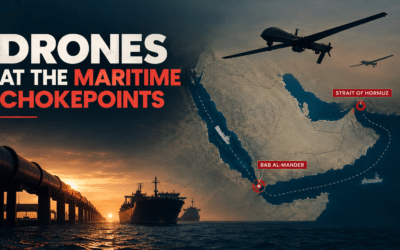
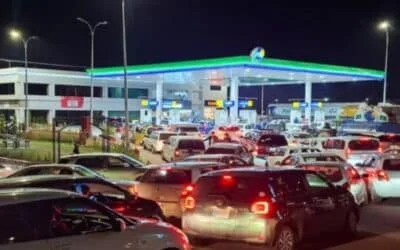
Trump acknowledged the pain Americans are feeling at the pump, with average gasoline prices topping $4 per gallon — the highest since 2022. He blamed Iran’s actions in the Strait of Hormuz, where Tehran has disrupted oil shipping in response to the strikes.
The president urged countries that depend on Gulf oil to step up and secure the vital waterway themselves, saying they should “build up some delayed courage” and “go to the strait and just take it, protect it.”
He stopped short of committing U.S. forces to the task, noting that America is largely energy-independent.
No Mention of Ongoing Talks
Despite Trump’s recent social media posts suggesting active negotiations and even a ceasefire request from Iran, Wednesday’s speech made no reference to diplomacy. Iranian officials have repeatedly denied direct talks and accused the U.S. of fabricating stories to influence oil markets.
Public Support Waning, Especially Among Republicans
The address came as public weariness grows over the conflict. Polls show a majority of Americans oppose the war, with concerns rising over higher energy costs and the risk of a prolonged fight reminiscent of Iraq and Afghanistan.
Support among Republicans has also dropped noticeably in recent weeks, with one recent YouGov survey putting overall backing for the war at just 28 percent (including 61 percent of Republicans).
Parsi noted that Trump’s base is “losing patience” as the economic effects hit grocery stores and gas stations.
Renewed Threats to Iranian Infrastructure
Trump reiterated strong warnings to Tehran, including the possibility of striking electric generating plants “very hard and probably simultaneously” if no deal is reached — a move that would target civilian infrastructure and draw sharp criticism under international law.
Iran has warned of severe retaliation against regional energy targets if such attacks occur.
What’s Next?
While Trump projected confidence that the conflict is nearing its end, the speech offered few concrete details on how or when it will actually conclude. No clear timeline beyond “very soon” or “two to three weeks” was provided, and questions remain about the U.S. endgame, potential negotiations, and the long-term stability of the region.
As the war enters its second month, many observers are watching to see whether the familiar rhetoric gives way to real progress — or further escalation.