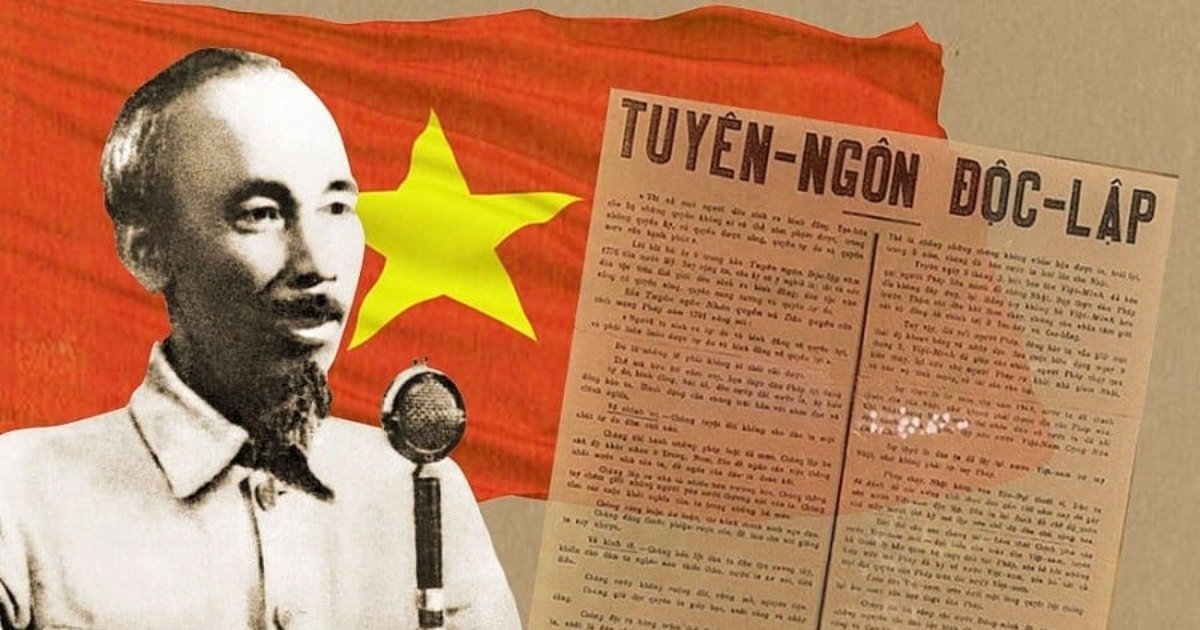



Vietnam is a Southeast Asian country with a long coastline in the South China Sea, boasting a rich culture formed by centuries of Chinese cultural influence, French colonial rule, and high domestic traditions. It belonged to French Indochina in the early 20th century, and people were heavily overexploited and deprived of their political rights. During World War 2, Vietnam was occupied by Japan, but French colonial rule was left intact there. With the defeat of Japan in the war by August 1945, there was a sudden power vacuum, and hence, Vietnamese nationalists had the chance to gain control of their future. The Viet Minh, a nationalist and revolutionary organization led by Ho Chi Minh, held the first national people’s congress on 16 August 1945, where representatives across the country met and strategized to become a nation. This conference became the political backbone of the liberation of Vietnam on September 2, 1945.
Historical Background
The fight of Vietnam to emerge free in the mid-20th century had a history of decades where there was colonization. The Vietnamese were exploited economically, mainly through working in French plantations, and were culturally and politically oppressed under French rule. It contributed to the rise of nationalistic movements, and the Việt Minh was the most robust one. Under the leadership of Ho Chi Minh, the Viet Minh developed a form of political organization that mixed guerrilla warfare to seek to unite the population against colonial and foreign presence.
The situation in the world changed catastrophically by the end of August 1945. Japan, which occupied Vietnam during World War II, was falling apart after it had been defeated by the Allied forces. When the Japanese government went awry and the French were not in a position to soundly revisit the nation, a vacuum of power started to emerge throughout the nation. This was the opportunity in which the Việt Minh felt the need to take, the moment where they could take control away, as they knew that foreign powers would eventually find their way in.
A Thread 👇🏻#OnThisDay (3 Feb) of 1930 the Communist Party of Vietnam (CPV) was founded by Ho Chi Minh. The CPV is considered one of the largest and most disciplined communist parties in the world, with an estimated 5 million members. pic.twitter.com/StcHOlfhY7
— The International Magazine (@TheIntlMagz) February 3, 2023
https://x.com/TheIntlMagz/status/1621550684788375552?t=IHpsx0c931AlG6YOInIGlw&s=19
First National People Congress (16 August 1945)
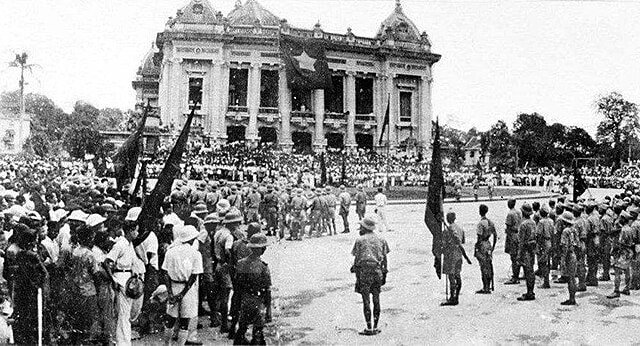
The First National People Congress, which was constituted in Tran Trao on 16 August 1945, helped make decisions regarding the fate of the country by 500 delegates representing all parts of the country. The Congress voted to establish a provisional government, declared an overall insurrection to overtake power from the crumbling Japanese government, and released its strategy of an autonomous Vietnam. This was not just a political rally but also a great demonstration of solidarity, proving that citizens of various regions and social standings could unite around one cause, which was ending foreign domination and becoming an independent nation.
Mobilization & Uprisings
After the Congress, the Viêt Minh rushed to put plans into practice. Military divisions and local revolutionary committees were on the move throughout the country, mobilizing the locals to rebel against Japanese legacy and pro-French rule. The movement moved very fast as towns and provinces were declaring their liberation in turn, prompted by both military action and large-scale popular support.
You May Like To Read:
- Regional Backlash Grows Over Israel’s Settlement Expansion in Palestinian Territories
- Malaysia Condemns Israel’s Settlement Expansion, Reaffirms Support for Palestine
- Deputy Prime Minister Ishaq Dar to Visit United Kingdom to Reinforce Bilateral Strategic Ties
The defining moment was on 19 August 1945 when the Việt Minh successfully captured the capital of the country, Hanoi. This success gave morale to the whole country and once again reinforced the fact that the revolution could not be stopped. In a matter of days, the greater part of northern and central Vietnam would come under the control of the Viet Minh, and on that schedule, the last leg in attaining independence would be achieved as result of August Revolution.
Independence & Legacy
The Declaration of Independence was the most significant event in the history of modern Vietnam, as it was one of the direct consequences of the uprisings. Mentored by the decisions made by the 16 August Congress, Hồ Chí Minh and the provisional government consolidated their authority, laid down the administrative frameworks, and planned a formal transition out of colonialism. The birth of the Democratic Republic of Vietnam came on 2 September 1945 when Hồ Chí Minh stood before a mammoth crowd in Ba Đình Square in Hanoi and declared the independence of this country as a free nation after years of being under foreign rule.
Events of August 16, 1945, continue to mark a milestone in the history of the revolution in Vietnam. They have shown how effective well-developed political planning can be when supported by the energy of popular action. The Việt Minh unified the multitude of voices present in the country into a single movement, thus paving the way to independence, and showed later generations how to strive to gain national sovereignty. Today, the First People National Congress is recalled as the day when Vietnamese national independence was really established itself the moment when the dream of a free Vietnamese nation shifted into reality that altered the history of the country.