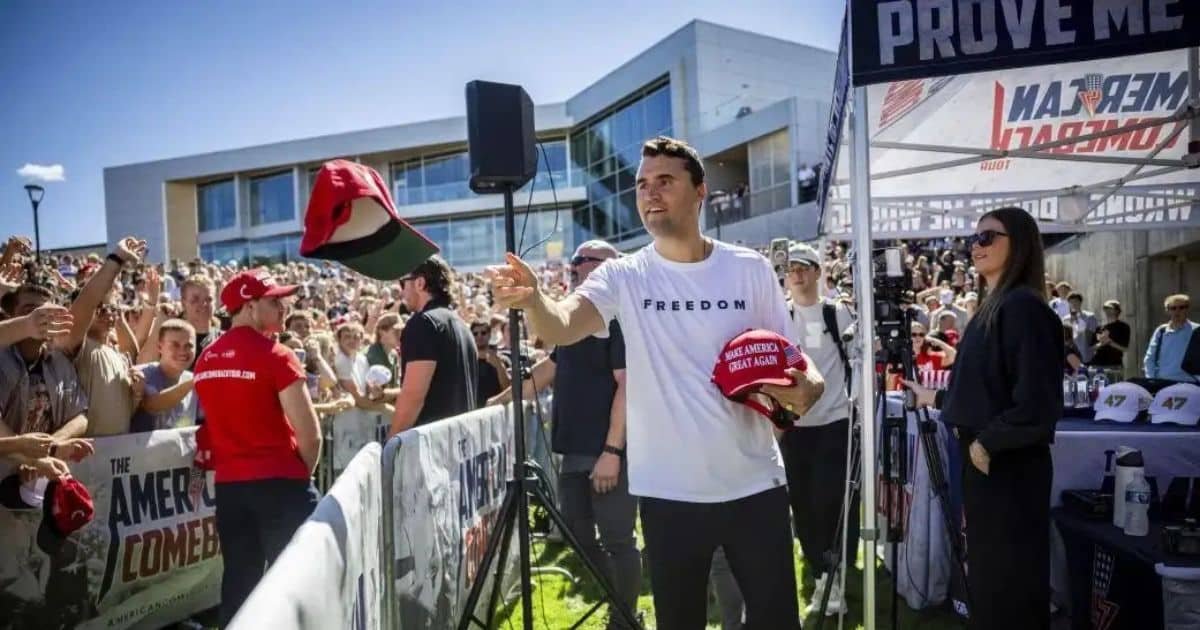





On September 11, 2025, conservative activist Charlie Kirk, the 31-year-old co-founder of Turning Point USA and a prominent ally of President Donald Trump, was fatally shot during a campus event at Utah Valley University in Orem, Utah. Kirk was engaged in a Q&A session discussing mass shootings and transgender issues when 22-year-old Tyler Robinson allegedly fired from a rooftop 142 yards away, striking him in the neck. Robinson, who had no prior voting record but recent left-leaning social media activity, was arrested shortly after; authorities suggest he viewed Kirk as a purveyor of “hate.” The incident has unleashed a torrent of partisan fury: Trump delivered an Oval Office address blaming “radical left” rhetoric for inciting violence, while Democrats condemned the act but accused conservatives of hypocrisy amid broader attacks on left-leaning figures. Social media erupted with celebrations from some on the left, prompting doxxing campaigns, firings, and calls for accountability from the right. This assassination, amid over 150 politically motivated attacks in the U.S. in early 2025, exemplifies escalating domestic polarization. Yet its ripples extend globally, threatening international security through disrupted alliances, amplified extremism via digital networks, and vulnerabilities in financial systems exploited by transnational threats.
The Surge of Political Violence and Its Domestic Divisions
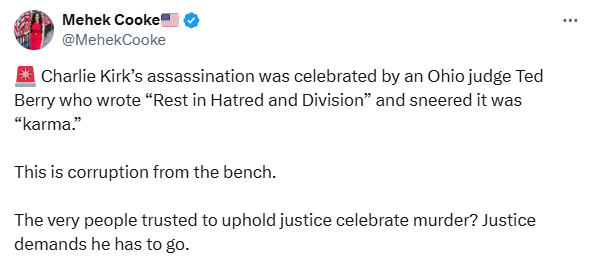
Kirk’s death has intensified America’s already fraught political landscape, where violence is increasingly normalized across the spectrum. In the immediate aftermath, vigils drew thousands, but partisan clashes overshadowed mourning: Congressional shouts disrupted a moment of silence, with Republicans like Rep. Anna Paulina Luna accusing Democrats of fueling hate, while figures like Sen. Katie Britt called for firing those celebrating the killing. On X and other platforms, right-wing users compiled databases doxxing over 40,000 individuals, teachers, professors, and judges, who mocked Kirk, leading to terminations, such as Ohio Judge Ted Berry’s removal after posting “Rest in Hatred and Division.”
Source: X.com
A teacher even showed the assassination video to 10- and 11-year-olds, claiming Kirk “deserved” it, sparking outrage and suspensions. Kirk, known for provocative views on guns, race, and gender, was a divisive figure, but his martyrdom has galvanized conservatives, with some warning of “civil war.” This mirrors prior incidents, like attempts on Trump and killings of Democratic lawmakers, highlighting a “vicious spiral” where rhetoric from both sides, e.g., left-wing celebrations or right-wing vengeance calls, erodes norms against violence. Erika Kirk, his widow, vowed to continue his work at a vigil, underscoring how personal loss fuels further entrenchment. Such divisions not only fracture U.S. society but export instability, as global observers note rising extremism.
Links to Global Financial and Terror Financing Risks
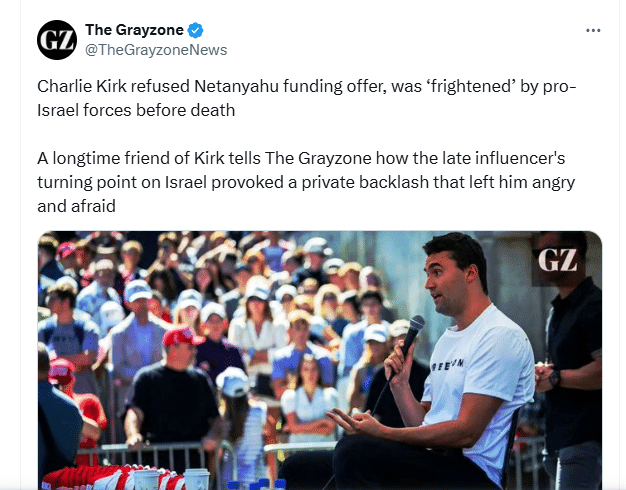
U.S. political turmoil, amplified by Kirk’s assassination, poses direct threats to international security through interconnected financial and extremist networks. Domestic radicalization, often via platforms like Discord or X, mirrors transnational terror tactics, where untraceable digital currencies fund operations. For instance, celebrations of Kirk’s death online have led to cross-border doxxing, potentially escalating into cyber harassment or funding for retaliatory groups via cryptocurrencies, evading traditional oversight. Experts warn this “vicious spiral” could inspire global copycats, as seen in European Parliament debates and vigils in Berlin, where fears mount that U.S. violence weakens NATO cohesion amid domestic unrest. Financially, polarized America disrupts global markets: Instability could spike illicit flows, with extremists exploiting regulatory gaps in virtual assets for terror financing, per FATF reports. Offshore networks might launder funds for U.S.-based radicals, linking to broader threats like cyber attacks on critical infrastructure. Kirk’s ties to pro-Israel stances, including rejecting Netanyahu funding, highlight how U.S. divisions intersect with Middle East tensions, potentially fueling international extremism. With 150+ U.S. incidents in 2025, this risks exporting chaos, undermining alliances and enabling actors like state-sponsored hackers to exploit weakened governance.
Source: X.com
The Role of International Governance in Mitigating Division
Transnational frameworks are essential to counter the global fallout from U.S. polarization, as ad hoc mechanisms like the FATF and UN initiatives fall short. Kirk’s death underscores the need for enhanced multilateral efforts: The IMF and G20 could expand financial transparency rules to track digital currency flows funding extremism, addressing gaps in Basel III that overlook political violence. International bodies, inspired by post-9/11 collaborations, should monitor cross-border radicalization, regulating tech giants to curb algorithms amplifying hate, e.g., via EU-style digital acts enforced globally. Reactions like UK rallies and European silence motions show solidarity, but finger-pointing in the U.S. hampers unity; ad hoc coalitions could bridge this, proposing UN resolutions for shared intelligence on threats. Without such governance, risks escalate: Retaliatory violence could disrupt supply chains or alliances, as unstable U.S. leadership erodes trust in institutions like NATO. Coordinated action, e.g., G7 tech regulations, could prevent further division, fostering resilience against exported instability.
You May Like To Read: What If Taiwan Falls? The Global Economic Earthquake of a Blockaded Indo-Pacific
Conclusion
Charlie Kirk’s assassination symbolizes America’s deepening fractures, where political violence, exemplified by over 150 incidents in 2025, threatens not just domestic harmony but global stability. From partisan backlash and doxxing to international vigils, the event reveals how U.S. divisions amplify extremism, enabling terror financing via digital means and weakening alliances. This demands urgent transnational governance: Enhanced FATF guidelines, G20 financial oversight, and UN-led tech regulations to curb radicalization and illicit flows. Unchecked, such polarization risks worldwide economic disruption and security breaches. By prioritizing unity over division, nations can honor Kirk’s legacy of discourse, forging cohesive frameworks to safeguard global peace.
You May Like To Read: Israel Deports Greta Thunberg, and 170 Gaza Aid Flotilla Activists