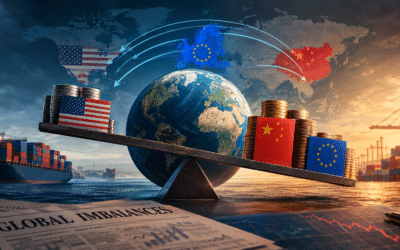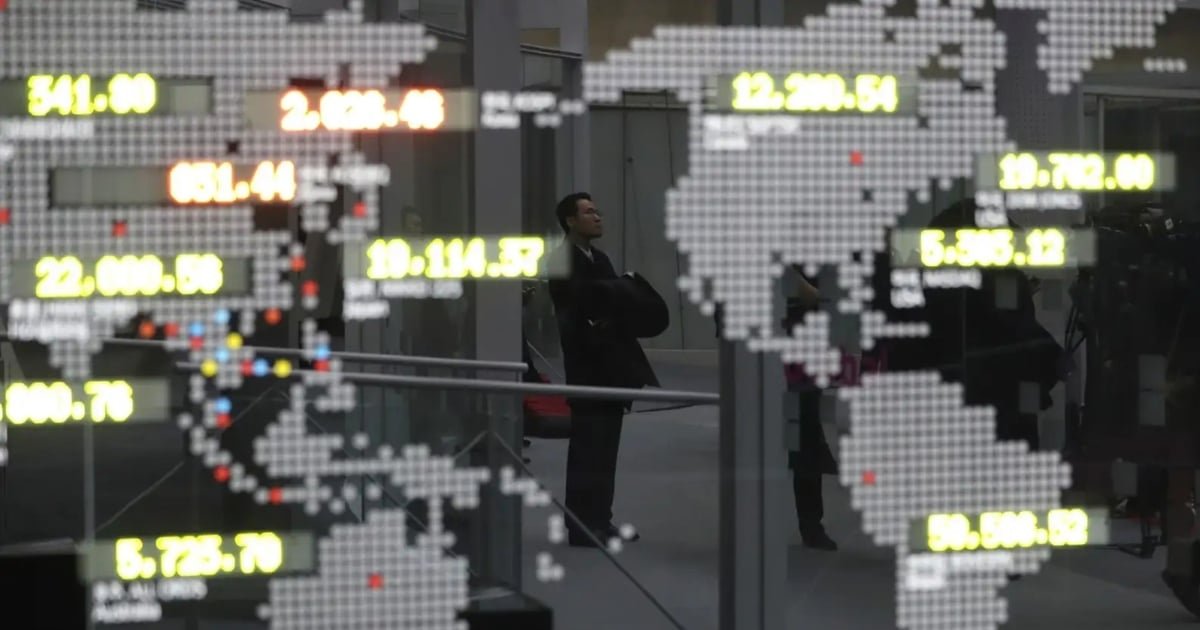





The global economy today stands at a crossroads. The term “deglobalisation” refers to the pullback from deeply integrated, just-in-time global supply chains. In contrast, “re-globalisation” describes efforts to re-embed cross-border trade and cooperation, but under new rules, standards, and structural designs. The tension between these two models is shaping where factories locate, how trade flows behave, and which countries emerge as winners.
Recent data and expert predictions show that multi-sector supply chains are under rising pressure in 2025. According to a report by World Economic Forum (WEF), leading global risks that threaten supply-chain operations this year include extreme weather events, geopolitical conflict, cybersecurity threats and resource shortages. Similarly, the OECD warned in its 2025 “Supply Chain Resilience Review” that aggressive reshoring and localisation, key features of deglobalisation, could reduce global trade by over 18 %and shrink global real GDP by more than 5%, while often failing to create real resilience.
Thus, what is playing out globally is not a neat retreat from global trade, but a transformation. Some supply chains contract; others get rerouted. Some flows dry up; others take new shape under different constraints.
You May Like to Read: The Fragmentation of Global Trade: Is the Era of Hyper-Globalisation Over?
What’s Driving the Shift: Risk, Resilience and Realignment
There are three major structural drivers pushing deglobalisation and re-globalisation to compete.
First, risk. The WEF in 2025 again flagged state-based armed conflict as among the most immediate threats to supply chains worldwide. On top of this, firms are increasingly concerned about cyber-attacks, resource shortages and extreme weather disrupting maritime and land freight, storms, droughts or floods can suddenly paralyse major shipping routes.
Second, the cost of disruption and volatility. Firms are reporting rising losses from unexpected delays or supplier failures. The 2025 survey by WTW shows many businesses no longer consider supply-chain disruption rare; instead, they treat it as part of “normal uncertainty.”
Third, a structural realignment of global value chains (GVCs) triggered by overlapping shocks, from the COVID-19 pandemic to geopolitical tensions like the rivalry between the United States and China and the Ukraine conflict. In a new 2025 working paper, researchers find that while China remains deeply embedded in upstream segments of many GVCs, importing countries, especially in the West, are increasingly shifting to “China + 1” sourcing strategies, adding firms in other Asian or emerging economies to reduce risk. This reallocation shows that global trade is not vanishing but evolving.
Re-globalisation: A New Kind of Global Integration
Re-globalisation is not a nostalgic return to 1990s-style unrestricted trade. Rather, it is an attempt to build a new kind of global economic structure based on resilience, diversification, regulation, and technology.
As part of this shift, many firms are investing in digital transformation, data and supply-chain mapping tools. According to industry surveys, nearly half of firms see high-quality data as a key opportunity this year, and 41% identify digital transformation as a priority to adapt to volatile global conditions. By using digital supply-chain twins, firms can simulate stress scenarios and rewire their supplier networks to reduce systemic risk, a method supported by recent academic work that shows such rewiring can reduce cascading disruptions by up to 50 %while preserving output.
At the same time, countries and firms are rethinking which goods, and which trade flows, matter most. The biggest value may no longer lie in bulk cheap manufacturing, but in higher-value, specialized goods and services, as well as regulated flows of critical or sensitive goods. This change reflects not just economic logic but strategic considerations: supply-chain resilience, national security and regulatory compliance.
What This Means for Pakistan: Risk, Opportunity and What Needs Work
For a country like Pakistan, the global shift offers both opportunity and warning.
On the opportunity side: recent developments under the China–Pakistan Economic Corridor (CPEC) suggest a foundation for deeper integration in re-globalised trade networks. In May 2025, Pakistan and China reaffirmed their commitment to “CPEC 2.0,” highlighting a shift from infrastructure-heavy investment to industrial cooperation, agricultural innovation and regional connectivity. Trade data corroborate this: from January to August 2025, bilateral goods trade between China and Pakistan grew 12.5 % compared to the previous year.
Moreover, Pakistan’s export composition seems to be shifting. As of November 2025, seafood exports to China alone reached US $153 million, up from about $122 million in the prior year, reflecting a 25 %increase. This shows real diversification beyond traditional low-value exports, aided by improvements in cold-chain logistics, faster transit times, and upgraded processing and packaging infrastructure.
On the risk side, global supply-chain stress, whether from geopolitical conflicts, climate-driven transport disruptions or cybersecurity threats, could interrupt trade through vital corridors, damage export flows and raise input costs for Pakistani industries. WEF and other supply-chain analysts warn that firms worldwide are increasingly treating ‘disruption as the new norm.’
For Pakistan to turn opportunity into advantage, structural reforms seem indispensable. Policymakers must ensure stable trade-facilitating infrastructure: efficient customs, reliable transport linkages, energy security, and modern warehousing and logistics. CPEC’s potential to anchor Pakistan as a regional corridor depends heavily on follow-through, clear regulation, facilitation of foreign industrial investment, support to export-oriented sectors and skill development.
You May Like to Read: Pakistan’s Position in Evolving Global Trade Governance
Policy Trade-offs: Between Protectionism and Pragmatic Integration
In theory, a retreat into protectionism and import-substitution might look appealing, especially when global trade appears unstable. But aggressive reshoring and localising, according to OECD modelling, tend to come at high cost: poorer trade volumes, lower GDP, increased volatility.
Thus, for Pakistan, a pragmatic balance must be sought. The path of selective integration, protecting sensitive sectors (if needed), but opening non-strategic ones, while improving trade facilitation, regulatory transparency and infrastructure, seems more sustainable. Given Pakistan’s geography, demographic profile and existing linkages with China and Central Asia, there is scope to align with the re-globalisation trend rather than retreat from it.
Yet such a path requires discipline, policy consistency, and institutional capacity. Erratic regulation or failure to improve logistics, energy or customs will likely deter investors and trade partners.
You May Like to Read: Pakistan’s Trade Deficit Balloons to $12.6 Billion in Four Months as Imports Hit 43-Month High
Conclusion: Pakistan’s Moment If Matched by Reform
What we are witnessing globally is not the end of globalisation, but a reconfiguration. Global supply chains are being rewired, firms and governments are choosing risk and resilience over lowest-cost shortcuts, and trade flows are being redirected, diversified, and regulated more strictly.
For Pakistan, this dynamic provides more than a theoretical choice. CPEC and evolving trade with China indicate potential pathways for greater integration into new regional and global networks. But turning that potential into real economic benefit will require structural reforms, in trade policy, infrastructure, logistics, energy, and workforce skills.
If policymakers seize this moment with strategic clarity and implement reforms consistently, Pakistan could emerge not as a passive victim of changing global tides, but as a proactive node in a re-globalised economic order. The real test will not be in slogans or pledges, but in ports, factories, customs halls, and grid-connected industrial zones.