For over two decades, Pakistan’s militant landscape has been dominated by the Fitna-al-Khawarij (FAK/TTP)—a group whose violent campaign is not only a challenge to national security but also an assault on the very idea of modernity. While most terrorist violence is often framed as opportunistic or tactical, the FAK’s strategy reveals something deeper: a systematic ideological war against progress. Schools, vaccination teams, communication towers, and state infrastructure are not incidental casualties but chosen targets, representing an enemy worldview that sees modern state-building itself as “apostasy.”
You May Like To Read: Quetta Lecturer Exposed: India-Backed FAH’s Baloch Proxies Foiled Again
Education as a Battlefield
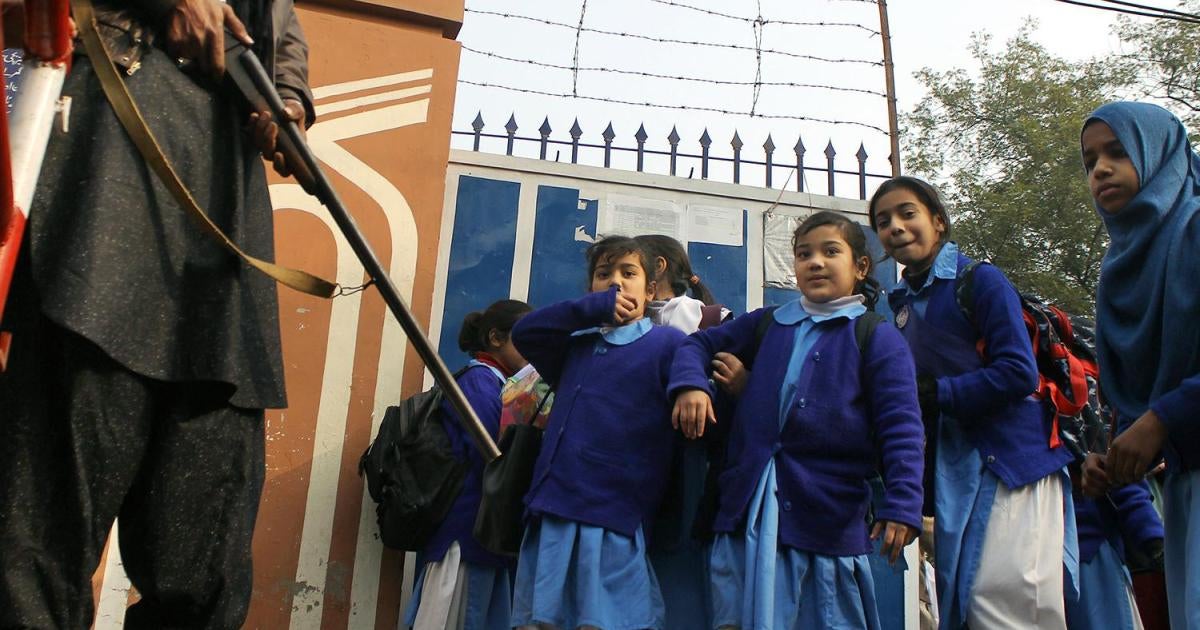
The most emblematic aspect of this ideological war is the FAK’s campaign against education. From the bombing of girls’ schools in Swat and FATA to high-profile attacks like the 2014 Army Public School massacre in Peshawar, education has consistently been positioned as a threat to their worldview.
For the FAK, education—especially for women—represents emancipation from clerical control and tribal patriarchy. A literate society undermines the monopoly of militant ideology by producing citizens who can question, challenge, and aspire beyond extremist narratives. By burning schools and terrorizing teachers, the FAK seeks to halt this social mobility and trap communities in intellectual darkness.
The attack on Malala Yousafzai in 2012 was not only an assault on an individual but also an act of symbolic warfare: punishing those who embody the very values of progress and empowerment.
Public Health as an Ideological Target
Another striking dimension is the targeting of polio vaccination teams. Pakistan remains one of only two countries where polio has not been eradicated, largely due to militant violence against health workers.
The FAK frames vaccination drives as “Western conspiracies,” using religious rhetoric to delegitimize them. Dozens of polio workers—often women—have been assassinated in recent years, creating a climate of fear that hampers eradication campaigns.
This opposition is not about health policy per se—it is about rejecting the state’s authority to provide public goods. By undermining vaccination, militants weaken trust in state institutions and perpetuate cycles of disease and dependency in marginalized regions.
Infrastructure Sabotage: Towers, Roads, and Energy
Beyond education and health, the FAK also targets communication towers, electricity grids, and development projects in border areas. Destroying mobile phone towers cuts off connectivity, isolating communities and limiting the state’s ability to project governance.
Similarly, attacks on roads and construction projects stall integration of tribal regions into Pakistan’s national economic framework. For militants, poor infrastructure is not a disadvantage—it is a form of control. An isolated, underdeveloped, and fearful society becomes easier to manipulate through coercion and extremist narratives.
By sabotaging development, the FAK not only weakens Pakistan’s physical infrastructure but also erodes the symbolism of progress—the visible signs of a state striving for modernization.
The Ideological War Against Modernity
At its core, the FAK’s violence cannot be understood merely as a military insurgency. It is a project of ideological regression, where any marker of progress—be it a school, a vaccine, or a transmission line—becomes a symbol of resistance to their theological worldview.
This worldview sees modernity as a corrupting force that dilutes religious purity and erodes traditional power hierarchies. Progress is equated with apostasy, and those who champion it—teachers, doctors, engineers—are marked as enemies.
In this sense, the FAK’s violence reflects a calculated “apostasy of progress,” where destruction is not random chaos but the enforcement of a political theology that rejects the legitimacy of the modern Pakistani state.
Consequences for State-Building
The cumulative effect of these attacks is profound. By targeting schools, militants create a generational knowledge gap; by attacking health workers, they perpetuate disease; by sabotaging infrastructure, they stunt economic growth.
The FAK’s campaign thus represents a strategic strangulation of state capacity. A weak, fearful, and underdeveloped periphery creates space for militant control, while undermining Pakistan’s ability to integrate borderlands into the national framework.
Countering this requires not only military responses but also ideological counter-narratives. Pakistan must frame education, health, and development not just as state services but as acts of collective resilience against extremism. Protecting teachers, honoring polio workers, and rebuilding schools must be treated as victories in a broader ideological battle.
Lessons for Policy and Society
- Education as Counter-Extremism: Investing in schools, particularly for girls, is not just social policy—it is counter-terrorism.
- Health as National Security: Protecting vaccination campaigns is as vital as guarding borders, for disease undermines long-term stability.
- Infrastructure as Resistance: Roads, towers, and grids are more than development projects—they are bulwarks of national sovereignty.
- Ideological Contestation: Militancy cannot be defeated without delegitimizing its worldview. Religious scholars, community leaders, and civil society must reclaim space from extremist narratives.
The FAK’s war is not only against the Pakistani state but against the very idea of progress. By framing modernity as apostasy, they seek to reverse history and reimpose an isolated, regressive order. Yet the resilience of Pakistani society—from teachers returning to classrooms, to health workers braving threats, to engineers rebuilding infrastructure—shows that the contest is far from over.
The real victory against extremism will come not only when militants are neutralized, but when progress itself—education, health, and development—is defended as a sacred trust, a collective covenant of national survival.
You May Like To Read: The Kulbhushan Jadhav Echo: Enduring Relevance of Espionage Cases in Indian Proxy Warfare