




A legal milestone, and a test for the world
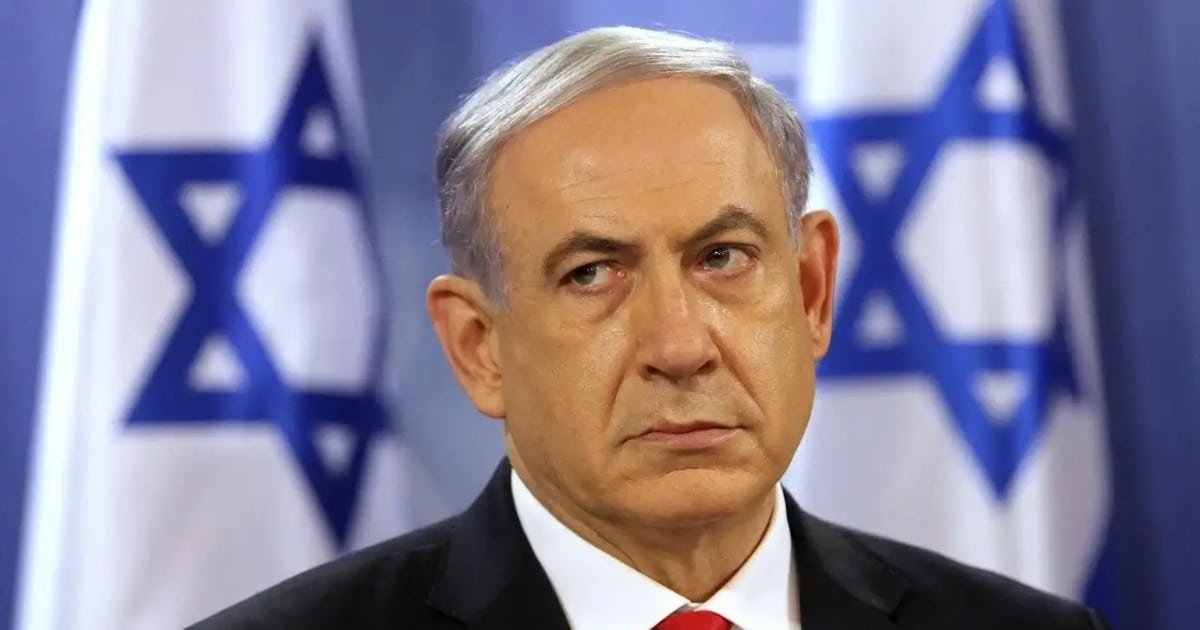
On 21 November 2024 the International Criminal Court took the rare step of issuing arrest warrants for Israel’s prime minister, Benjamin Netanyahu, and his then-defence minister Yoav Gallant, accusing them of war crimes and crimes against humanity in Gaza. The court’s judges had already issued a separate warrant for Russia’s president, Vladimir Putin, in March 2023 over the alleged unlawful deportation of Ukrainian children. Those decisions mark an unmistakable turning point; the ICC is willing to name sitting leaders from powerful states. Yet naming is not the same as enforcing, and the gap between legal pronouncement and practical accountability is the central drama now playing out across international politics.
When law meets realpolitik
States sign treaties and create courts to make universal law meaningful in ordinary life. But the field of international criminal justice sits on an uneasy compromise: sovereign equality on paper, asymmetric power in practice. Arrest warrants issued by The Hague become operational only if nation-states, many of which are parties to the Rome Statute, decide to act. When those states are allies of the accused, or when larger geopolitical calculations are at stake, enforcement becomes a discretionary political act rather than an automatic legal duty. The result is a patchwork of compliance that makes justice look, at times, conditional on convenience.
Powerful friends, selective shields
Why do powerful allies evade accountability? The reasons are blunt: strategic alliances, economic dependence, military cooperation and domestic political calculations. Several democracies have publicly resisted enforcing warrants against allied leaders. Some governments frame the ICC’s steps as politicised or legally flawed; others worry about reciprocal exposure of their own officials. The United States, which has never ratified the Rome Statute, has moved beyond rhetoric and imposed penalties on ICC personnel involved in cases touching U.S. allies, a dramatic exertion of extraterritorial power that undercuts the court’s reach. Those actions signal that legal imperatives collide with national interest calculations in predictable ways.
The politics of non-enforcement: recent examples
Non-enforcement has not been theoretical. When Netanyahu travelled to friendly states after the ICC warrants were issued, at least one European government publicly vowed not to comply and even discussed withdrawing from the Rome Statute rather than risk arrest. Other states have quietly avoided placing him in situations where arrest could be demanded. At the same time, a number of countries have pursued their own legal routes or political responses, Turkey, for example, issued national arrest warrants for Israeli officials in November 2025, a move that underscored both solidarity with victims and the fragmentation of international judicial responses. The practice of issuing national warrants alongside, or instead of, ICC action is an emerging feature of this fractured enforcement landscape.
The philosophical tug-of-war: rights versus sovereignty
At the heart of the debate is a philosophical tension older than the ICC; are there moral claims so weighty that they trump a state’s sovereign prerogative? Human-rights advocates argue that some crimes, genocide, crimes against humanity, war crimes, are of universal concern and must be prosecuted irrespective of the perpetrator’s rank. Sovereignists reply that subjecting sitting heads of state to arrest by a supranational institution risks politicising justice and violating norms of domestic self-determination. Both positions have force; the dilemma is not resolved by legal instruments alone but by the balance of power among states, and by the political will to accept constraints on impunity.
Does selective enforcement delegitimise the court?
Selective enforcement corrodes perceived neutrality and, over time, the legitimacy of any legal institution. If the court is seen to apply pressure selectively, pursuing leaders of some states while others escape consequence because of strategic alliances, its authority will be questioned by governments and publics alike. That delegitimisation is dangerous: it pushes skeptical states either to openly defy the court, to withdraw from the Rome Statute, or to attempt domestic prosecutions that mirror international investigations but lack their impartiality. The long-term effect could be not more justice but more juridical fragmentation, a world where accountability depends on blocs and bargains rather than on a shared body of law.
The regional stakes: Why Pakistan should watch closely
For countries in South Asia and the Global South, the ICC’s travails are not abstract. These states have a strong interest in predictable international norms: selective justice sets a precedent that powerful states can weaponise international law or ignore it when inconvenient. At the same time, many developing countries rely on the very multilateral institutions that have kept interstate conflict from spiralling. Pakistan, with its own complex security environment and diplomatic priorities, benefits from stable rules that apply evenly. A weakened ICC reduces an avenue for redress for ordinary victims and tilts the system toward ad hoc power politics, a trend that would be worrying for any state that prizes a rules-based order.
What the ICC can do, and what it cannot
The court can strengthen its legitimacy by rigorous transparency, impeccable evidentiary standards, and relentless engagement with member states to clarify jurisdictional questions. It can also build coalitions of states willing to uphold rulings and to protect court officials from political pressure. But the ICC cannot compel non-cooperative governments to act militarily or politically against their own allies. Nor can it insulate itself from broader geopolitical backlash; measures such as sanctions or diplomatic isolation by powerful countries are outside its control. In short, the ICC’s authority ultimately depends on politics as much as law.
A fragmented legal order is the real risk
If selectivity becomes the norm, the international legal ecosystem risks fragmentation rather than reform. We may see parallel tracks, national prosecutions in some capitals, politically motivated immunity in others, and ad hoc tribunals convened by coalitions of the willing. That outcome would make accountability contingent and inconsistent, eroding the predictability that underpins international relations and, worse, leaving victims without reliable remedies. Conversely, a coordinated response by a critical mass of states, including those in the Global South, could shore up the court’s authority and narrow the gap between indictment and arrest.
Conclusion: politics will decide justice’s fate
The ICC’s November and earlier warrants are historic and necessary moves toward ending impunity; they are not, however, a cure-all. Whether the court’s rulings become enforceable law or symbolic gestures will depend on how states choose to act, whether they prioritise alliance politics or the long-term stability that comes from consistent rule application. For Pakistan and other nations watching closely, the choice of alignment matters. The international community now faces a moral and strategic choice: protect the principles of universal accountability even when it is uncomfortable, or accept a world where law yields to power and justice becomes selectively delivered. The future of a rules-based international order hangs in the balance.
You May Also Like to Read:
-
U.S. Sanctions ICC Officials in Controversial Retaliation Amid Global Condemnation
-
-
A Graveyard of Innocence: The Daily Slaughter of Children in Gaza, and Collapsing Global Conscience
-
Israel Intensifies Strikes in Southern Lebanon as Hezbollah Vows to Resist
-
UN Top Court Rules Israel Breached Obligations, Must Allow Full Aid Access to Gaza