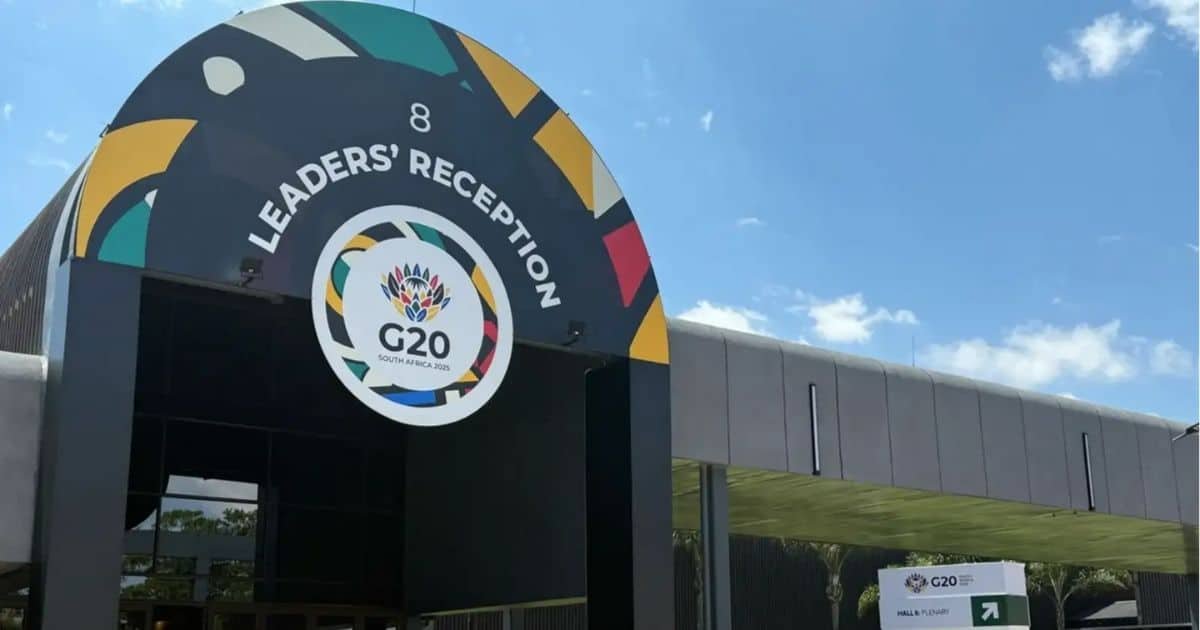





The G20 leaders’ summit in Johannesburg has drawn intense global attention because it is the first time the grouping meets on African soil and because South Africa has framed the talks around issues that matter most to developing countries. These include reform of global finance, relief for unsustainable debts and scaling up climate finance. The summit’s programme, laid out by South Africa’s presidency and shaped by a wide set of guest African countries and blocs, intentionally puts the priorities of poorer nations centre stage, promising a different tone from many past gatherings.
You May Also Read: Overwhelming Consensus Reached at G20 Summit Despite US Boycott
IMF Reform: More Voice, More Legitimacy
One of the clearest demands from the Global South is that major institutions such as the International Monetary Fund change how they work. Low- and middle-income countries want a bigger voice in IMF governance, quicker access to concessional lending, and lending rules that recognise the need for long-term investment and climate resilience rather than just short-term macro stability. The IMF itself has acknowledged the fragile state of the global economy and the need for cooperation, but concrete steps on quota changes or governance reform are politically sensitive and slow-moving, and many developing delegations will press Johannesburg to convert talk into a timetable for real change.
Debt Restructuring: From Ad hoc to Systemic Solutions
Debt relief and a workable way to restructure sovereign debt is probably the single most urgent economic demand at the summit. African leaders and a wide set of low-income countries have been paying a steep price in debt service that cuts investment in health, education and green infrastructure. Recent G20 expert work and proposals presented under South Africa’s presidency call for coordinated refinancing packages, use of concessional instruments, and creative options such as better mobilisation of Special Drawing Rights and rethinking how official and private creditors share burdens. Johannesburg will test whether the G20 can move from repeated diagnoses to a coherent mechanism that speeds restructurings without destabilising markets.
Climate Finance: Money, Timing and Instruments
Climate finance remains a top demand. Vulnerable countries say promises made in earlier summits have not translated into funds on the ground, particularly for adaptation and for the new “loss and damage” commitments that recognise irreversible harms from extreme weather. Developing nations want larger, predictable flows, more concessional finance, and instruments that do not load them with new debt. South Africa’s agenda presses for better links between multilateral development banks, climate funds and private capital to squeeze more finance out of existing structures. The technical reports and roadmaps circulated by the G20 this year aim to strengthen the global sustainable finance architecture, but the political test is whether rich countries back those programmatic fixes with cash and firm timelines.
What the Global South is asking for, in practice
Delegations from Africa, Latin America and parts of Asia are asking for a package that combines immediate relief and long-term reform: expedited debt treatments for the most distressed borrowers, a clearer pathway to include climate costs in debt sustainability frameworks, faster reform of IMF lending instruments so they do not force austerity that chokes growth, and a big push to operationalise loss-and-damage funding in a way that reaches communities. They also want more representation in decision-making bodies so that policies reflect their realities rather than models built for very different economies. Those are practical tasks, not rhetorical flourishes, and Johannesburg will be judged on whether it turns them into measurable steps.
You May Also Read: From ‘Global South’ to ‘Global Majority’: Is the West Losing Its Linguistic Monopoly on Power?
Politics in the room: A Complication for Substance
Johannesburg’s agenda is also being shaped by geopolitics. There are difficult political moments that complicate consensus-building, from disagreements between major powers to high-profile absences and protests over diplomatic protocols. Such tensions can slow or dilute commitments. Yet the summit has also shown that when the Global South’s arguments are framed in terms of global stability and growth, they can find support beyond their region. Translating that fragile political convergence into durable policy will require skilful diplomacy and willingness by advanced economies to accept changes to the status quo.
What Success would look like for Developing Countries
For developing countries, a successful Johannesburg outcome would not be a single headline but a package: clear timelines and funding pledges for the loss-and-damage and adaptation agenda; a credible, time-bound plan for faster, fairer debt treatments; commitments to IMF governance or to new lending facilities that protect development spending; and tangible steps to mobilise private finance through strengthened MDB (multilateral development bank) coordination. Concrete indicators, dates, dollar amounts, and reform milestones, would signal a departure from past G20 pledges that often lacked follow-through.
Why Pakistan and Similar Economies should care
For countries like Pakistan, the stakes are obvious. Better access to concessional finance and a fairer approach to restructuring would ease immediate fiscal pressures and free resources for infrastructure, social services and climate resilience. Stronger loss-and-damage financing and more concessional climate finance would reduce reliance on commercial borrowing for adaptation projects. Even if Pakistan is not the headline actor at Johannesburg, the outcomes there will shape the international financial landscape Pakistan navigates for years to come.
You May Also Read: IMF Beyond Loans: Does Pakistan’s Recurring Dependence Reveal a Structural Crisis in the Global Financial Order?
The Sceptical Verdict: Promises may Outstrip Delivery
Sceptics warn that even a friendly Johannesburg declaration risks falling short without robust implementation plans and financing. Institutional inertia, political pushback in creditor nations and the complexity of coordinating commercial creditors, China, bilateral lenders and multilateral institutions all make the pathway narrow and hard to manage. The summit can set new norms and start processes, but the hard work of turning those commitments into real debt relief, new IMF rules and flowing climate funds will happen long after leaders depart.
You May Also Read: The Global South’s Chessboard: Rewriting the Game of Geopolitics
Concluding: A test of Global Fairness, and of Political will
Johannesburg is more than a regional milestone; it is a test of whether the G20 can reform the global financial system to be fairer and more resilient. For the Global South, the summit is an opportunity to press a united case for justice in finance: clearer rules for debt restructuring, safety nets against climate loss, and institutions that reflect today’s multipolar reality. The outcome will be judged not by the rhetoric of communiqués but by whether poorer countries see relief in their budgets, investment in their green transitions and a meaningful voice at the institutions that set the rules. If leaders deliver tangible steps, Johannesburg could mark the start of a more equitable global finance. If not, it will be remembered as another summit of good intentions without the follow-through that developing countries urgently need.
Check out our latest video: