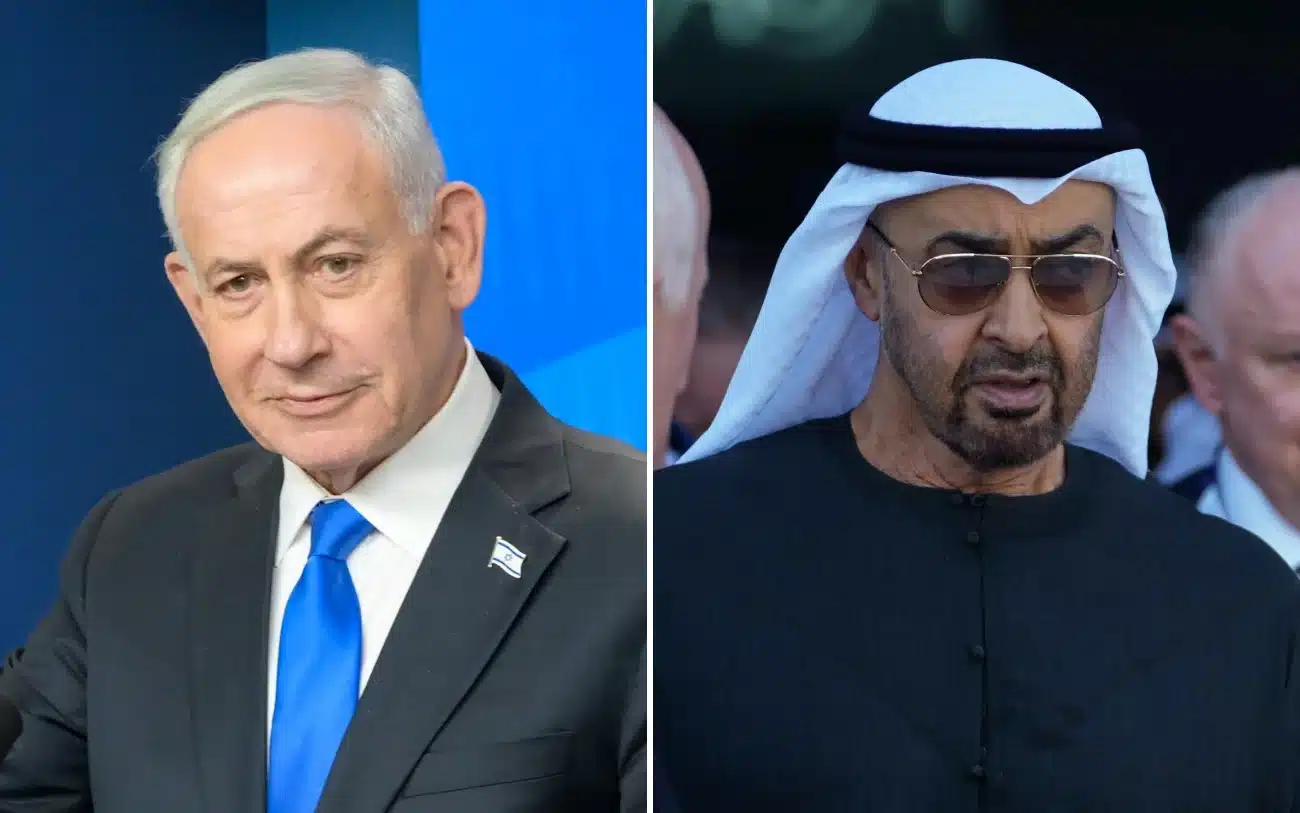





Israeli Prime Minister Benjamin Netanyahu’s office has released a statement claiming a clandestine meeting between Netanyahu and UAE President Sheikh Mohammed bin Zayed Al Nahyan took place during a period of heightened tensions, coinciding with an Israeli military operation against Iran. The statement, released on Wednesday, asserts that Netanyahu made a secret visit to the UAE to meet with President Sheikh Mohammed.
Netanyahu’s office hailed the alleged visit as “a historic breakthrough in relations between Israel and the UAE.” The timing of the statement is particularly noteworthy, coinciding with US President Donald Trump’s visit to China.
Benjamin Netanyahu’s office says he had secret meeting with UAE president – but Emirates deny claimhttps://t.co/2kg6Siiues
— Sky News (@SkyNews) May 14, 2026
UAE Denies the Claim
However, the UAE has swiftly denied the reports. The UAE’s foreign ministry stated that relations between the two countries are not conducted in secrecy and dismissed the claims of an unannounced visit as “baseless” unless officially confirmed by the UAE.
Critical Analysis
This situation presents a complex geopolitical puzzle. Netanyahu’s office’s claim, if true, would represent a significant step towards normalization between Israel and the UAE, potentially signaling a united front against shared regional concerns. The timing of the release, coinciding with Trump’s visit to China, could be interpreted as a strategic move to highlight Israel’s diplomatic efforts and its alignment with certain regional powers.
However, the UAE’s swift and firm denial casts serious doubt on the veracity of Netanyahu’s office’s statement. Several possibilities arise:
- Misinformation or premature disclosure: Netanyahu’s office may have released the information prematurely, before a formal agreement or announcement could be reached with the UAE. It is possible that discussions occurred but did not reach a stage warranting a formal visit.
- Political maneuvering: The statement could be a strategic move by Netanyahu to bolster his image domestically or internationally, regardless of its accuracy. It might be an attempt to project strength and diplomatic prowess.
- Genuine denial: The UAE may be genuinely refuting the claim due to political sensitivities or concerns about domestic or regional repercussions. Publicly acknowledging such a meeting, especially during a period of heightened tensions, could be perceived negatively.
- Miscommunication: There could have been a misunderstanding of some kind with the information received by Netanyahu’s office.
The conflicting accounts highlight the sensitive nature of relations between Israel and the UAE, and the complexities of diplomacy in the Middle East. Further investigation and official statements will be needed to clarify the truth behind this disputed claim.