


Pakistan’s Geography, and Crime Networks
Pakistan’s geography, a long, porous land border with Afghanistan, a lengthy coastline on the Arabian Sea, busy air- and sea-ports, and large diasporas in the Gulf and beyond, has long shaped its role in transnational criminal markets. That position makes the country simultaneously vulnerable as a source of victims and attractive as a transit hub for organised criminal groups moving drugs, people and contraband between South Asia, the Middle East, Africa and Europe. Recent data and enforcement activity through 2024–2025 show both the scale of the problem and the limits of responses so far.
Narcotics Trade, and Shifting Routes
The narcotics picture is the most visible. The collapse of formal controls in neighbouring Afghanistan after 2021 and the persistence of opiate production there have reinforced routes that pass through Pakistan toward Iran, the Gulf states and Europe. At the same time, new consumer markets and synthetic drugs, notably methamphetamine, have generated fresh routes, concealment methods and packet-smuggling tactics that use commercial trade, couriers and maritime containers. International monitoring by UN agencies identifies South and West Asia as critical nodes in global opiate and stimulant supply chains, and Pakistani territory has been repeatedly implicated as transit for consignments destined for the Gulf, Southeast Asia and beyond.
You May Like to Read: ANF Conducts Nationwide Crackdown on Drug Traffickers, Seizing Narcotics Valued at Over Rs. 21.5 Million
Law Enforcement, and Drug Seizures
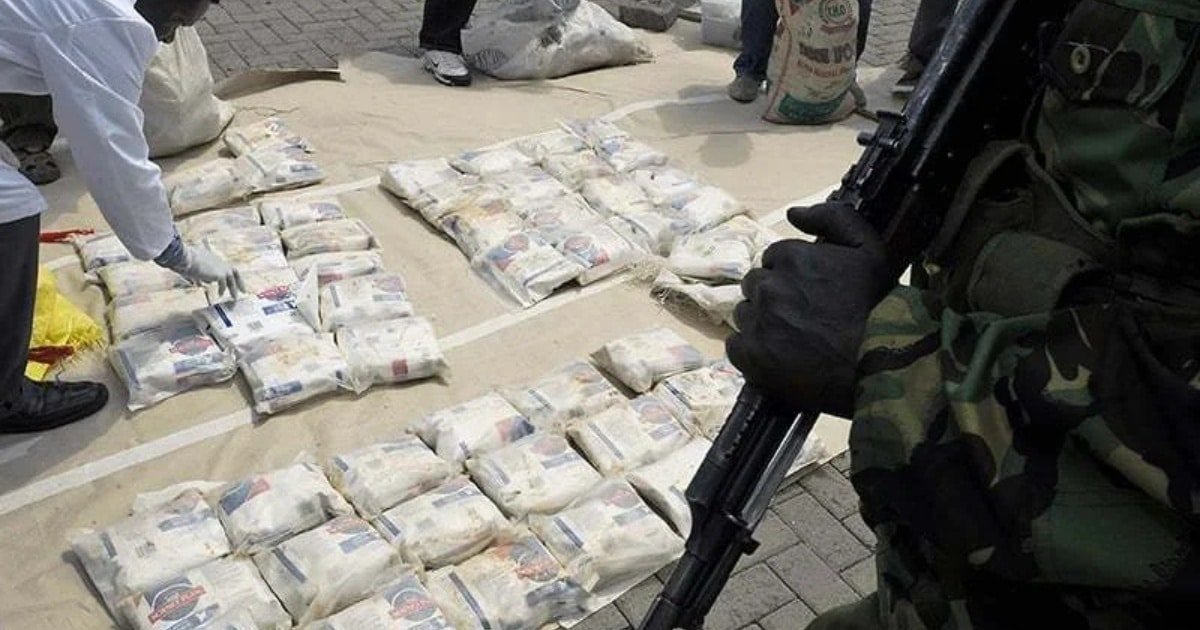
Law enforcement in Pakistan has scored frequent tactical successes, with Anti-Narcotics Force (ANF) press releases and court filings showing large seizures of heroin, methamphetamine and precursor chemicals in ports and airports. Those seizures illustrate both the scale of trafficking and improving detection capacity inside the country. In 2024–2025 ANF reported hundreds to thousands of kilograms seized in coordinated operations at sea, in containers and via parcels. But seizures, while headline-grabbing, are only one measure; traffickers adapt quickly, shifting routes and packaging methods, and the inflow of illegal drugs continues to outpace prosecutions and convictions in many cases.
Human Trafficking, and Migrant Smuggling
Human trafficking and migrant smuggling are another grave and complex dimension. Pakistan is predominantly a source and internal destination for forced labour, including bonded labour in agriculture, brick kilns and domestic work, while also acting as a transit country for migrants heading to the Gulf and Europe. The United States Trafficking in Persons report and UNODC analyses underline that chronic poverty, lack of legal migration channels, and weak labour protections push people into exploitative arrangements and criminal hands.
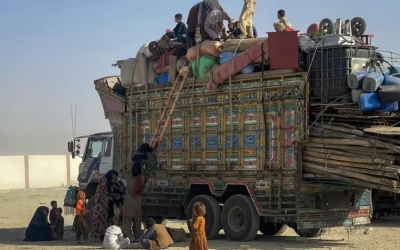
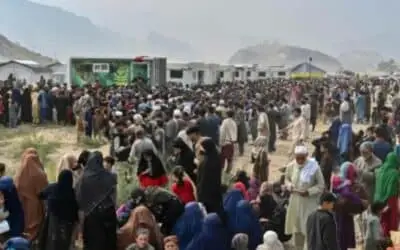
Afghan refugees and irregular migrants are especially vulnerable to traffickers who exploit demand in Gulf labour markets and criminalised migration corridors. These patterns mean Pakistan is both a place where trafficking victims are produced and a corridor by which victims are moved.
You May Like to Read: Narco-Money and Smuggling: The Hidden Lifeline of FAK Along the KP-Balochistan Border
Organised Crime, and International Networks
Organised crime in Pakistan is not a single monolith but a web of domestic groups, regional brokers and international suppliers. Some networks are locally rooted, exploiting weak governance in border districts and urban margins, while others are transnational, linking suppliers in Afghanistan and Iran with distribution cells or buyer networks in the Gulf, Southeast Asia and Europe. Money-laundering, falsified documentation, and the use of legitimate businesses as fronts are common. Corruption and limited inter-agency coordination at times blunt investigations and prosecutions, meaning that high-profile arrests do not always translate into sustained disruption of entire chains. International partners have therefore emphasised intelligence-sharing, port security and capacity building as priority interventions.
You May Like to Read: Organized Crime’s Expanding Reach: Drugs and Human Trafficking Networks
Regional Cooperation, and Gradual Progress
There are signs of gradual improvement. Pakistan has stepped up cooperation with Gulf states and regional partners on intelligence and liaison officers focused on narcotics and migrant smuggling. Joint operations, better screening at ports and airports, and targeted investigations against courier networks have produced larger seizures and occasional dismantling of trafficking cells. International organisations such as UNODC have supported awareness campaigns, victim assistance initiatives and training for Pakistan’s law enforcement and judicial actors to strengthen prosecutions and victim protection. Yet prevention and protection remain weak where social and economic drivers, poverty, lack of work, and limited legal migration routes, are unaddressed.
Balancing Policy, with Social Realities
Policy choices must therefore balance enforcement with social policy. Heavy-handed crackdowns may disrupt flows temporarily but can deepen marginalisation and push traffickers to more clandestine methods. A more durable strategy would combine coordinated regional diplomacy to close transit loopholes, modernisation of customs and port monitoring, stronger anti-corruption measures inside enforcement agencies, scaled victim services for trafficking survivors, and pragmatic labour agreements that provide safe, legal channels to the Gulf markets that many Pakistanis rely on. These measures are politically difficult and require resources, but they address the root incentives that criminal networks exploit.
You May Like to Read: Exploiting the Vulnerable: Organized Beggary and Human Trafficking
Concluding
Pakistan’s location is a structural fact that cannot be changed. Geography makes it a corridor and a frontline, but it also places the country at the centre of a security challenge that no single national agency can solve alone. Honest accounting of both the operational successes and remaining governance gaps should guide public debate. Reducing the harms of transnational crime will require sustained regional cooperation, better protection for vulnerable communities, and a shift from episodic enforcement to a long-term, integrated policy that treats smuggling and trafficking as both criminal justice and social development problems.