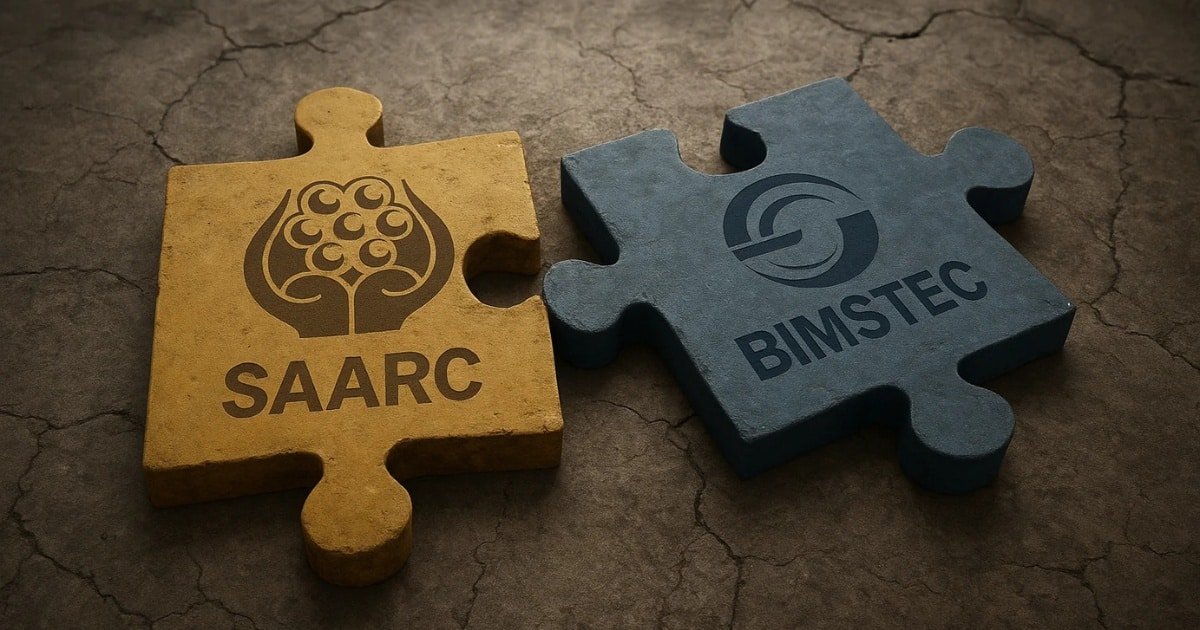


South Asia’s two big regional banners; SAARC and BIMSTEC, tell a revealing story about the region’s stop-start integration. SAARC, born in 1985 with lofty aims and a free-trade area formalised in 2006, has been largely paralysed since the 2016 summit collapse. By contrast, BIMSTEC has inched forward: its Charter entered into force on May 20, 2024, and leaders gathered in Bangkok on April 4, 2025, to push connectivity and trade facilitation. The contrast matters for Pakistan, which sits inside SAARC but outside BIMSTEC.
Why SAARC Stalled
The proximate cause is politics. India–Pakistan tensions repeatedly spill into regional forums, freezing consensus in an organisation that operates by unanimity. Since 2019, diplomatic downgrades and trade suspensions have hardened the impasse, and Indian officials continue to link any revival of SAARC to concerns over cross-border terrorism. In practice, that has meant no leaders’ summit even as some technical bodies still meet. The numbers reflect the chill. Intraregional trade is stuck around 5% of South Asia’s total, far below ASEAN’s ~25%, leaving billions in potential gains unrealised.
You May Like to Read: The Foreign Policy Dilemma of Pakistan and India
BIMSTEC’s Slow but Real Movement
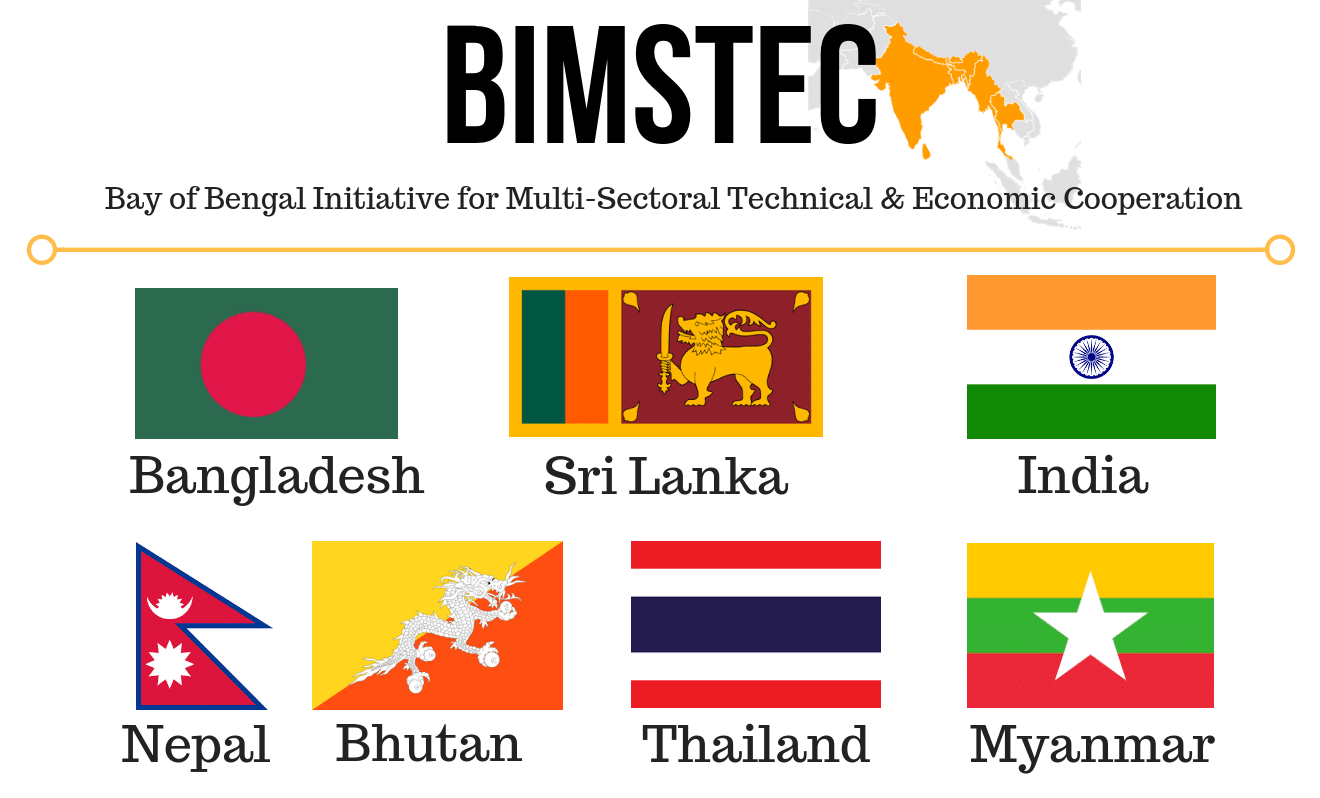
BIMSTEC links five South Asian economies with Thailand and Myanmar around the Bay of Bengal. The Charter’s entry into force in 2024 gave the grouping legal personality and clearer institutional organs; the Bangkok Summit in April 2025 signalled political willingness to operationalise connectivity and trade agendas, including advancing the Maritime Transport Agreement and the BIMSTEC Master Plan for Transport Connectivity. Yet even here, intra-regional trade remains in the mid-single digits, and implementation will hinge on customs reform and financing.
Structures that Complicate South Asian Regionalism
South Asia’s regional integration struggles stem less from individual rivalries and more from structural imbalances. The region brings together economies of very different sizes, levels of development, and governance capacities, which makes consensus-building difficult. Countries often hedge between regional cooperation and extra-regional partnerships, diluting collective bargaining power. On the economic side, persistent non-tariff barriers, slow customs harmonisation, and underdeveloped transport corridors raise the cost of doing business across borders. Even when tariffs are reduced on paper, cumbersome paperwork, mismatched standards, and border management issues continue to stall the flow of goods and services.
Why BIMSTEC Appears to be “Moving” Where SAARC Is Not
Design and geopolitics both matter. BIMSTEC avoids the India–Pakistan veto problem entirely, Pakistan is not a member, allowing India, Bangladesh, Sri Lanka, Nepal, Bhutan, Thailand and Myanmar to advance sectoral cooperation where interests converge. The Charter clarifies decision-making and expands scope for external partnerships; flagship documents like the Trade Facilitation Strategic Framework and the Transport Master Plan create credible workstreams that can be funded and sequenced. Even so, progress is uneven and will require sustained attention from capitals beyond occasional summits.
You May Like to Read: Gulf Economies’ Diversification (Vision 2030)
What this Means for Pakistan
For Pakistan, the SAARC paralysis is not a verdict against regionalism; it is a prompt to pursue layered integration. Islamabad retains an interest in reviving SAARC, Kathmandu, as chair and host of the Secretariat, continues to back an inclusive platform, and in repairing bilateral ties with India where feasible, because nothing substitutes for the scale effects of the immediate neighbourhood. At the same time, Pakistan can plug into Bay of Bengal value chains indirectly by deepening trade facilitation with Bangladesh and Sri Lanka, aligning standards, and using shipping links that BIMSTEC is prioritising, even without formal membership. This is consistent with the region’s own recognition that connectivity and logistics, rather than tariffs alone, will unlock growth.
A Pragmatic Pathway Forward
First, decouple technical cooperation from political cycles. SAARC’s specialised centres continue to function, the SAARC Cultural Centre’s Governing Board met in Colombo in August 2025, offering space for apolitical pilots on disaster management, public health and climate adaptation that tangibly benefit citizens across borders. Second, champion trade facilitation at home: digitised customs, mutual recognition of standards with neighbours, predictable border management and efficient port logistics would lower costs regardless of forum and position Pakistani exporters to snap up pent-up demand in South Asia. Third, engage constructively with BIMSTEC’s connectivity agenda via project-level partnerships and shipping routes, even as Pakistan advocates a formal restart of SAARC summitry. None of this requires abandoning principled positions; it does require a practical focus on supply chains, standards and ships over slogans.
Conclusion
South Asia’s integration problem is not destiny. It is a governance challenge shaped by mistrust, design flaws and underinvestment in connectivity. BIMSTEC’s recent institutionalisation shows progress is possible when veto points are fewer and projects are tightly scoped. If Pakistan couples a principled push to restart regional dialogue with domestic reforms that cut trade costs, it can help nudge South Asia from stalemate to slow, steady integration, on terms that serve Pakistani exporters, consumers and workers. That is a regionalism worth pursuing, and a pragmatic path that aligns with Pakistan’s own growth imperative.
You May Like To Read: Cloudburst Calamities in Pakistan: The Causes, Impact, and Challenges