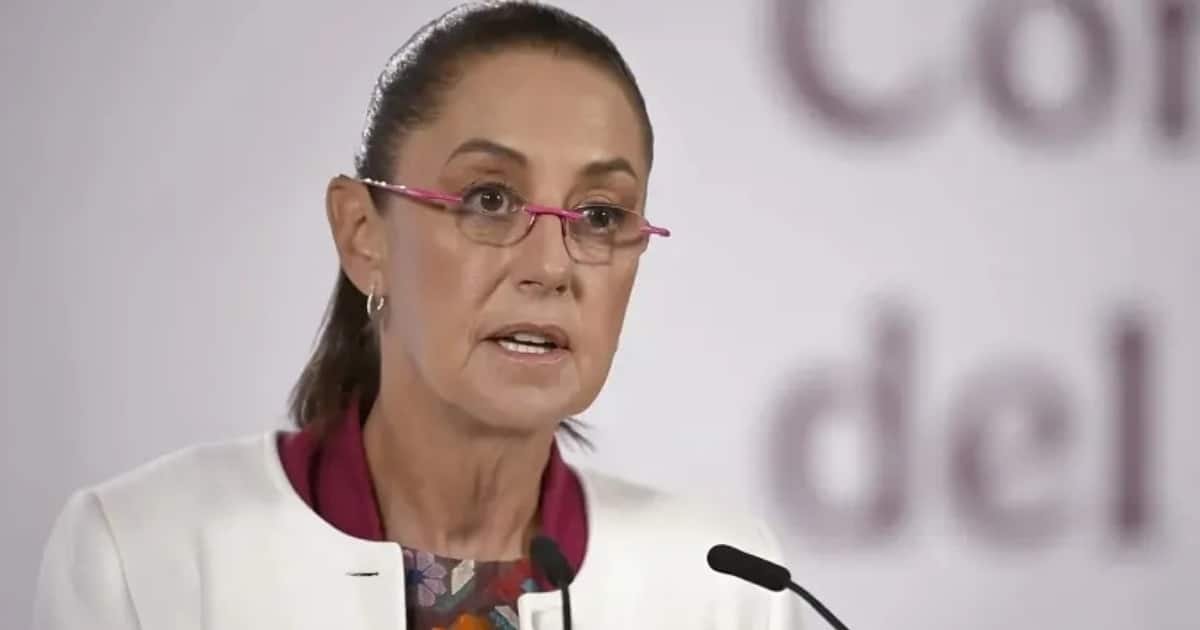





President Claudia Sheinbaum and U.S. President Donald Trump held a pivotal 15-minute telephone exchange on January 12, focusing on the future of bilateral security cooperation and the current balance of power between the two nations.
“Last time the United States intervened in Mexico, they took half of our territory”
President Sheinbaum said she would not accept “support” from foreign troops, after Trump suggested he would “be proud” to bomb Mexican boats to stop “drug cartels” from coming to the US. pic.twitter.com/aLmsn9vVdM
— BreakThrough News (@BTnewsroom) November 18, 2025
Strategic Boundary-Setting
During the call, President Sheinbaum explicitly rejected the possibility of direct U.S. military involvement in Mexico’s fight against organized crime. Citing constitutional and sovereignty grounds, Sheinbaum emphasized that while security collaboration is a shared goal, intervention on Mexican soil is a non-negotiable boundary. This position follows a shift in regional dynamics after the recent U.S. military operation in Venezuela, which has heightened Mexican concerns regarding unilateral U.S. actions.
Deterrence Through Data
President Sheinbaum countered narratives of a “captured” state by presenting measurable operational outcomes from her administration’s security strategy:
- Fentanyl Reduction: A 50% decrease in fentanyl crossings into the U.S. and a 43% decline in fentanyl-related deaths.
- Domestic Safety: A 40% reduction in homicides in Mexico since Sheinbaum took office.
- Enforcement: The dismantling of dozens of clandestine laboratories and tens of thousands of arrests related to drug trafficking.
Regional Stability and Non-Intervention
The leaders also discussed the ouster of Nicolás Maduro. President Sheinbaum restated Mexico’s long-standing doctrine of non-intervention, distancing Mexico from the Venezuelan political crisis while acknowledging U.S. concerns regarding narcoterrorism links. Senior Mexican officials described this approach as “delivering the homework”—demonstrating that Mexico is a capable partner to remove any pretext for unilateral military escalation from Washington.
You May Like To Read: White House Announces 25% Tariff on Nations Conducting Business with Iran
Looking Ahead
While U.S. Ambassador Ronald Johnson described the current relationship as “most cooperative,” structural tensions remain. The upcoming binational security meeting in Washington, scheduled for January 22-23, will serve as a critical indicator of whether the U.S. will continue to work within existing coordination mechanisms or pursue a path of increased pressure.
For Mexico, this “defensive pragmatism” aims to use policy results as instruments of deterrence to maintain diplomatic space and protect national sovereignty.
Check out our latest video: