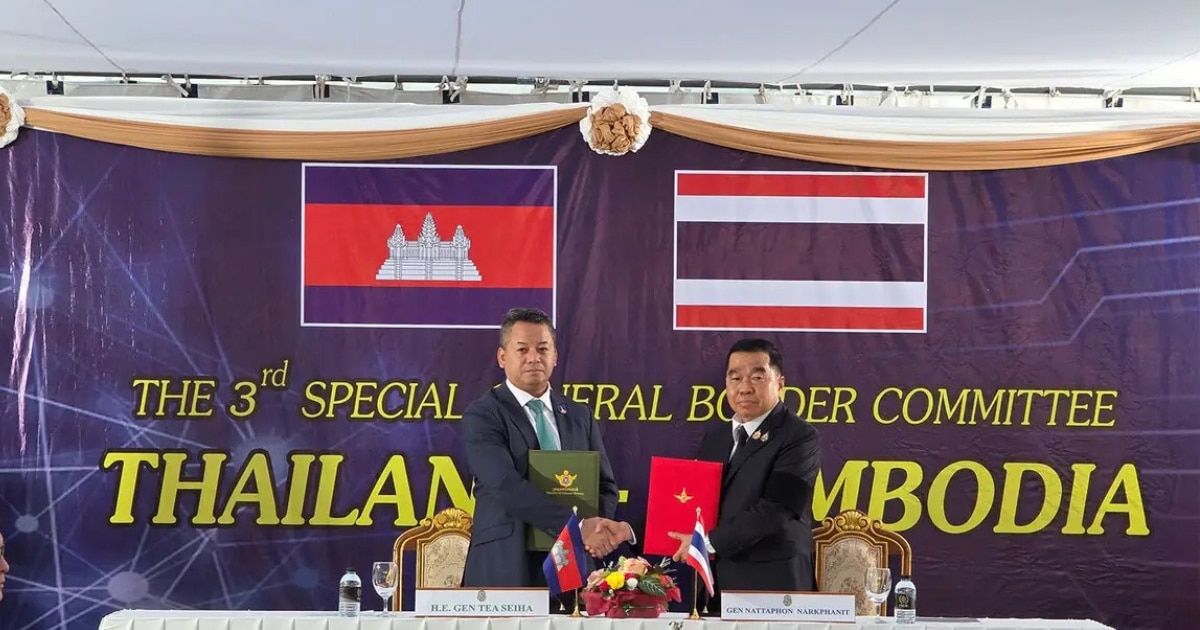


Thailand and Cambodia officially agreed on Saturday to a comprehensive ceasefire, ending twenty days of intense border clashes that marked the most significant hostilities between the two Southeast Asian nations in decades.
The agreement, signed by Thai Defence Minister Natthaphon Nakrphanit and Cambodian Defence Minister Tea Seiha, mandates an immediate halt to all movement of troops and military assets. According to a joint statement released by the Cambodian Ministry of Defence, both nations will maintain current deployments to prevent further escalation.
“Any reinforcement would heighten tensions and negatively affect long-term efforts to resolve the situation,” the joint statement noted.
Key Provisions of the Agreement:
- Troop Standstill: Both sides have committed to maintaining current positions without further movement or reinforcement.
- ASEAN Monitoring: An observer team from the Association of Southeast Asian Nations (ASEAN) will monitor the ceasefire to ensure compliance.
- Repatriation: Thailand has agreed to return 18 Cambodian soldiers held since July, contingent upon the maintenance of the ceasefire for 72 hours.
- Civilian Safety: Both ministers underlined a commitment to refrain from using force against civilians and to facilitate the return of over 500,000 displaced persons.
- Direct Communication: Permanent communication channels have been established between the respective Ministers of Defence and Chiefs of the Armed Forces.
The conflict, which saw the deployment of fighter jets and heavy artillery, resulted in at least 101 fatalities and widespread displacement across the 817-kilometre land border. The resurgence of fighting in early December followed the breakdown of a previous July truce brokered by US President Donald Trump and Malaysian Prime Minister Anwar Ibrahim.
While the ceasefire addresses immediate security concerns, both parties clarified that the pact does not impact ongoing border demarcation activities. Long-term territorial disputes will continue to be addressed through existing bilateral mechanisms.
You May Like To Read: Google Introduces New Feature to Change Gmail Addresses
“War and clashes don’t make the two countries or the two people happy,” stated Thai Air Chief Marshal Prapas Sornjaidee. “I want to stress that the Thai people and the Cambodian people are not in conflict with each other.”