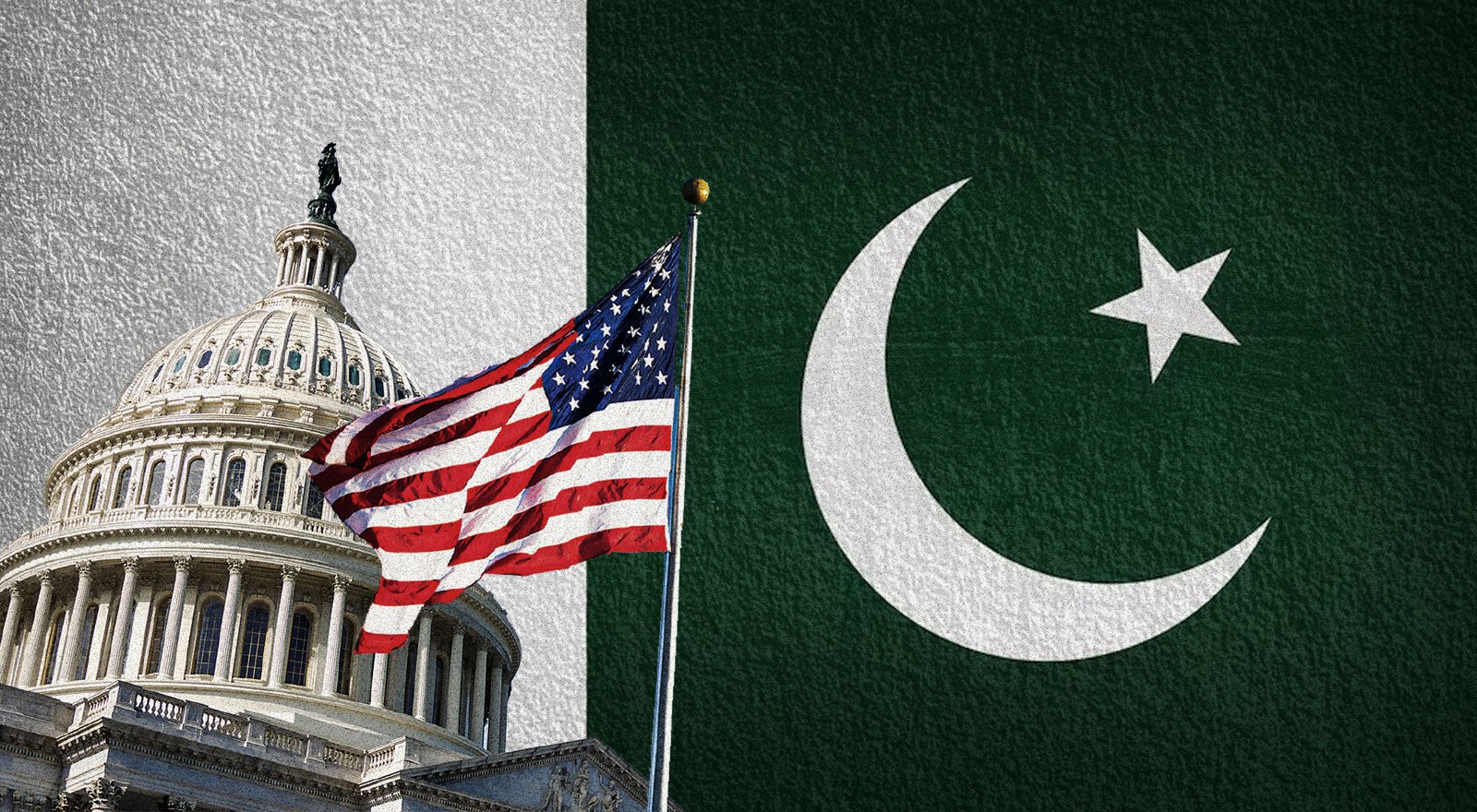



The course of Pakistan-US relations has traditionally been defined by the changes in the geopolitical interests, and they are characterized by alternating periods of strengthened collaboration and extreme suspicion. The relationship has been under great tension during the first term of Donald Trump (2017-2021) when the US suspended aid, accused Pakistan of being duplicitous in counter-terrorism campaigns, and the US strategic leaning towards India was evident. Nevertheless, there was a certain positive interaction, especially towards the end of the Afghanistan peace talks, when Pakistan played a major role. Trump 2.0 becomes president in 2025, it raises questions concerning US-Pak bilateral ties. This article discusses how the second term of Trump redefines ties between Pakistan and the USA in the changing regional and international contexts.
Return of Strategic Isolationism and America First
With a second Trump administration, the policy of isolationism, transactional diplomacy, and a hard-line approach to China, the “America First” policy is likely to be revived. This strategy puts more emphasis on short-term strategic and economic interests than long-term partnerships, and such a move will limit the room held by old allies such as Pakistan. Trump is highly interested in internal agendas and has low access to the multilateral system; those priorities can further restrain the American contribution to the complex security of South Asia.
US Indian Relations and What It Means to Pakistan
Simultaneously, already under Trump 1.0, likely to continue under Trump 2.0, the US-India strategic partnership will move toward becoming more comprehensive when it comes to defense, as well as trade, in a bid to counter China and support Indo-Pacific centrality strategies. This transition can cause the marginalization of Pakistan in regional diplomacy unless it gets its positions strategically in place. Also, Trump’s cost-benefit prospect ushers in a recalculation of assistance, military alliance, and foreign relationship with Pakistan, strengthening a bilateral relationship that is more conditional and unpredictable.
The people of Pakistan are great and their leaders are brilliant” — Donald J. Trump 🇵🇰✨
Meanwhile, India’s foreign office is still crying: ‘Trump had no role!’ 😂🧂 pic.twitter.com/caR4XIqzLW— Mansoor Ahmed Qureshi (@MansurQr) May 21, 2025
Pakistan-US Relations
The legacies of Trump 2.0 are going to be felt in the security, geopolitical, and economic fronts, and it will require a recalibration of tight-rope practices followed by Pakistan, in its effort to remain relevant in the changing outlook of foreign policy in the US.
Strategic and Security Cooperation
As soon as the U.S. troops left Afghanistan, the position of Pakistan as a nation providing its security services faded. Under Trump 2.0, security cooperation should continue to be minimal and of tactical nature, which does not imply strategic interaction but rather intense counterterrorism activities. In addition, the fluctuating policies by Trump regarding the Taliban and Afghan peace may compromise the security relationship even further, since they are unstable and increase dependence on reactionary measures in the region.
Geo-political and Regional Dynamics
Trump is bound to intensify the Indo-Pacific approach even further, strengthening the US-India relationship to the disadvantage of Pakistan’s role in the region. This might impact the diplomatic situation of Islamabad since it is now under heavy pressure to tread through the US-China power struggle. Pakistan, with CPEC and the BRI on the cards, has China as its most important economic and strategic partner; the U.S. can force Pakistan to shift its loyalties, noncompliance will fuel tensions in the region.
Economic and Trade Relations
The trade between Pakistan and the U.S. has not taken any major strides, and there is no likelihood of that happening under a Trump-led government. This is rather replaced by even more economic questioning, in particular, over Pakistan’s increasingly economic relations with China. Once more, Washington could take advantage of such tools as adherence to FATF or IMF requirements to influence Pakistan, making economic instruments, such as economic pressure, determine policy decisions in Pakistan.
Barriers in Rebuilding Trust
Trust between Pakistan and the United States would be hard to rebuild during Trump 2.0, because recent history stands in its way. During Trump’s first term, cuts to military aid, public criticism from U.S. leaders, and unstable arms deals caused severe ammunition shortages.
Other causes of strain in the relationship are the key policy mismatches, especially on the future of Afghanistan, counter-terrorism approach, and the U.S. approach to the issue of Kashmir after India annexed it in 2019. Unlike during the Cold War or post-9/11 years, U.S.-Pakistan relations are not deeply institutionalized, today they lack strong long-term foundations or shared strategic goals. This makes it harder to sustain cooperation and goodwill over time
Pakistan Policy Options and Opportunities
Nevertheless, there are some opportunities that Pakistan can use to improve the relations between the United States and Trump 2.0. Proactive diplomacy shall be major to mark the ongoing relevance of Pakistan in terms of regional stability, especially in Afghanistan, whereby Islamabad may take itself as a major player in the matter of avoiding a further conflict or certain resurgence of extremism. The common formation of a balanced foreign policy that is not aligned with any power can also assist Pakistan navigate the emerging rivalry between China and the US.
Moreover, Pakistan can call itself a strategic buffer between Washington and Beijing, with its geographic and diplomatic location ready to assist both parties but remaining independent. Such geopolitical hedging, being in the hands of wise rulers, may provide new avenues of communication and economic opportunities. Pakistan should also seek to diversify the areas of interaction with the U.S, which include technology, climate resilience, and education, hence shifting the relationship away from the security paradigm toward a more lasting and multi-layered relationship.
Moving Forward
With the probable Trump 2.0 administration, one can expect Pakistan-US friendship to continue along the lines of caution, and the U.S.-centric regional shifts. Nevertheless, the latest events, including a visit to the U.S. by General Asim Munir, show that there is a possibility of reviving diplomacy and building trust. Pakistan needs to seize such opportunities to reclaim its strategic value, and enhance regional stability. Through the implementation of a more moderate foreign policy and the extension of the focus of cooperation beyond security, Pakistan will be able to overcome the challenges and move toward more stable and interest-based bilateral relations.