


United States President Donald Trump has dismissed the likelihood of an early diplomatic resolution to the ongoing confrontation with Iran, asserting that the US military campaign aims for total operational victory while signaling intensified long-range strikes across the Middle East.
The declaration comes amid severe maritime disruptions in the Persian Gulf, where Iran’s Islamic Revolutionary Guard Corps (IRGC) claims to have targeted commercial oil tankers attempting to navigate the Strait of Hormuz under US military escort. Concurrently, diplomatic friction has flared in Baghdad over uncoordinated US-Saudi airstrikes within Iraqi territory, while Tehran has moved to defuse regional tension following a drone attack on Egyptian port infrastructure.
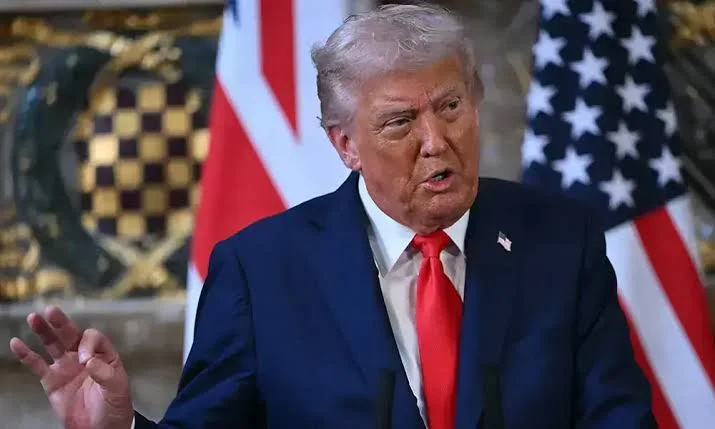
“All they do is make me angry,” President Trump said on Iran, telling reporters during a Cabinet meeting Friday that he was “losing faith” in the ability to make a deal because “they do lie and they do misrepresent.”
He added that Iran “break their word so often.”… pic.twitter.com/LvYNt4CMHc
— CBS News (@CBSNews) July 31, 2026
Executive Summary & Tactical Developments
Middle East Escalation Matrix:
- Washington Posture: Trump rejects early truce; proposes $1.5tn defense authorization
- Maritime Operations: IRGC asserts Hormuz is closed; daily transits collapse to 4 vessels
- Iraqi Sovereignty: Baghdad states zero prior notification for US-Saudi PMF strikes
- Regional Diplomacy: Tehran denies involvement in Egypt’s Damietta port drone strike
Washington Hardens Stance: Extended Air Campaign and Defense Budget Expansion
Speaking during a televised cabinet meeting at Camp David, President Trump signaled an uncompromising military posture, preparing the American public for an extended air and naval campaign targeting Iranian strategic assets:
-
Rejection of Immediate Negotiations: Dismissing prospective peace talks, Trump stated that Tehran frequently breaks diplomatic commitments, citing missile launches conducted during active preliminary discussions.
-
Targeting Military and Industrial Capacity: The White House emphasized that five months of continuous kinetic operations have severely degraded Iran’s industrial manufacturing and conventional military infrastructure, predicting a complete loss of defensive capacity if operations continue at current intensity.
-
Defense Budget Expansion: Trump announced plans to request an unprecedented $1.5 trillion defense budget for Defense Secretary Pete Hegseth next year to sustain high-tempo global force deployment and procurement.
-
Media Reaffirmations: In subsequent remarks to Fox News, the US President maintained that military pressure would force adversary forces to withdraw, reiterating that offensive operations would maintain maximum momentum.
Maritime Chokepoint Crisis: Hormuz Transit Collapses Amid Kinetic Interdiction
The maritime situation in the Persian Gulf has reached critical levels as conflicting claims between Tehran and US Central Command (CENTCOM) leave international shipping lanes severely compromised:
IRGC Interdiction Claims vs. CENTCOM Assurances
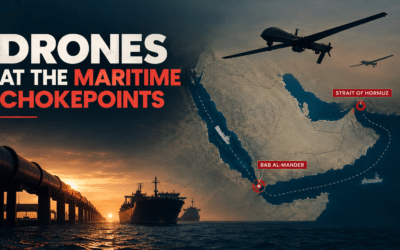
The IRGC stated it successfully intercepted and disabled two non-compliant oil tankers navigating under US military air escort through the Strait of Hormuz, forcing four accompanying vessels to reverse course. Iranian military command explicitly rejected CENTCOM assertions of normal maritime flow, declaring the Strait of Hormuz closed to unauthorized commercial traffic.
Shipping Flow Analytics
Ship-tracking and commodities data indicate a near-total collapse in vessel throughput across the vital energy corridor:
-
Minimal Transits: Only four commodity vessels completed a transit through the Strait of Hormuz over the reporting period, all exiting the Gulf.
-
Key Crude Carriers:
-
Spain B: Carrying 2 million barrels of Saudi crude loaded at Ras Tanura, anchored off Fujairah, UAE.
-
Noble: Carrying 2 million barrels of Iraqi Basrah crude, en route to China.
-
-
Bab el-Mandeb Comparison: By contrast, 25 commodity vessels successfully navigated the Bab el-Mandeb Strait over the same timeframe, illustrating a sharp divergence in operational risk profiles between the Red Sea and Persian Gulf routes.
Regional Fallout: Iraqi Sovereignty Friction and Mediterranean Proximity
The kinetic footprint of the conflict has expanded into neighboring theaters, creating fresh diplomatic strain across the region:
Baghdad Unaware of US-Saudi Strikes
The Iraqi government publicly stated it received no prior notification or authorization for joint US-Saudi airstrikes executed against Popular Mobilisation Forces (PMF) positions within Iraq.
-
Iraqi government spokesperson Haider al-Aboudi confirmed that Baghdad granted no approval for operations targeting specific groups on its territory.
-
The bodies of five IRGC personnel killed in the strikes were subsequently repatriated to Iran via the Mehran border crossing in Ilam province.
De-escalation Efforts with Egypt
Following an unclaimed drone attack targeting commercial shipping at Egypt’s Damietta port on the Mediterranean coast, Iranian Foreign Minister Abbas Araghchi moved to clarify Tehran’s diplomatic stance. Writing on social media, Araghchi affirmed that Egypt remains a crucial regional partner, emphasizing that Egyptian national security and infrastructure integrity are paramount to Iran.
Strategic Analysis: Asymmetric Pressure & Chokepoint Volatility
The convergence of military escalation, maritime interdiction, and diplomatic tension highlights several critical strategic dynamics:
Structural Fragility in Global Energy Logistics
The sharp reduction of commercial traffic through the Strait of Hormuz demonstrates how asymmetric interdiction tactics—leveraging anti-ship missiles, fast-attack craft, and drone systems—can effectively paralyze international shipping corridors even in the presence of heavy naval escorts. The reliance of major Asian and European markets on persistent crude flows through Fujairah and the Indian Ocean makes prolonged closures economically unsustainable over extended time horizons.
Sovereignty Fractures in Regional Alliances
Uncoordinated airstrikes within Iraq underscore the persistent challenge of balancing coalition security objectives against the sovereign political authority of local partners. As cross-border strikes against proxy networks increase, host governments face heightened domestic pressure regarding foreign military activity inside their borders.
Diplomatic Containment Beyond the Core Theater
Iran’s prompt diplomatic outreach to Egypt following the Damietta port incident highlights a calculated strategy to prevent the core US-Iran conflict from spilling over into relationships with neutral Arab states. By reassuring Cairo, Tehran seeks to maintain functional diplomatic channels in North Africa while retaining focus on its immediate maritime and territorial defense perimeter in the Gulf.