




While we often hear the words Hawala and Hundi in everyday news, we seldom pay heed to what these systems are and how dangerous they are for not just the economy but the entire country.
Hawala and hundi are ancient informal value transfer systems that operate outside regulated financial institutions. Hawala involves brokered money transfers based on trust and local networks, with no physical movement of cash—clients pay a hawaladar in one location, and a counterpart settles the equivalent amount elsewhere. Hundi, prevalent in South Asia, serves similar purposes in trade, remittances, and financing, but also thrives on personal trust and informal settlements. These networks erode actual value and tax revenues, undermine monetary policy, and pose significant risks by enabling illicit financial flows.
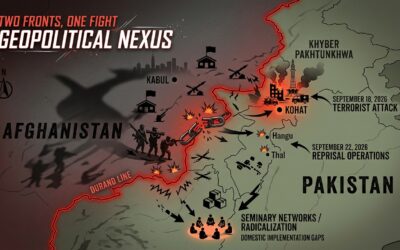
When it comes to Hawala/Hundi, in Southeast Asia, Afghanistan plays a pivotal role in the hawala/hundi system, feeding financial channels into Pakistan and across the region. The porous Afghanistan–Pakistan border and longstanding trade ties make it a key hub in the informal economy.
Numerous enforcement actions by Pakistani agencies have time and again shown the reliance on these networks to fund militant and terrorist groups.
It is important to note that such systems are “difficult to trace,” allowing anti-state elements to operate below the radar. For example, in one high‑profile case, Pakistan’s Inter‑Services Intelligence (ISI) uncovered a gang of 52 Afghan nationals involved in hundi/hawala operations transferring funds to terrorist outfits, many using forged Pakistani identity cards.
The system has taken root, deep within the Pakistani urban centres and is making the country weak from within. Recent raids by the Federal Investigation Agency (FIA) underscore the networks’ continued activity. A Karachi operation in November 2024 seized Rs 25 million in cash and arrested five hawala operators. In April 2023, two dealers in Swat were arrested with over Rs 5–7 million each. Similar crackdowns in Swat, Timergara, and Nowshera uncovered millions more in both domestic and foreign currency, all linking the cases to the infamous and notorious Durand Line.
Nationwide, the FIA registered 269 cases and arrested 327 hawala/hundi suspects in a recent four-month campaign, seizing over Rs 623 million and foreign currencies including USD, QAR, and SAR.
The caveat is that these informal systems are primary conduits for terrorist financing. Arrested militants detained in Karachi revealed that they used hawala and hundi to channel money to Afghanistan via networks run by individuals like Haji Khan Kandhari. Another investigation into a Daesh-linked kidnapping revealed funds were routed through over 50 bank accounts and brokers based in Pakistan and Afghanistan. A UN-traced case showed the use of Afghanistan-based hawala to fund a mosque bombing in Peshawar; the suicide bomber reportedly received Rs 200,000 through hundi.
One of the biggest factors that undermines Pakistan’s counter-terrorism efforts is this illicit flow of funds. Pakistan has borne the brunt of militant attacks: thousands of civilians and security personnel have been killed over the past decade. The economic toll includes billions in reconstruction and counter-terrorism costs.
For instance, Pakistan’s security expenditure totalled over Rs 1.5 trillion in FY24, with human development and infrastructure badly impacted. Efforts to dismantle hawala networks directly support law enforcement and stabilisation strategies.
Pakistan’s efforts are supported by global anti-money laundering frameworks. On the Financial Action Task Force (FATF) grey list, Pakistan faced pressure to address illicit flows, including hawala/hundi, and align with international standards. The FATF mandated reforms under its action plan, including enhancing suspicious transaction reporting, cross-border currency monitoring, and prosecuting illegal value transfer services. Pakistan responded with:
- Creating a cross‑border currency movement directorate,
- Strengthening bank audits,
- Seizing properties and funds of banned outfits,
- Blocking channels used by networks like LeT, a policy linked to FATF oversight.
These measures, combined with rigorous legal and financial system reforms, led to Pakistan’s historic removal from the FATF grey list in 2023, reflecting improved supervision, regulation, and enforcement.
Efforts to curtail Hawala/Hundi
Domestic authorities have intensified crackdowns. Across Pakistan, robust FIA drives have exposed syndicates. In one operation in Khyber Pakhtunkhwa, six hawala/hundi dealers, including Afghan nationals, were arrested with nearly $30,000 in multiple currencies and handwritten receipts . These operations flood illicit funds back into legitimate circulation, reducing terrorist resources and improving fiscal control.
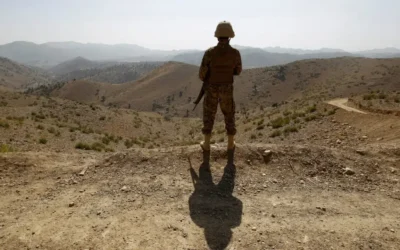
Still, challenges persist. The informal financial ecosystem in Pakistan is deeply entrenched, with cash remittance by foreign workers—especially in the Gulf and Afghan-Pakistan corridors—heavily reliant on informal systems. The opaque nature and rapid execution of Hawala and Hundi make regulation difficult. Cross-border corridors, especially in tribal regions, remain vulnerable to exploitation.
These systems not only finance terrorism but also undermine economic policy. Large unregulated outflows warp foreign exchange metrics, strain reserves, and complicate monetary policy. The exaggerated informal economy dampens tax revenue and limits financial inclusion. Strengthening Pakistan’s financial infrastructure—including formalising remittances, improving rural access to formal banking, and leveraging digital transactions—will help reduce reliance on informal channels.
On the security front, disrupting hawala networks is essential to cutting off soft financing channels sustaining militant groups. Combined with active dismantling of terrorist infrastructure, legislative reforms, and better intelligence cooperation with Afghanistan, Pakistan is making headway. According to UN data, cross-border militant bases remain, but the momentum has shifted in Pakistan’s favour, with decreased domestic attacks and improved border security.
While the losses from cross-border terrorism have cost Pakistan thousands of lives and tens of billions of dollars in economic and developmental setbacks, the move toward systemic change is gaining traction. Defeating illicit hawala networks is integral to this transformation, not just as an anti-terror measure, but as an anchor for financial integrity and sustained national resilience.