Following the horrific attack on the Army Public School (APS) in December 2014 that killed more than 140 innocent lives, of which the majority were children, Pakistan rallied in sorrow and desperation. This agonizing event acted as a wake-up call and forced the political and military authorities of the country to declare the National Action Plan (NAP): a 20-point counterterrorism road map to eradicate extremism and terrorism of all shapes and sizes. It was a strong pledge, a national determination never to permit such atrocities in future.
Some of the key areas that the NAP emphasized included combating terrorism by military action, suppressing hate speech and sectarian violence, transforming the religious seminaries (madrassas), controlling the media discourse on extremism, and preventing terror financing. The central role was to be played by institutions such as NACTA (National Counter Terrorism Authority), and the law enforcement agencies, intelligence services, and the judiciary were to cooperate. The civil-military cooperation was high in the initial years, and the military courts were established to provide quick justice. Counter-terrorism operations such as Zarb-e-Azb and Radd-ul-Fasaad were initiated to eliminate the militant hideouts.
So, more than ten years later, and as of July 2025, it is time to take a closer look at NAP with a critical mind. Although Pakistan has certainly done much to deter the large-scale terrorist attacks and to a certain degree it has managed to enhance the internal coordination, the potential of NAP has not been fully achieved. Some of its aspects are not well executed or even disregarded. The structure that was supposed to support the dreams of the nation has failed to change with time, and most of its objectives are yet to be delivered or have been partially delivered.
You May Like To Read: CTD Strikes Fitna-al-Khawarij (FAK): Operations in Bannu and Swat
Accomplishments since Inception
There have been some positive changes since the introduction of the National Action Plan, particularly within the first years. Among the most noticeable achievements were the drastic reduction of major acts of terrorism in 2015-2020, which was largely possible due to large-scale military campaigns, such as Zarb-e-Azb in North Waziristan and Radd-ul-Fasaad, which targeted sleeper cells in all parts of Pakistan. These have broken up militant networks, forced large numbers of groups underground, and reasserted state writ in hitherto no-go areas.
The other significant accomplishment was in fighting terror financing, especially when they came under pressure by the Financial Action Task Force (FATF). New laws were enacted in Pakistan, more effective banking controls were introduced, and charity fronts of proscribed organizations were also targeted. In the middle of 2022, Pakistan was taken off the grey list of FATF, which is a sign of progress in the fight against illegal financial flows.
Military courts under NAP enabled the speedy trial of hardened terrorists, they provided speedy justice where the ordinary courts had failed, either because of threats or the absence of evidence. Moreover, a few steps were taken to enhance the exchange of intelligence between security agencies and the establishment of counter-terrorism departments (CTDs) in Punjab and Khyber Pakhtunkhwa.
Pakistan also established de-radicalization and rehabilitation programs like Sabaoon and Mishal centers that were meant to integrate the radicalized youths into society. Such programs, albeit small, marked a change in mindset of how to deal with militants, only to prevent them in the future as well. Nonetheless, these accomplishments, as significant as they are, have not been systematically followed through. A lot of the gains achieved within the initial years started to slow down after 2019, which brings up the issue of whether the state is determined and capable of applying the National Action Plan to the full extent.
Key Lapses and Failures of Implementation
Although there have been certain positive results in the initial stages, many of the fundamental elements of the National Action Plan are still unfinished, or are completely overlooked, leaving deep holes in the Pakistan system of countering terrorism.
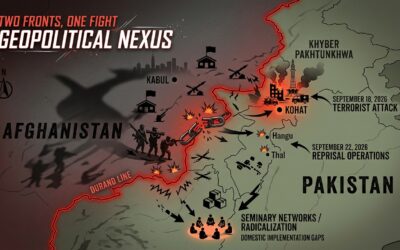
Madrassa reforms have been one of the greatest disappointments. NAP specifically demanded regulation and mainstreaming of religious seminaries, but a decade later, this is yet to be achieved. Although there have been attempts to formalize some madrassas and to standardize the curriculum, the opposition of religious groups, political will, and the lack of coordination between federal and provincial governments have thwarted any serious initiatives. By July 2025, thousands of unregistered madrassas are freely running, with scant control over their finances and curriculum.
The second point of failure is the irregular response to hate speech and sectarian literature. There are laws, but enforcement is selective and weak. Sectarian violence and inciting religious speeches are still being practiced, particularly in sensitive months such as Muharram. The narrative that drives terrorism remains mostly unchallenged as extremist ideologies continue to be propagated both online and offline with little responsibility.
Although a number of the organizations were outlawed, most of them are still operating either in disguise under new names or as charity groups or political fronts. They are still active on social media and in certain instances, their leaders are still active in public meetings without any repercussions. This not only weakens the rule of law but also sends a mixed signal to society and victims of terrorist acts.
NAP also vowed to demobilise militias and regulate the proliferation of weapons, but illegal weapons are available in large numbers, particularly in volatile areas such as Balochistan and certain areas in KP. Likewise, the plan also involved criminal justice reforms, yet not much has been done to safeguard judges and witnesses or to update the process of investigation and prosecution of terrorism cases.
You May Like To Read: Interior Minister Vows to Eradicate Fitna‑ul‑Hindustan Terrorists from Balochistan
Finally, absence of institutional capacity and political ownership is one of the most important weaknesses. These agencies, such as NACTA, that was expected to take the lead in national coordination, are under-resourced and sidelined politically. No central database exists, no periodic public reporting on NAP progress, and no responsibility on non-achievement of targets. The process of decision-making has also been complicated by civil-military imbalance that has made the process of sustaining and civilianizing counterterrorism strategies even more difficult.
Perception of the People, the Role of Media and the Requirement of a New Path
The attitude of the population towards the National Action Plan (NAP) has changed over the years, but the change has been negative, and there is now a lot of frustration. Following the APS tragedy in 2014, the issue of fighting terrorism was a concern to which the nation agreed unanimously, and it was largely popular to take aggressive measures. Media was a key factor in creating such momentum, exposing the cruelty of the terrorist organizations and demanding policy changes as soon as possible. The civil society was also loud in its call to accountability and transparency in the fight against terrorism.
Nevertheless, since 2020, when the process of implementing some of the main points of the NAP was stagnant, the trust of the population started to decline. Civil society and media leaders highlighted the selective application of the law, particularly on handling prohibited groups and hate speech. As an example, the absence of transparency, political favoritism, and the closing of the civic space in the name of security were repeatedly reported by organizations.
Additionally, mainstream media started to be involved in NAP, but the situation became complex over time. Media aided in unmasking terror networks and misinformation campaigns on one hand, and on the other, caused divisive discourses and gave airtime to controversial individuals belonging to proscribed organizations. The lack of a definite state discourse of counter-extremism provided the space for the spread of disinformation and radical ideologies over the internet and in non-official media.
NAP 2.0, a reformed and updated version of the plan, which is more in touch with the realities on the ground. This would entail laying sound performance markers, committing sufficient resources to NACTA, and encouraging civilian ownership and parliamentary oversight to discourage the over-dependence of military-led responses.

Source: The Voice Pakistan
The countering of radical ideologies, particularly on the internet, is also an issue of concern to the future of counterterrorism in Pakistan. A new course should be aimed at digital literacy, de-radicalization courses, involvement of youth, and reasonable religious speech. Government, religious scholars, educators, and technology companies should work closely with each other. The war against extremism will not be won in a sustainable way without a broad-based, inclusive, and transparent approach.