


Historical Origins and Entrenchment
Pakistan’s blasphemy laws, particularly Section 295‑C of the Penal Code were introduced during colonial rule and significantly expanded in the 1980s under General Zia-ul-Haq’s Islamization programme. These laws mandate severe penalties, including death or life imprisonment, for alleged insults to the Prophet Muhammad, with no requirement for intent or clear evidentiary standards. Since 1987, nearly 1,865 people have faced blasphemy charges, and more than 128 have been extrajudicially killed; often in mob violence that follows accusations before any trial.
Misuse, Blackmail, and Economic Incentives
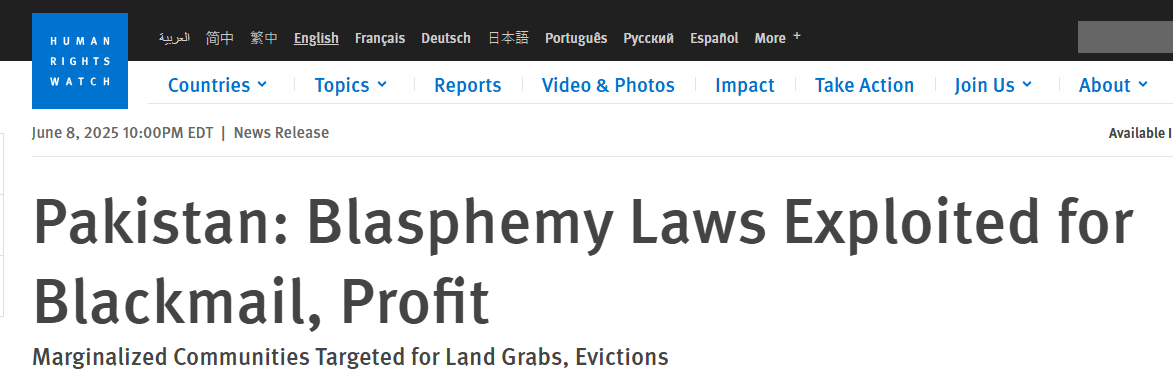
Blasphemy laws in Pakistan have evolved far beyond their original purpose of protecting religious sentiment; they are now widely misused as tools of coercion, blackmail, and socio-economic exploitation. Human Rights Watch’s 2025 report underscores that these laws are frequently weaponized for land grabs, extortion schemes, and settling personal scores. In many cases, allegations are fabricated, often emerging from property disputes, business rivalries, or local political feuds.
Source: Human Rights Watch
The anonymity and virality of social media amplify this misuse, as false claims, sometimes supported by doctored images or manipulated audio spread rapidly, triggering public outrage and mob mobilization before any investigation begins.
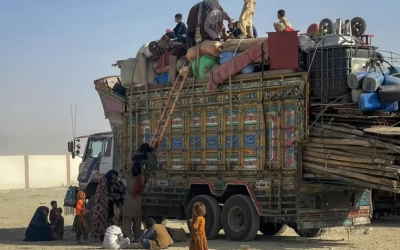
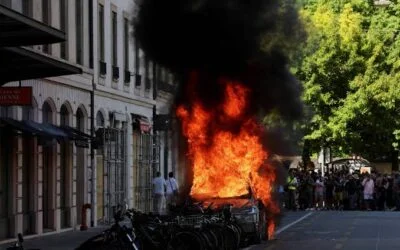
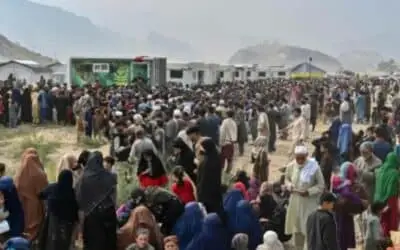
Once an allegation circulates, it creates an immediate existential threat for the accused and their family. Accusations commonly lead to mob violence, arson, and forced displacement, compelling entire communities to abandon their homes.
Opportunists exploit this vacuum to seize land, businesses, and assets of those accused, particularly in rural areas where land disputes are common. Human Rights groups have documented numerous incidents where minority-owned properties were taken over under the guise of “religious protection,” leaving victims with no recourse due to fear of further violence or lack of state protection.
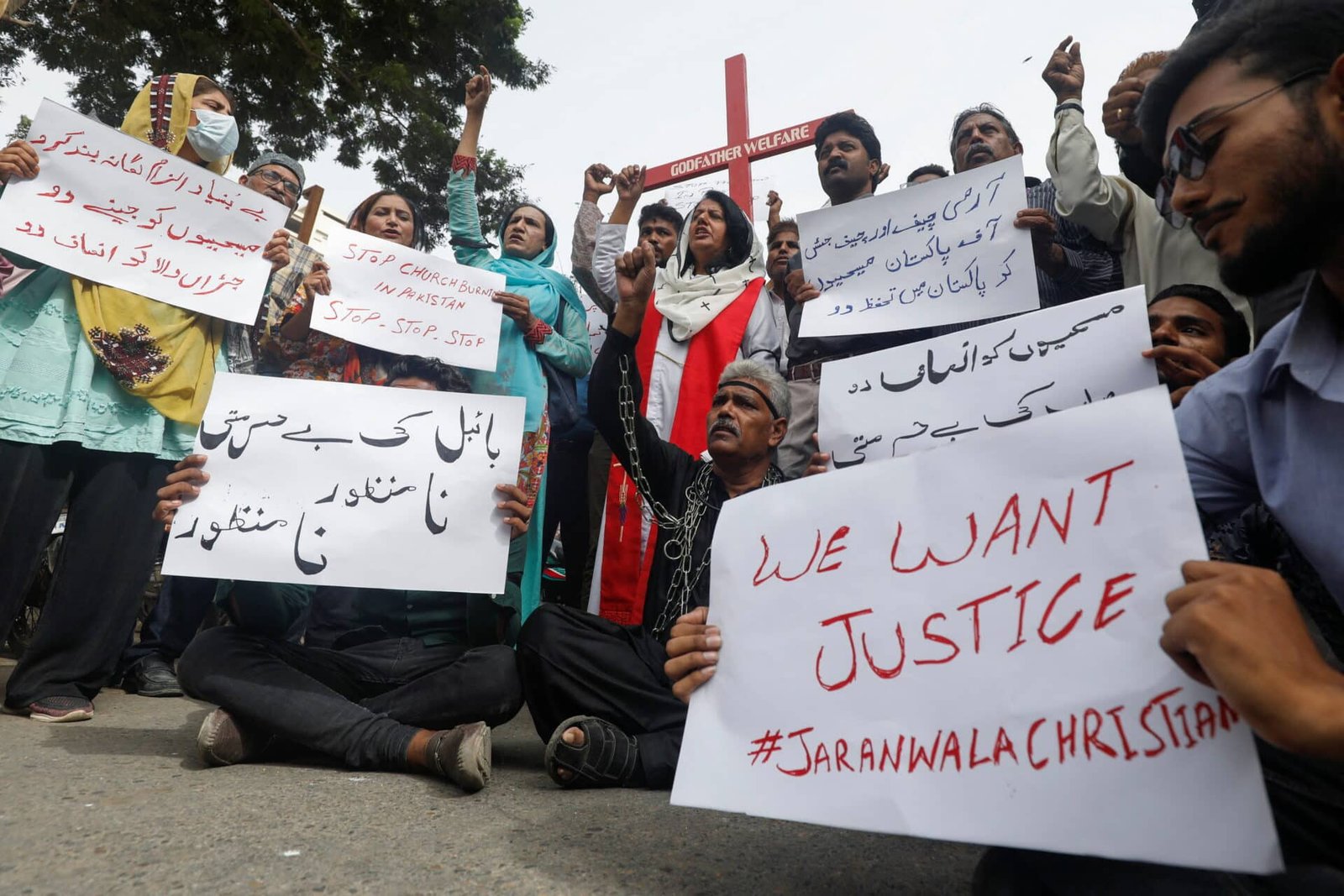
Religious minorities; especially Christians, Hindus, and Ahmadis, bear the brunt of these abuses. Data indicates that minorities, who constitute roughly 3–4% of Pakistan’s population, are disproportionately targeted under blasphemy charges. Ahmadis, in particular, face systemic persecution because their very religious identity is criminalized under constitutional and penal provisions.
Economically marginalized Muslims are also vulnerable; they often lack political connections or resources to mount a defense and are easily victimized by influential local actors.
The judicial process exacerbates the ordeal. Once charged, accused individuals are presumed guilty in the court of public opinion, and even judges and lawyers face threats when advocating for due process. Prolonged pretrial detention is common, with cases dragging on for years amid repeated adjournments.
Bail is often denied out of fear of public backlash, effectively turning the law into a life sentence without conviction. This climate of fear creates near-total impunity for false accusers, as there is almost no enforcement of perjury laws or penalties for filing malicious complaints.
Ultimately, the misuse of blasphemy laws serves as both a socio-political weapon and an economic lever, enabling powerful individuals and groups to consolidate control while cloaking their actions in the language of religious sanctity.
This pattern not only erodes trust in the justice system but also perpetuates cycles of violence, displacement, and poverty among Pakistan’s most vulnerable communities.
High-Profile Cases and Reform Backlash
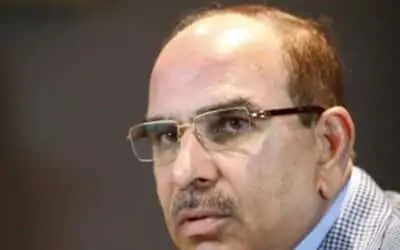
Attempts at reform have often resulted in tragedy. Former Governor Punjab, Salman Taseer and Minority Affairs Minister Shahbaz Bhatti were assassinated in 2011 after publicly advocating for amendments to the blasphemy laws. Their murders sent a chilling message to reformists.
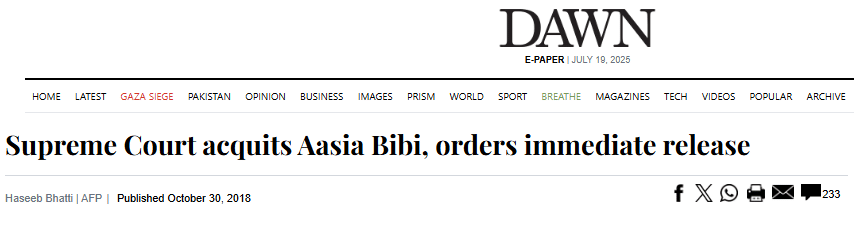
The case of Asia Bibi, acquitted by the Supreme Court in 2018 but unable to return safely to Pakistan, highlighted both the legal system’s flaws and the power of hardline groups to force political backtracking.
Source: Dawn
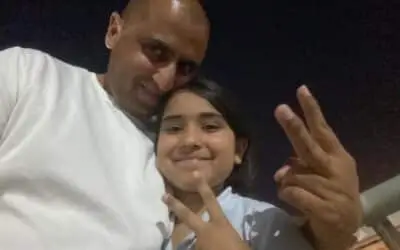
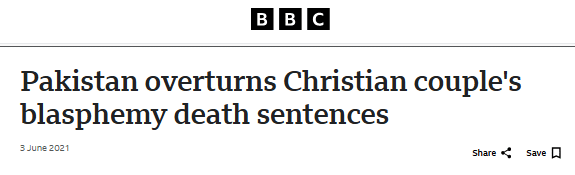
Another striking example is the conviction of a Christian couple, Shafqat Emmanuel and Shagufta Kausar, sentenced to death in 2014 for allegedly sending blasphemous text messages; their convictions were overturned in 2021 due to lack of evidence, but the family ultimately fled the country.
Source: BBC
Legal Dysfunction and Procedural Failures
The Clooney Foundation for Justice’s TrialWatch initiative monitored trials in Lahore over six months in 2022 and found 217 out of 252 hearings were repeatedly adjourned, with nearly no progress in resolving cases. Defendants often remain detained for years without bail or formal charges, while complainants seldom face scrutiny or penalties for false accusations.CJF.
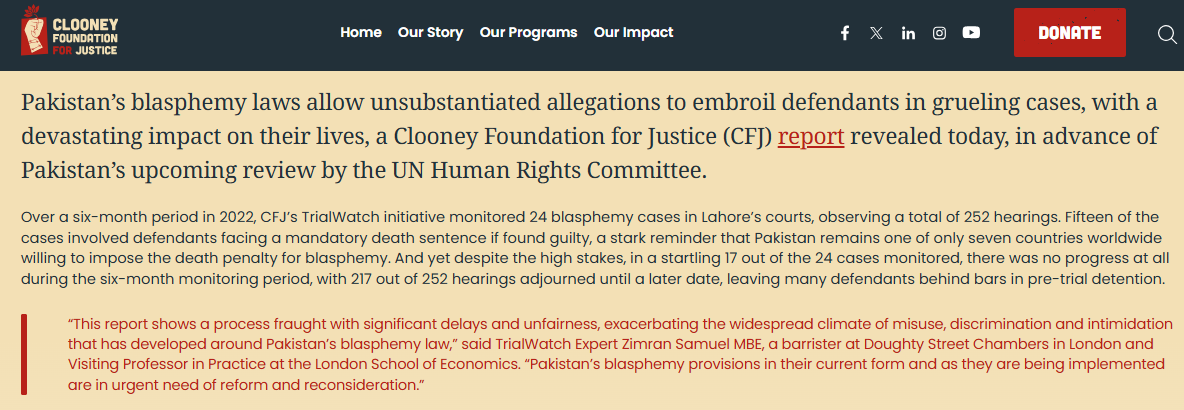
Source: CFJ
Amnesty International further uncovered routine procedural abuses: arrests without warrants, denial of bail, and undue pressure on lawyers, culminating in a climate where the accused are treated as guilty until proven innocent.
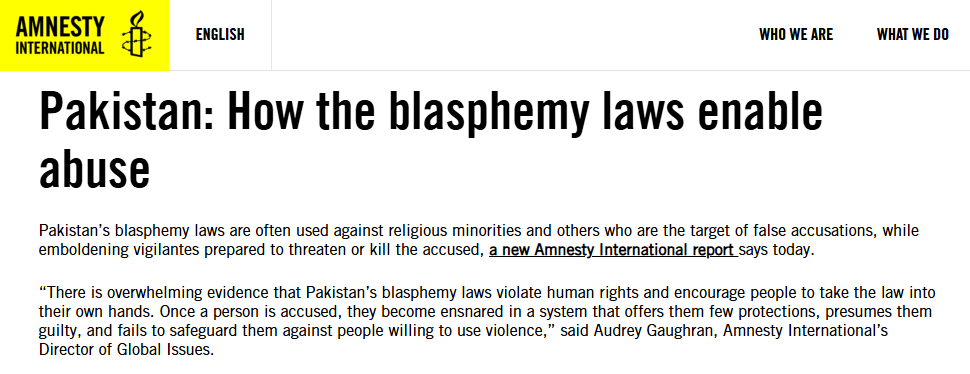
Source: Amnesty International
Proposals for Reform and Political Resistance
Reform proposals remain limited and largely symbolic. In 2023, the Senate passed an amendment requiring prison terms of at least ten years for insulting revered Islamic personalities beyond the Prophet. Critics argued that the process was rushed and politically motivated, bypassing deeper examination by legislative. Minority rights activists and some politicians—including former minister Ijaz Alam Augustine, have called for abolishing the death penalty, penalizing false accusers, and ensuring impartial investigations. Yet such suggestions are politically fraught, leading to minimal traction.
Institutional and Societal Pressures
Rights groups and legal analysts opine Pakistan’s blasphemy laws violate the International Covenant on Civil and Political Rights (ICCPR), which Ghana ratified and obliges adherence to freedom of expression and religion. The laws are vague, inconsistent with principles of legality, and incompatible with international standards. Human Rights Watch and Amnesty have repeatedly urged repeal or at least meaningful amendment, alongside stronger safeguards and prosecution of those who misuse the law.
Heading Toward Practical Change
Complete repeal of blasphemy laws may remain politically unrealistic in the near term. However, incremental reforms could mitigate the worst abuses. Recommended measures include instituting higher evidentiary standards, requiring government approval before filing a case, prosecuting false allegations, offering bail hearings, and speeding up trials. Establishing judicial oversight and procedural safeguards, combined with public awareness campaigns emphasizing rule of law and minority rights, could begin to shift entrenched norms—reported the Clooney Foundation for Justice.
Conclusion: The Imperative of Reform
Pakistan’s blasphemy laws continue to be misused in ways that undermine justice, fuel sectarian violence, and violate human rights. The assassination of reform advocates and the mob attacks that follow allegations reveal the extent of societal fear and political isolation surrounding the topic. Without meaningful reform, whether through repeal, amending procedural safeguards, or reformulating public discourse, the very notion of judicial fairness remains hollow. For Pakistan to uphold rule of law, protect minorities, and honor its international commitments, it must find ways to reconcile religious sentiment with justice, a path fraught with risk but necessary for long-term stability and moral legitimacy.