


“In Pakistan, climate is no longer a season — it is a sentence.”
This stark reality echoes across a nation once again grappling with devastating monsoon floods. This July, the rains returned, but they brought more than water; they brought a haunting memory of lives uprooted, homes erased, and warnings unheeded, cementing a pattern of disaster that is rapidly becoming a grim prediction for 2025.
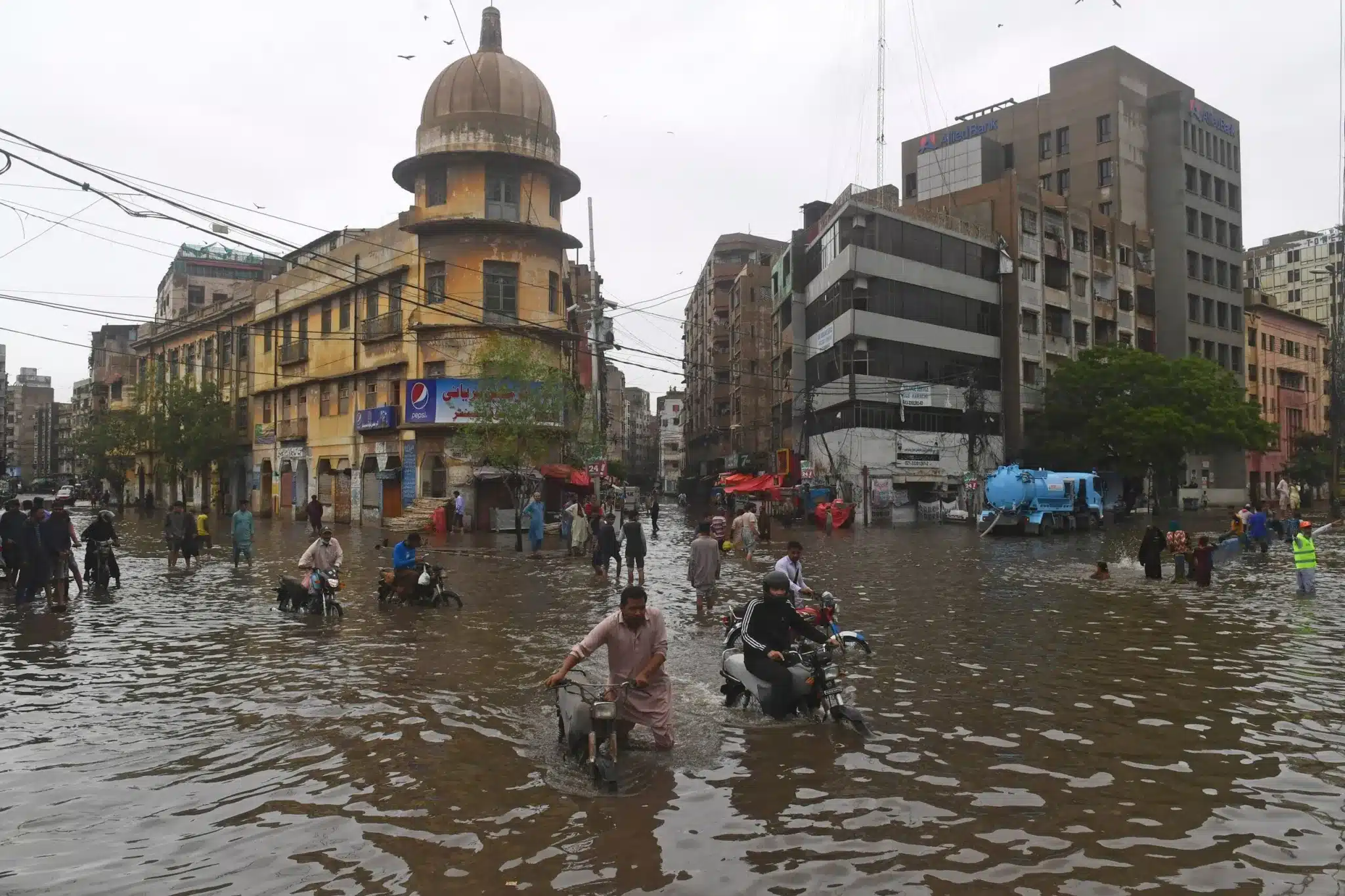
In cities and villages across the country, the monsoon did not arrive—it collapsed. Streets turned to rivers, hillsides became torrents, and rivers overflowed like grief. Since the seasonal rains began on June 26, the nation has been in the throes of a deepening emergency. Punjab, Pakistan’s most populous province, has been particularly hard hit, reporting at least 63 casualties and 290 injuries in just 24 hours.
The Provincial Disaster Management Authority (PDMA) revealed that most fatalities were due to collapsing walls and buildings, with others resulting from drowning or electrocution. The nationwide death toll since late June has tragically climbed to over 170.
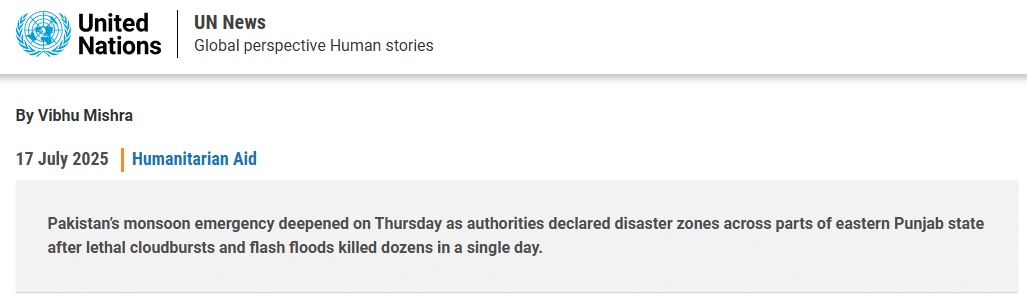
Source: UN
Rainfall this year surged significantly, with the National Disaster Management Authority (NDMA) and the Pakistan Meteorological Department (PMD) forecasting “above-normal” rain showers, particularly in northeastern Punjab, southern Sindh, and parts of Balochistan and Khyber Pakhtunkhwa. Chakwal, in Punjab, recorded an astonishing 423 mm (16.7 inches) of rainfall in just 24 hours, leading to severe flooding.
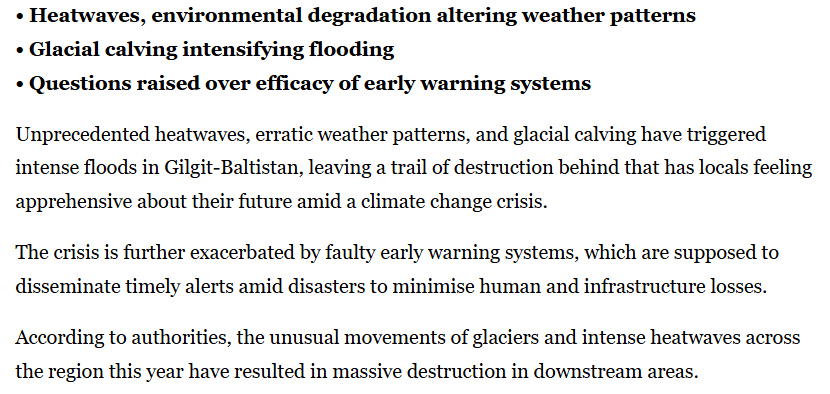
In Gilgit-Baltistan, record-high summer temperatures, including 48.5°C in Chilas, have dramatically accelerated the melting of glaciers. This intensified ice melt has triggered multiple Glacial Lake Outburst Floods (GLOFs), sending walls of water crashing down valleys, blocking critical roads, damaging homes, and stranding residents.
Source: Dawn
Once-green fields in Punjab, and Pakistan, have vanished beneath a grey floodplain, bridges have crumbled, markets have closed, and hospitals have been forced to turn into shelters. More than 250 people lost their lives — many without warning, many without shelter. But the real toll is still rising — in disease, displacement, and deaths.
A Pattern, Now a Prediction
This is no longer an anomaly; 2010, 2022 and now 2025. The intervals between disasters are shrinking. The scale is growing. Each flood is less a surprise — and more a certainty.
And every time the waters recede, they leave behind more than mud. They leave questions. Why are our forests gone? Why are homes still built on riverbeds? Why is planning seasonal, but the damage permanent?
Pakistan sits on the frontlines of climate change — home to over 7,200 glaciers, more than any country outside the polar regions. But it’s not just geography that makes the nation vulnerable; it’s a series of critical decisions—or the lack of them. Unregulated urban sprawl, encroachment on natural drainage channels, delayed response systems, and a pervasive lack of climate education and long-term vision exacerbate the crisis.
The Cost of Standing Still
This season alone, the estimated losses are over $20 billion, a figure that does not capture what was lost most: Food, Security, Dignity, and Time. The Asian Development Bank (ADB) highlights that Pakistan faces average annual losses exceeding $2 billion due to climate disasters, which disproportionately affect women and vulnerable groups.

Source: Dawn
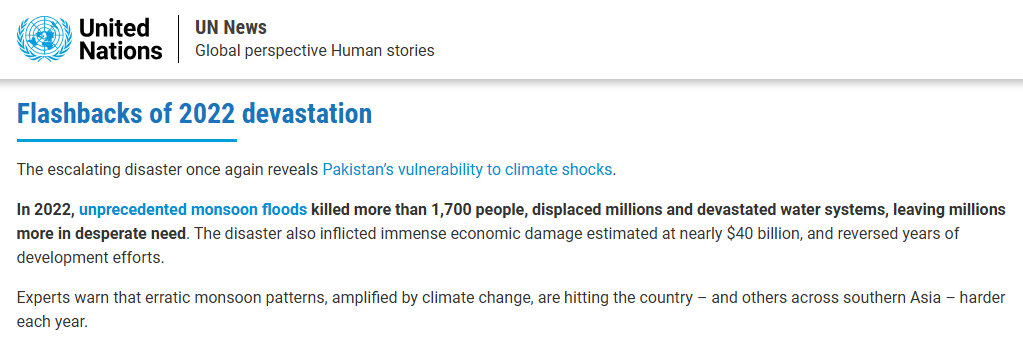
The catastrophic 2022 floods, which submerged a third of the country, inflicted an immense economic damage estimated at nearly $40 billion, reversing years of development efforts.
Source: UN
Farmlands, especially in Sindh and southern Punjab, have been devastated. Rice fields rotted. Cotton crops failed. Cattle drowned. Livelihoods that took decades to build disappeared in hours. Inflation rose as supply chains fractured. In rural areas, the economic ripple is becoming a long-term crisis.
When the Water Lingers, So Does Illness
After the flood, a second crisis begins, a public health emergency, from which stems diseases like, Dengue, Diarrhea, Malaria, and Typhoid. With drinking water contaminated and sanitation systems damaged, entire communities are now facing disease outbreaks. The World Health Organization (WHO) has warned that flooding is exacerbating the spread of these diseases, with immunization campaigns disrupted and stagnant water omnipresent.
Children are especially vulnerable — both to illness and to the loss of education as schools close and turn into shelters. Women, too, face heightened risk — of unsafe living conditions, lack of hygiene facilities, and food insecurity. In many places, there is no clean water, no medicine, no way out.
What Fails First: Infrastructure or Intention?
Pakistan does not suffer from a lack of data. We know the risk zones. We have flood maps. We’ve had the warnings.
But what we continue to lack is follow-through. Early warning systems are often too late, disaster response plans are outdated, relief efforts are politicized, and recovery is partial, unequal, and slow. The UN Office for the Coordination of Humanitarian Affairs (OCHA) notes that pre-positioned aid supplies remain far below projected needs, with severe gaps in key sectors like protection, nutrition, and shelter.
Floods are no longer disasters — they are annual events. The real disaster is treating them like surprises. Nature is not waiting for us to catch up. The climate is changing — and fast. The question is not whether Pakistan will flood again — but whether it will rebuild differently.
We must invest in:
- Climate-resilient infrastructure. Including the development of early warning systems and improved coordination among government departments.
- Reforestation and watershed protection. Crucial for mitigating the impact of heavy rainfall and glacial melt.
- Urban planning that respects natural systems. To prevent encroachment on drainage channels.
- Community-led disaster preparedness. Strengthening local capacity for disaster response.
- Education that creates long-term awareness, not just seasonal panic. To foster a proactive approach to climate change.
This is no longer just a matter of environment. It is a matter of survival. Of stability. Of justice.
A Country That Floods Back – Or Moves Forward
Every time the waters rise, they take a part of us. But they also leave behind a truth we must stop ignoring: We cannot rebuild the same way and expect different results.
Pakistan is not drowning only in water. It is drowning in delay. In neglect. In the quiet acceptance of avoidable loss.
The future does not come with lifeboats. It comes with choices. And it is time to choose.