




What Is the Rimland and Why It Matters
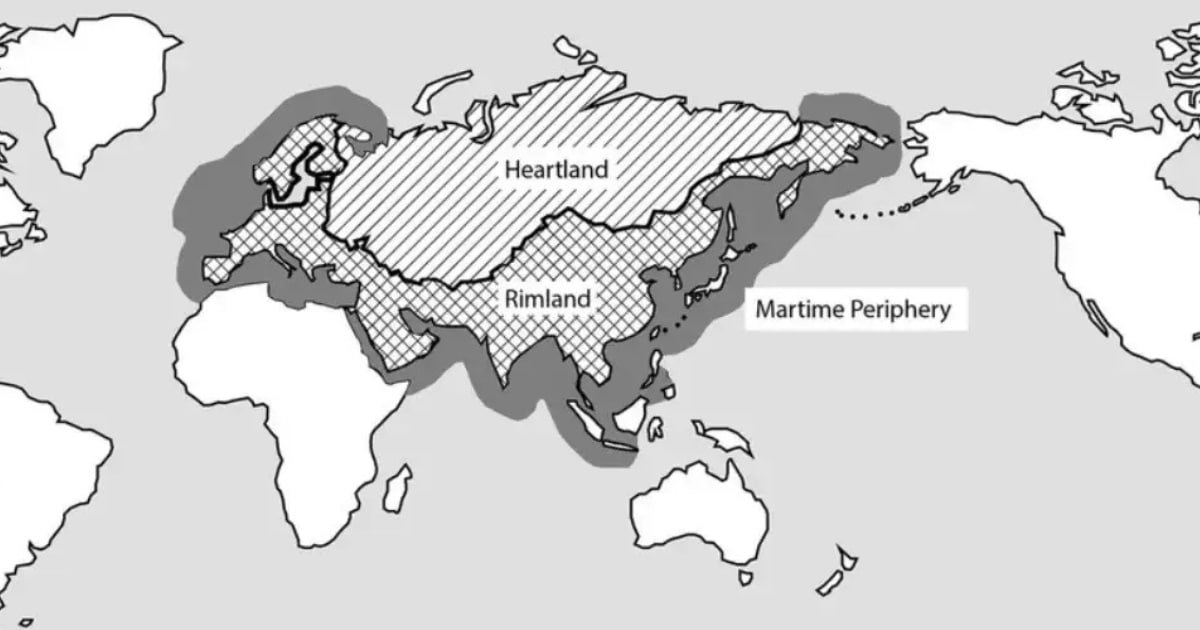
The Rimland is a term in geopolitics first explained by American scholar Nicholas J. Spykman during the 1940s. Spykman argued that the coastal fringes of the vast Eurasian landmass, stretching from Western Europe through the Middle East, South Asia, and into Southeast and East Asia, are more important than the land interior for global power. He believed that these coastal regions, sitting between the sea and the large continental “Heartland,” are critical hubs of population, trade, resources, and strategic access. He famously stated, “Who controls the Rimland controls Eurasia; who controls Eurasia controls the destinies of the world.”
This idea has shaped much of modern strategic thinking about sea power, alliances, and great‑power competition.
Historically, Rimland areas have been the corridors through which goods, armies, and ideas moved. They include important maritime zones such as the Mediterranean Sea, the Persian Gulf and the Arabian Sea, the Strait of Hormuz, the South China Sea, and other key routes. Control of these waters and coastlines translates into influence over trade and energy flows that sustain global economies.
How History Set the Stage
The modern struggle for the Rimland did not begin in the 21st century; it has roots in centuries of European colonial expansion. From the 18th century onward, Western powers such as Britain, France, and later the United States built extensive naval forces and controlled key seas and ports to secure trade and political influence. British control over the Mediterranean, the Suez Canal, the Indian Ocean, and the Persian Gulf was central to its empire. Later, the United States established alliances and military bases across Europe and Asia to limit the spread of Soviet influence during the Cold War. This system of alliances and forward military presence became a defining feature of the global order after World War II.
Even after the end of formal colonial empires, many Western powers retained strategic interests in Rimland areas through military partnerships, defense agreements, and naval patrols. These positions were justified as protecting global trade and peace, but they also reflected a deeper interest in maintaining influence over these regions. Today’s military bases in the Gulf, East Africa, and Southeast Asia are part of that legacy.
The Modern Struggle: Competing Approaches to Rimland Control
In the 21st century, Rimland debates have evolved but remained central to international politics. Western powers have continued to maintain strong naval forces in the Atlantic, Indian, and Pacific Oceans to ensure freedom of navigation and secure trade routes. For example, the U.S. Navy, allied with European and Asian naval forces, conducts regular patrols in the South China Sea, the Persian Gulf, and the Mediterranean to deter conflicts and protect maritime commerce.
At the same time, new and rising powers have sought a larger role in Rimland areas. China, through initiatives such as its Belt and Road Initiative (BRI), is investing heavily in ports, railways, and infrastructure from East Asia to Europe, effectively linking maritime and land routes. China’s growing naval presence in the Indian Ocean and support for port development in Pakistan, Sri Lanka, and East Africa reflect a broader strategy to secure access and influence across key maritime corridors.
Iran and the Persian Gulf: A Strategic Rimland Case
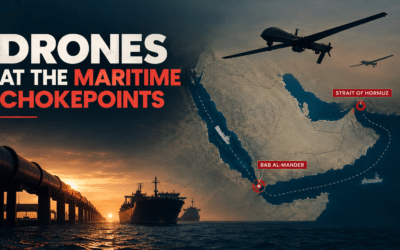
One of the most consequential arenas in the Rimland struggle today is the Persian Gulf and the Strait of Hormuz, a narrow waterway where nearly 20% of the world’s crude oil and liquefied petroleum gas passes each day. Iran’s geographic location gives it direct oversight of this chokepoint, making it a central player in regional and global energy security.
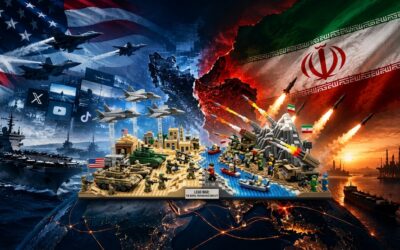
Since mid‑2025, tensions in this region have escalated dramatically. A series of strikes by the United States and Israel on Iranian soil in June 2025 triggered strong responses from Tehran. In retaliation, Iran’s parliament voted to close the Strait of Hormuz, a move symbolizing defiance against foreign military action. While full closure involves technical and legal complexities and has not been fully carried out under international law, Iran has taken steps to restrict maritime traffic and signal its leverage over the route. These actions have drastically slowed ship movements and strained global energy flows.
Lately, the situation intensified as naval engagements and missile attacks disrupted normal maritime operations. According to recent reports, over 3,000 vessels remain stranded due to near‑halted shipping in the Strait, forcing markets and governments to grapple with the consequences of this prolonged standoff.
Global Impact: Oil Prices, Economy, and Diplomacy
The disruptions around the Strait of Hormuz have had real economic effects. Brent crude prices briefly rose above $112 per barrel, influenced by the reduced capacity of the strait and uncertainty in markets. Such volatility ripples into fuel costs, inflation pressures, and growth forecasts worldwide. International agencies have warned that prolonged instability could slow global economic growth and elevate inflation, especially in import‑dependent countries.
The potential closure or restricted navigation of the strait is not a matter isolated to the Gulf; it affects Europe, South Asia, East Asia, and Africa. Countries that rely on Middle Eastern oil and gas, from India to China and Japan to South Korea, have had to adjust their economic planning in light of these risks. Recent data show significant disruptions in exports and shipping, further underscoring how Rimland tensions can reverberate far beyond regional borders.
The Limits of Western Naval Dominance
For decades, Western strategy focused on maintaining a strong naval presence in Rimland zones to ensure stability and deter rivals. However, recent conflicts have highlighted limits to this approach. As the United States commits significant military resources to the Gulf, it struggles to balance attention across all Rimland fronts, including the Indo‑Pacific region. This has encouraged other powers, including China and Russia, to pursue their own strategic partnerships and influence corridors.
The ongoing conflict in the Middle East reflects these shifts. Washington and its allies face difficulties in reopening the Strait of Hormuz and restoring normal trade flows. Efforts at negotiation have been publicly reported, but Iranian authorities deny official dialogue with U.S. counterparts, underlining deep mistrust.
Iran’s Strategic Position and Regional Diplomacy
Iran’s role in the Rimland is unique. Instead of aligning fully with any single great power, Tehran has positioned itself as an independent actor capable of influencing key maritime routes and regional outcomes. It maintains enduring ties with China, a major purchaser of Iranian energy, as well as with Russia and non‑Western partners, strengthening its strategic options beyond reliance on Western powers. This posture reflects a broader aspiration to shape its own security policy in the Gulf while navigating international pressures.
At the same time, Iran has engaged in regional diplomacy with neighbouring states and other powers to manage tensions. While global media often highlights military clashes, Tehran continues to emphasize political engagement and negotiation as part of its foreign policy, resisting narratives that paint it as purely a destabilizer.
Conclusion: Rimland Realities and the Path Forward
The struggle for control over the Eurasian Rimland is neither a simple relic of old theory nor an abstract academic debate. It is a palpable and evolving contest that affects energy markets, trade, security alliances, and national strategies across continents. Spykman’s insight that control of coastal zones and maritime corridors confers power remains relevant, but the shape of that control is changing.
Global powers can no longer assume uncontested dominance over Rimland zones. Rising states like China and assertive regional actors like Iran are shaping the course of events. For countries such as Pakistan, understanding these dynamics is crucial for navigating diplomacy, securing economic interests, and protecting regional stability in an age of shifting geopolitical balances.
In the end, the struggle over the Rimland underscores a broader truth: in a connected world, geography still matters, but so do partnerships, diplomacy, and the ability of states large and small to adapt to change.
You May Like To Read: Iraq’s Diplomatic Crisis Deepens as Proxy Strikes Target Gulf Neighbors
Check out our latest video: