


Defence Budgets Set New Records Amid Rising Tensions
Global defence spending reached USD 2.63 trillion in 2025, according to the latest annual assessment by the International Institute for Strategic Studies (IISS). This represented a continuation of the broader trend of rising military budgets, although growth slowed to about 2.5 per cent in real terms compared with previous post-Ukraine invasion years. The expansion of defence budgets was shaped directly by ongoing wars, geopolitical rivalries, and the strategic recalibration of major powers. Europe’s share of total defence spending rose above 21%, largely driven by Germany’s defence budget exceeding USD 100 billion as part of NATO’s pledge to deepen military capability. Asia’s combined defence expenditure also climbed, led by China’s estimated USD 251 billion allocation, while the Middle East and North Africa region spent nearly USD 219 billion amid persistent instability. Meanwhile, U.S. defence outlays remained the largest single share, about 36 per cent of the global total, but experienced real-term moderation from previous peaks. These figures highlight how conflicts and strategic competition continue to push governments to allocate more resources to military preparedness.
The United States Strategic Reset: Scale, Priorities, and Constraints
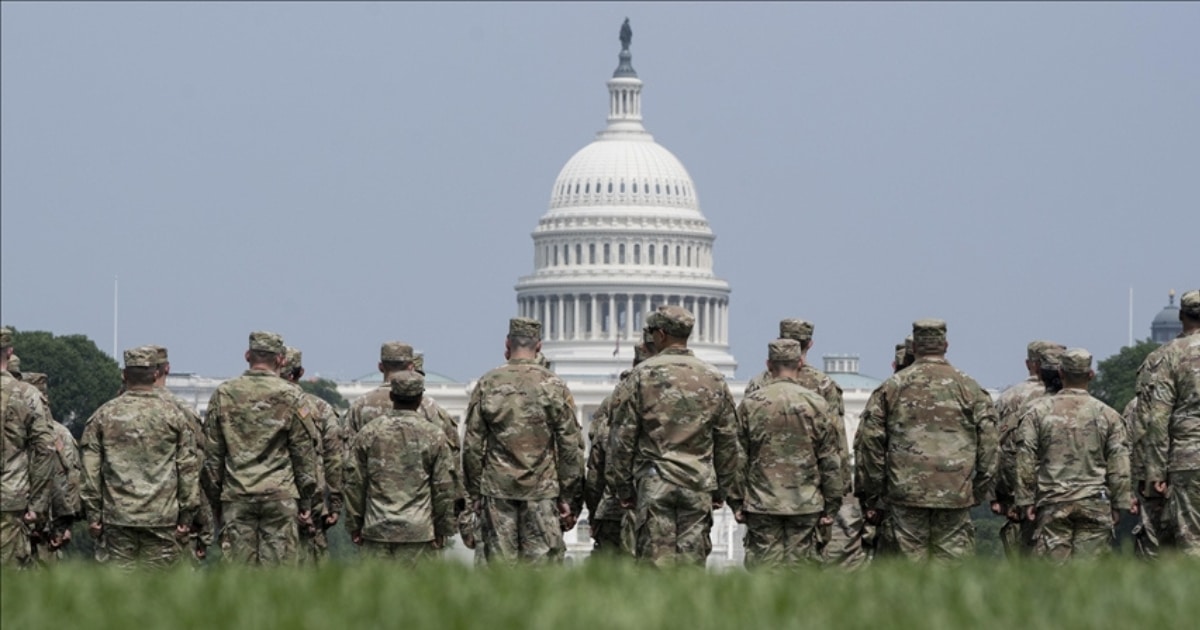
The United States remains the world’s largest defence spender, but recent trends reflect a strategic reset rather than unchecked expansion. U.S. defence funding crossed the USD 1 trillion threshold in the 2026 fiscal plan with a roughly 13.4% boost over prior levels, focusing on missile defence, advanced technologies, and sustained force posture in key regions. However, IISS analysts warn that this pace of spending may not be sustainable over the long term without major budgetary adjustments, and that the U.S. must balance global commitments with domestic priorities.
In the Middle East, American strategic repositioning is particularly visible. The U.S. has assembled one of its largest force deployments in the region in decades, including two aircraft carrier strike groups and advanced air defence assets, as tensions with Iran remain high. Former Pentagon figures have described the force posture as calibrated for a “highly kinetic” conflict scenario, reflecting both deterrent intent and readiness for direct military operations should diplomatic channels fail.
This shift in U.S. policy underlines a broader strategic rebalancing: Washington is urging partners in Europe and Asia to invest more in their own defence capabilities while the United States retains decisive power projection roles in multiple theatres.
U.S Showcases Military Strength Amid Rising Iran Tensions
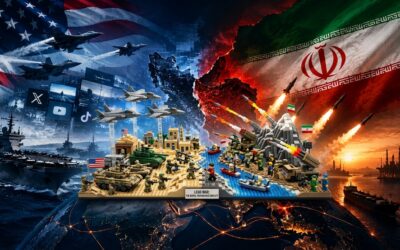
In early 2026, the United States deployed its largest concentration of naval and air forces in the Middle East in decades, positioning multiple warships, aircraft carriers and fighter jets within striking range of Iran amid sharply rising tensions. According to The Washington Post and Associated Press reporting, the Pentagon has sent two aircraft carrier strike groups; the USS Abraham Lincoln and USS Gerald R. Ford along with several guided-missile destroyers into waters near the Gulf of Oman and the Arabian Sea as diplomacy over Iran’s nuclear programme faltered. This buildup includes over 100 U.S. warplanes and thousands of additional personnel forward-deployed in the region, marking the most significant U.S. naval presence near Iran since the 2003 Iraq war era.
The Trump administration has made clear that these forces serve as a deterrent and a possible launching point for precision strikes if Tehran refuses to meet U.S. demands on its nuclear activities, while officials stress that no major ground invasion force has been committed. This deployment also coincides with Washington’s expanded use of air defence batteries and forward-based combat aircraft in allied countries, reflecting the seriousness of the stand-off and the risks of escalation should diplomatic efforts fail.
Russia and Eastern Europe: Sustained War, Slowing Surge
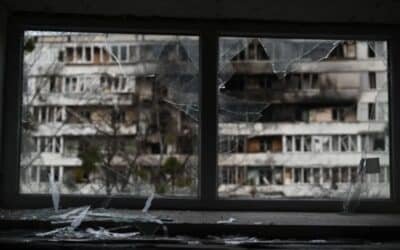
Eastern Europe remains a key flashpoint two years after Russia’s full-scale invasion of Ukraine. Russia’s defence spending in 2025 increased by about 3 per cent, a significant slowdown from its explosive rises in earlier years, yet still valued at roughly USD 186 billion or 7.3 per cent of its GDP. The war in Ukraine persists into its fifth year, with both Moscow and Kyiv allocating high proportions of national budgets to sustain combat operations. Despite economic strain from Western sanctions, Russia maintains its large presence on the battlefield and continues to develop long-range missiles and drones that pose enduring security concerns for Europe.
The Russia-Ukraine war has also reinforced NATO’s strategic cohesion, prompting allies to deepen defence cooperation and investment. The alliance’s recent commitment to a 5% GDP defence benchmark by 2035 underscores European capitals’ recognition of a protracted environment of great-power competition and the need for enhanced deterrence.
Middle East Flashpoints: Iran, Israel, and Persistent Instability
The Middle East’s security landscape in 2025 saw some of the most consequential military escalations and humanitarian crises in recent memory. The Iran–Israel war that erupted in June 2025 marked a dramatic widening of regional hostilities. Israeli forces launched a large-scale campaign against Iranian nuclear and military facilities, striking more than 100 sites in cities such as Tehran and Natanz. Iran retaliated with missile launches targeting Israeli territory.
The US joined on June 21 with “Operation Midnight Hammer,” using B-2 bombers and bunker-busters against Iranian nuclear facilities, while intercepting missiles aimed at Israel. A fragile ceasefire took effect around June 24 after Trump-brokered talks, though violations were reported; casualties included over 220 Iranian deaths and two dozen Israeli by mid-June.
These operations inflicted significant casualties and damage, including civilian infrastructure losses, and were widely criticized by international legal experts for potential breaches of international law.
Alongside interstate conflict, broader regional instability continued to drive militarisation. Renewed fighting and shifting power dynamics in the Gaza Strip, including the 2025 Hamas–Doghmush conflict in Gaza in October, reflected ongoing localised violence even after ceasefires.
Iran itself faced large-scale internal unrest beginning in late 2025, with widespread protests against economic hardship and governance that have been among the largest since the 1979 revolution. Official and independent casualty estimates differ, but tens of thousands are reported to have been affected by violence and state crackdowns, further complicating Tehran’s capacity to manage its external conflicts.
Iran’s Nuclear Expansion and Global Perception in 2026
In 2025–26, Iran’s nuclear activities have drawn intense international scrutiny, as Tehran continues to enrich uranium to high levels and limit transparency with global watchdogs. According to a Reuters-obtained report from the International Atomic Energy Agency (IAEA), Iran has stored uranium enriched up to 60 percent purity at a secure underground site, a level close to weapons-grade and a significant concern for many governments given the technical ease of further enrichment.
This development has heightened global alarm because 60 per cent enriched uranium dramatically shortens the “breakout time” should Iran decide to pursue a nuclear weapon, even though Tehran says its programme is for peaceful energy purposes and denies any intention to build such weapons. In response, European powers have reactivated UN sanctions via the JCPOA “snapback” mechanism, reinstating restrictions tied to Iran’s nuclear and missile activities. Iran has vehemently rejected this snapback and labelled the move unjustifiable, asserting it will protect its sovereign rights under the Nuclear Non-Proliferation Treaty.
While talks in Geneva and mediated discussions continue into 2026, with Iran offering proposals to reduce enrichment levels under certain conditions, mistrust remains high. Western capitals view Iran’s enrichment and limited inspector access as escalation and proliferation risks, even as Tehran insists its programme adheres to its legal rights.
Israel–Gaza War and Humanitarian Impact
The long-running Israel–Gaza conflict continued in 2025 with a major offensive in March that broke a temporary ceasefire. Israel’s military operation in Gaza caused hundreds of deaths and injuries, with health authorities reporting significant civilian tolls, including women and children. This campaign highlighted the fierce intensity and human cost of urban warfare in Gaza, and further drew international scrutiny on military conduct and civilian protection.
One stark measure of the conflict’s impact has been documented attacks on journalists and media workers. Reports from watchdog groups showed that 2025 was the deadliest year on record for journalists globally, with 129 journalists killed, two-thirds in Gaza and by Israeli fire, underscoring the risks to civilians and non-combatants in high-intensity conflicts.
Asia and the Indo-Pacific: Rising Competition and Capability Race
In the Indo-Pacific region, strategic competition, particularly involving China, continued to shape defence policies and posture. China’s defence budget remains a dominant force in the region, prompting neighbouring powers to enhance their own military capacities. Japan has introduced upgraded missile systems and significantly expanded its defence budget to over USD 60 billion for 2026, focusing on unmanned systems and long-range munitions. South Korea’s military spending also rose, with an eye toward bolstering deterrence against North Korea and deeper cooperation with the U.S. alliance framework.
These capability investments reflect a larger Indo-Pacific trend where allies and partners are deepening interoperability, expanding indigenous defence industries, and strengthening deterrent postures in response to Beijing’s assertiveness and North Korea’s unpredictable nuclear and missile activities.
You May Like To Read: Iran Unleashes 10th Missile Wave as U.S. Jets Crash in Kuwait and Saudi Oil Facilities Hit
Concluding: Implications for Pakistan and South Asia
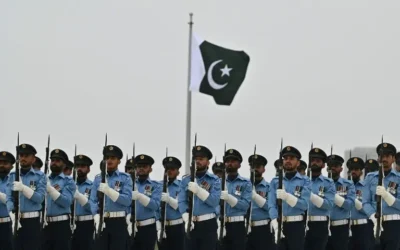
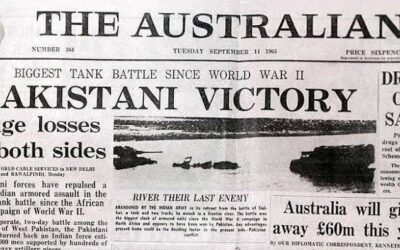
Global defence trends in 2026 hold significant implications for South Asia. Pakistan’s strategic environment remains shaped by its regional rivalries, particularly with India, which has one of the world’s largest defence budgets. While specific official figures vary, Islamabad’s defence priorities continue to focus on maintaining credible deterrence, modernising air defence, and sustaining strategic stability along contested borders.
The broader rise in military spending by major powers, the acceleration of high-tech capabilities such as long-range missiles and cyber tools, and the persistence of violent conflicts reinforce the need for well-calibrated defence planning in South Asia. For Pakistan, this means balancing robust security preparedness with economic sustainability and diplomatic engagement to navigate an increasingly complex security landscape.
Check out our latest video: